
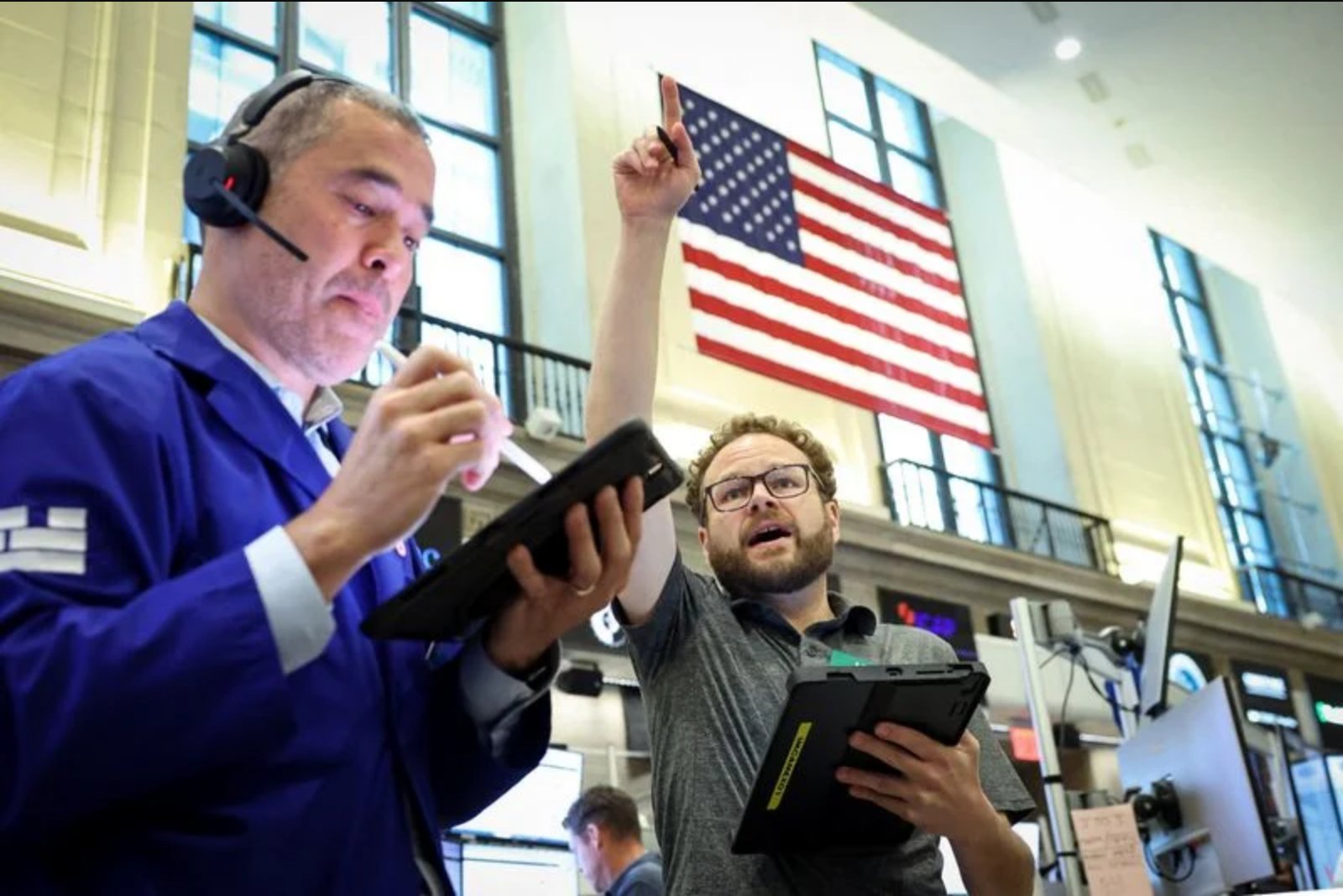
Wall Street pulled back from record territory on Wednesday as escalating tensions in the Middle East and a rise in oil prices heightened inflation worries and spurred profit-taking among investors. Broad declines were led by financial and technology stocks, while the small-cap Russell 2000 underperformed larger-cap indices.
Semiconductor stocks diverged from the broader market trend, rising 1.7% and underlining continued investor interest in artificial intelligence-related names. At the same time, six members of the so-called Magnificent Seven group of AI-linked megacaps traded lower on the day.
"The AI names are trading on their own completely separate world, largely oblivious to macro and geopolitical risk, at least within reason," said Ross Mayfield, investment strategy analyst at Baird in Louisville, Kentucky. "And so there’s going to be a bid for those names, especially on days where everything else looks a little bit less attractive."
Weakness was concentrated in the S&P Software & Services index, which dropped 3.9% after facing pressure in recent months from concerns about AI-driven disruption. At the same time, tensions in the Middle East intensified and diplomatic efforts to conclude hostilities appeared stalled after the United States and Iran exchanged a new round of air strikes, testing an already fragile ceasefire. The uptick in oil prices added to fears that energy-driven cost pressures could feed into broader inflation.
"The market is desperate to believe the narrative that we’re heading towards some sort of longer-term sustainable deal in the Middle East," Mayfield added. "And this is a market that’s pretty narrow and at all-time highs so it’s susceptible to any piece of that narrative falling apart."
Market-implied odds of additional tightening by the Federal Reserve have increased. CME’s FedWatch tool showed markets priced in a 41.8% probability of a rate hike at the conclusion of the Fed’s December meeting, up from 9.1% a month earlier. Despite the shift in expectations, New York Fed President John Williams reiterated that the central bank does not need to change interest rates in the near term, saying monetary policy is "in the right place."
Economic releases painted a mixed picture: the labor market appeared stable and the services sector continued to expand, yet input prices remained elevated and corporate spending plans looked muted amid rising energy costs and geopolitical uncertainty.
Major index moves were notable. The Dow Jones Industrial Average fell 420.95 points, or 0.82%, to 50,886.84. The S&P 500 lost 38.40 points, or 0.50%, to 7,571.38, and the Nasdaq Composite fell 206.28 points, or 0.76%, to 26,887.62. Within the S&P 500, consumer discretionary and technology sectors posted the largest declines, while energy stocks recorded the biggest percentage gains as crude prices climbed.
Chipmakers showed pockets of strength, with Marvell, Intel, Qualcomm, and Sandisk advancing between 4.2% and 6.9%. Broadcom was up about 1.0% ahead of its earnings report, which was expected after the bell.
Asset managers came under pressure after Switzerland’s Partners Group capped withdrawals from an $8.6 billion private equity fund. Major alternative-asset managers KKR, Blackstone, Blue Owl and Ares Management each fell in the range of 4.3% to 4.9% on the session.
GameStop gained 6.7% after reporting an increase in quarterly revenue and announcing a $2 billion share buyback program. Separately, plans emerged that SpaceX intends to price its initial public offering at $135 a share in an effort to raise $75 billion, a development that has attracted broad market attention.
Market breadth tilted negative. On the New York Stock Exchange, declining issues outnumbered advancers by a 2.55-to-1 ratio, with 234 new highs and 154 new lows. On the Nasdaq, 1,301 stocks rose versus 3,440 that fell, leaving decliners ahead of advancers by about 2.64-to-1. The S&P 500 logged 32 new 52-week highs and 18 new lows, while the Nasdaq Composite recorded 83 new highs and 124 new lows.
Investors navigated a combination of geopolitical risk, shifting rate expectations and industry-specific developments. Financial and technology stocks bore the brunt of the pullback, energy benefited from higher crude, and chip-related names continued to attract demand even as the broader market cooled.