
Economy May 28, 2026 10:37 AM

St. Louis Fed’s Musalem Cautions Against Betting on AI to Lower Inflation

Musalem urges continued policy vigilance as inflation, expectations and a firm labor market argue against loosening

By Derek Hwang

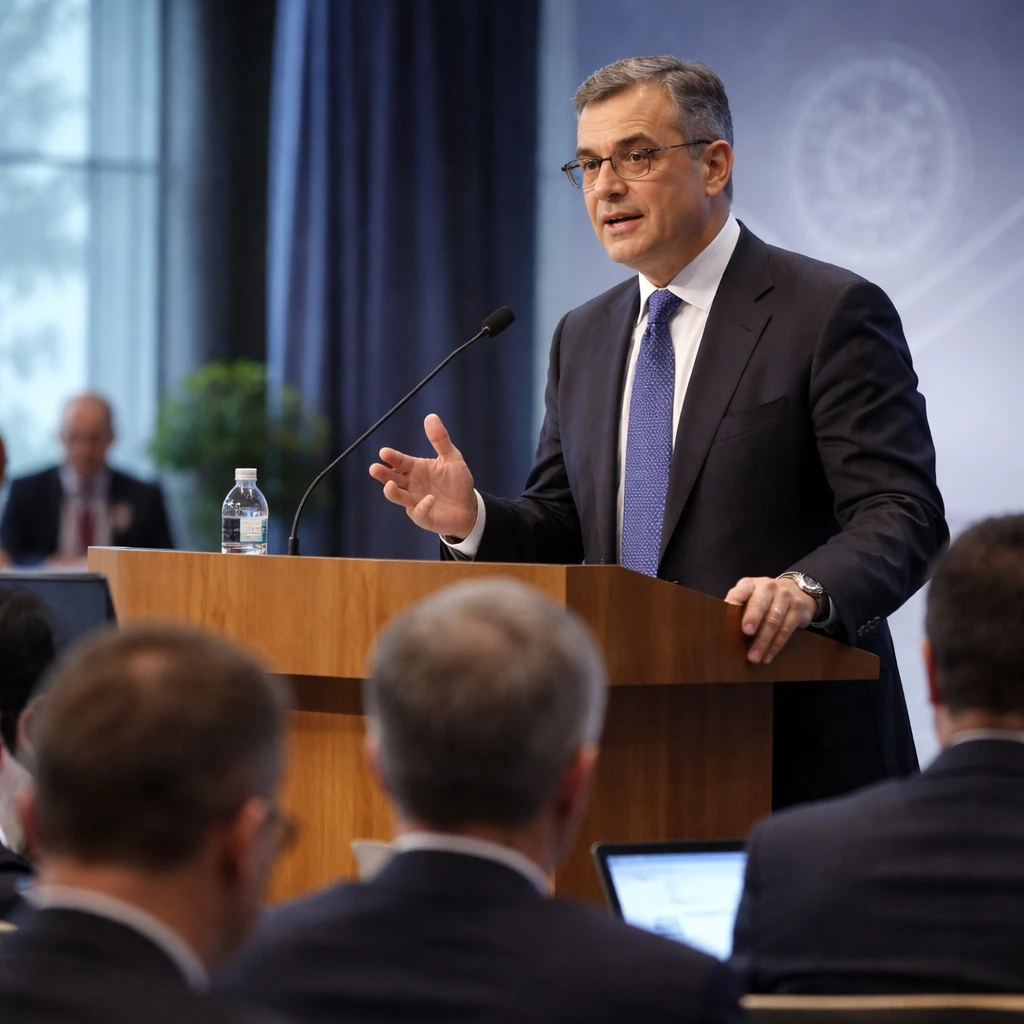
St. Louis Federal Reserve President Alberto Musalem said he is skeptical that gains from artificial intelligence will reduce inflation sufficiently to permit easier monetary policy. Speaking at a Reykjavik conference, he argued current data - including inflation above target and a stable labor market - do not support a move to looser rates and warned of risks if policy is set too low.

St. Louis Fed’s Musalem Cautions Against Betting on AI to Lower Inflation

Key Points

  • Musalem urged maintaining vigilant monetary policy until inflation and inflation expectations clearly move toward target; sectors affected include fixed income markets and the broader economy.
  • He expressed skepticism that AI-driven productivity gains will soon allow the Fed to lower interest rates; technology-related sectors such as semiconductors and data center services are already showing demand pressures.
  • The Fed official warned that setting policy too low could push up longer-term interest rates if the public doubts the Fed's commitment to the 2% inflation goal, which would discourage investment and could harm growth and employment.

Reykjavik - St. Louis Federal Reserve President Alberto Musalem on Thursday pushed back on the idea that artificial intelligence-driven productivity gains will solve current inflation pressures, saying policymakers should not relax monetary policy on the strength of those expectations.

Addressing an economic conference co-hosted by the Central Bank of Iceland and Northwestern University in Reykjavik, Musalem outlined several reasons the present environment argues against shifting to easier policy. He noted that the real policy rate remains below the Fed's notion of the long-run neutral rate, inflation continues to run meaningfully above the 2% target, longer-term inflation expectations are drifting higher, and the labor market remains firm.

Given those conditions, Musalem said preserving vigilant monetary policy aimed at restoring price stability is preferable to relying on the prospect that higher productivity from AI will, in the future, bring inflation back under control.

He aligned with other officials within the Federal Reserve who have been skeptical of optimistic takes that AI will materially raise productivity to a degree that allows the central bank to set interest rates lower. Musalem specifically positioned himself against views held by many members of the Trump administration and Fed Chairman Kevin Warsh that expect substantial productivity uplift from AI to ease the path for looser policy.

Musalem did leave room to change his stance if clear evidence emerges that AI delivers sustained productivity gains that would reduce inflationary pressures. For now, he said, the jury remains out on how much AI will add to productivity, even as signs of increased demand for chips and data center capacity are already visible.

The Fed official warned of a specific risk if policymakers move or keep policy rates too low: longer-term interest rates could rise if the public begins to doubt the Fed's resolve to return inflation to the 2% target. Such a rise in longer-term rates would, he said, discourage investment and could weigh on economic growth and employment.


Context and implications

  • Musalem emphasized price stability as the priority in the current macroeconomic environment.
  • He signaled openness to revising his view only if clear, sustained productivity improvements attributable to AI become evident.
  • He identified a potential transmission channel from too-loose policy to higher long-term rates and weaker investment and labor market outcomes.

Risks

  • Easing or keeping policy rates too low risks a rise in longer-term interest rates if the public doubts the Fed will restore the 2% inflation target - this could reduce investment and hurt economic growth and employment (impacts: capital markets, corporate investment, labor market).
  • Uncertainty about the magnitude of productivity gains from AI means policymakers could misjudge the appropriate policy stance - this uncertainty directly affects technology sectors tied to chips and data center demand and broader productivity-sensitive industries.
  • With the real policy rate below the Fed's long-run neutral level while inflation remains meaningfully above target and longer-term expectations drift higher, there is risk to price stability if policy is loosened prematurely (impacts: inflation-sensitive sectors and financial markets).

More from Economy

Australian house price momentum to slow to four-year low as borrowing costs bite Jun 4, 2026 Kevin O’Leary Scales Back Utah Data Center Plan Amid Lawmaker Concerns Jun 4, 2026 Fed's Daly Says AI Could Exert Downward Pressure on Prices Over Several Years Jun 4, 2026 Putin Says Moscow Willing to Make Concessions if Kyiv Reciprocates Jun 4, 2026 Putin Says Moscow and Beijing Near New Energy Deals, Offers Few Details Jun 4, 2026