
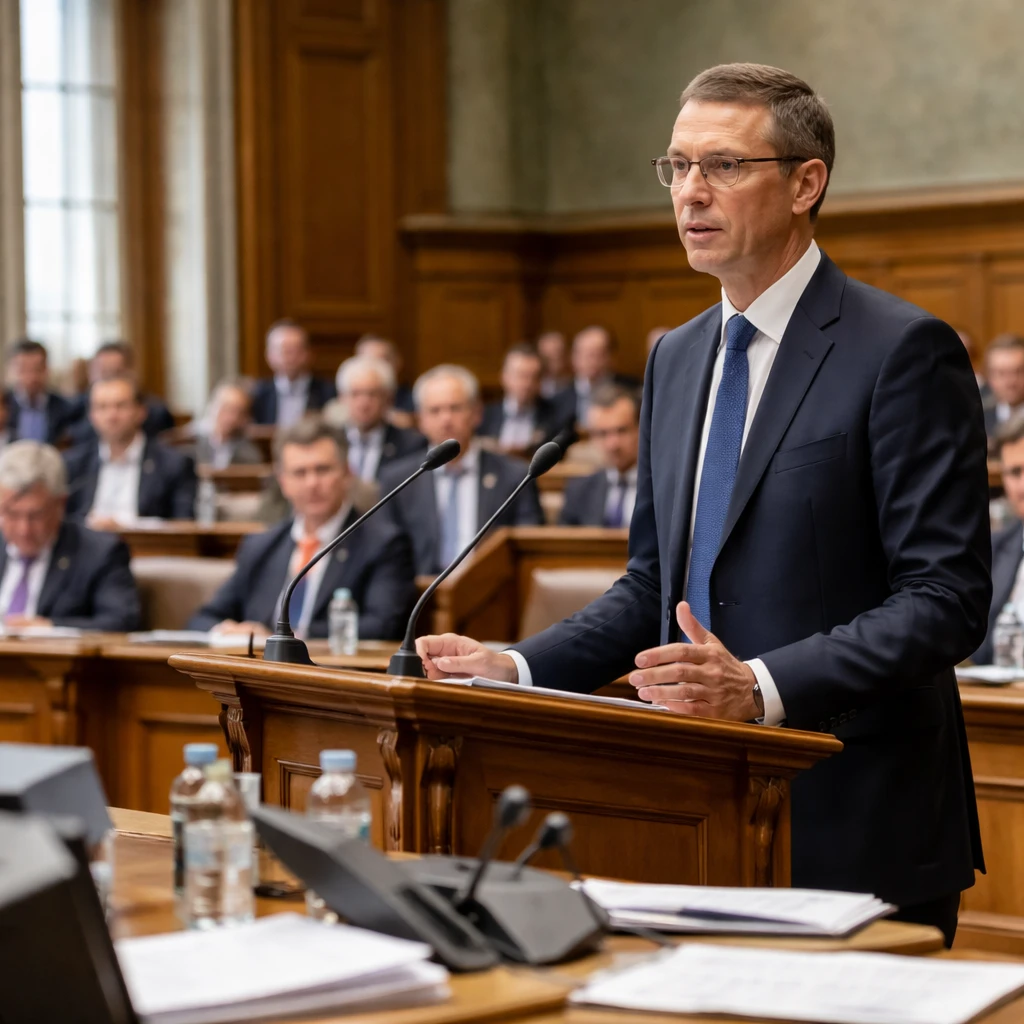
In testimony to parliamentarians in Bern, Swiss National Bank President Martin Schlegel reaffirmed that the SNB does not pursue a pre-set exchange rate target, while underlining the central bank's greater willingness to intervene in foreign exchange markets when circumstances require.
Schlegel explained that the SNB aims to secure appropriate monetary conditions primarily through its policy rate, complemented by additional measures as necessary - among them, foreign exchange market operations. He presented this approach as part of a framework to ensure monetary conditions remain aligned with the bank's objectives.
The central bank chief drew a distinction between nominal and real movements in the franc, stating that real appreciation has been significantly lower than nominal appreciation. He highlighted that recent upward pressure on the Swiss currency has been driven in part by escalating tensions in the Middle East, and said this development has contributed to the SNB's heightened readiness to intervene in FX markets.
Delivering a talk titled "Monetary policy in the best interests of the country," Schlegel stressed that maintaining price stability requires a robust institutional framework and a narrowly defined monetary policy mandate. He argued that a focused mandate is key to safeguarding the central bank's long-term independence and shielding monetary policy from undue political influence.
Schlegel's remarks reiterated the SNB's stance that while it does not target an exchange rate, it retains the tools and willingness to act in foreign exchange markets if market dynamics threaten monetary conditions. He framed these powers as complementary to traditional interest-rate policy and as elements of a broader institutional design meant to preserve price stability and central bank autonomy.
The presentation emphasized the linkage between institutional clarity, a limited mandate, and the central bank's capacity to operate independently, particularly when exchange-rate developments and external geopolitical factors exert pressure on the currency.
Clear summary: The SNB does not have a specific exchange-rate target, but President Martin Schlegel said the bank is more prepared to intervene in FX markets. He noted real franc appreciation trails nominal gains and pointed to Middle East tensions as a source of upward pressure on the currency. Schlegel also argued that price stability depends on a narrowly defined mandate and strong institutional independence.