
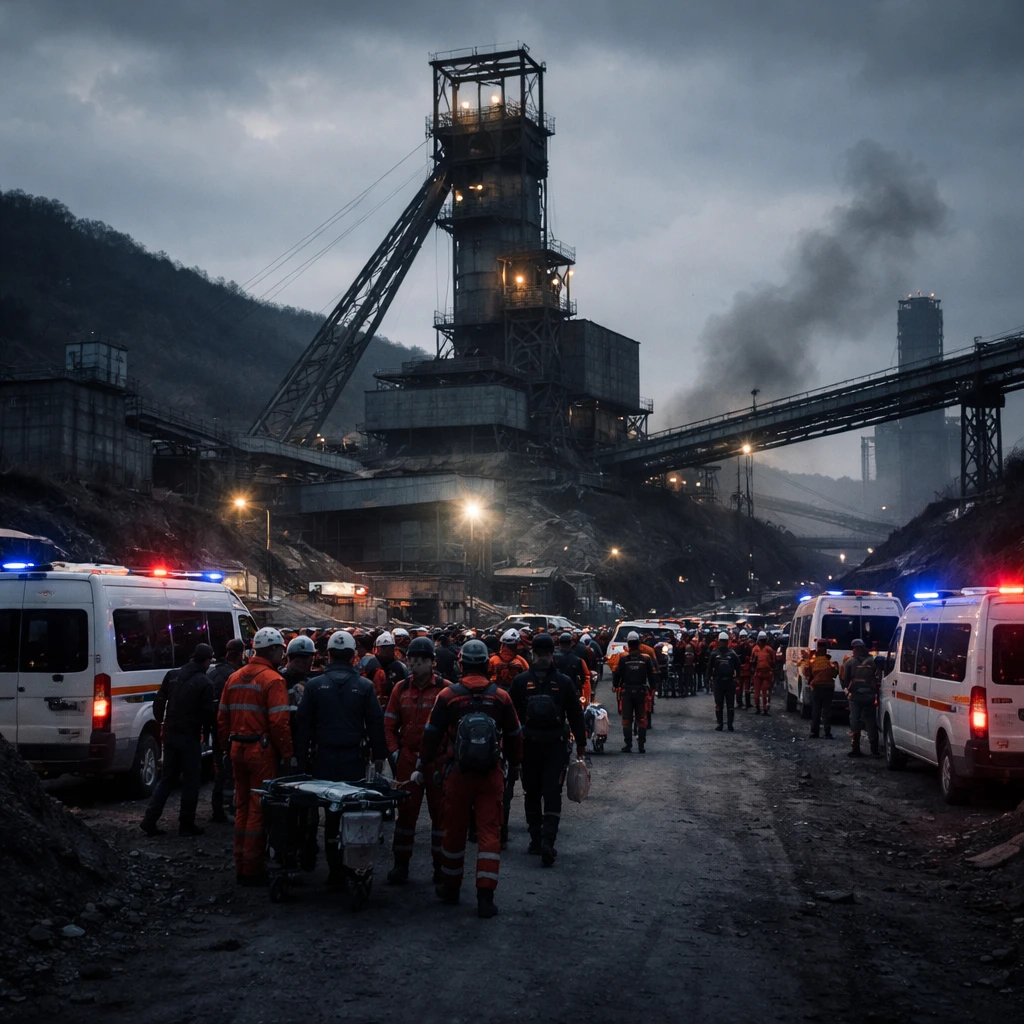
Chinese authorities on Saturday adjusted the reported number of fatalities from a gas explosion at the Liushenyu coal mine in northern Shanxi province to 82, reducing an initial tally that had placed the death toll at at least 90.
The blast struck late Friday at the Liushenyu mine, located in one of the nation’s principal coal-producing regions. Despite the revision, officials said the incident remains the most lethal mining disaster in China since a 2009 gas explosion at the Xinxing mine in Heilongjiang province that claimed 108 lives.
Officials attributed the earlier, higher count to confusion in the immediate aftermath of the blast. At a press conference, Guo Xiaofang, head of Qinyuan county where the mine sits, said the scene was chaotic and the company’s initial count of workers underground was unclear, which produced the inaccurate figure.
"After the incident, the scene was chaotic, the company’s count of the number of workers was not clear, which led to the initial inaccurate number," Guo Xiaofang said.
Authorities reported that 247 workers were underground when the explosion occurred. As of Saturday, two people remained missing, 128 were hospitalized with injuries, and 35 managed to escape without injury.
The Liushenyu mine is run by Shanxi Tongzhou Coal Coking Group. Local officials stated that all four mines owned by the company have been closed and that several company executives have been detained while investigators pursue the cause of the accident.
President Xi Jinping directed authorities to prioritize treatment for the injured, to continue search and rescue operations, and to establish the cause of the blast, the state news agency reported.
China’s state-run People’s Daily on Sunday called for stronger workplace safety measures, urging officials to halt what it described as a tendency to prioritize development over safety following the disaster.
The Liushenyu operation has an annual production capacity of 1.2 million metric tons of coal. By comparison, China produced approximately 4.83 billion metric tons of coal last year, and coal remains a central fuel for the country’s power generation system.
Officials and commentators cited in state reports have suggested the accident will increase scrutiny of safety practices within China’s mining sector, which is among the world’s largest sources of coal. At this stage, authorities have closed the operator’s sites and detained executives as part of efforts to determine responsibility and prevent further incidents.
Context and next steps
Investigations are ongoing to establish the precise cause of the explosion. Rescue and medical teams have been mobilized to treat those injured and to continue search efforts for the missing. Local and national authorities have signaled a focus on both immediate response and subsequent accountability through detentions and mine closures.