
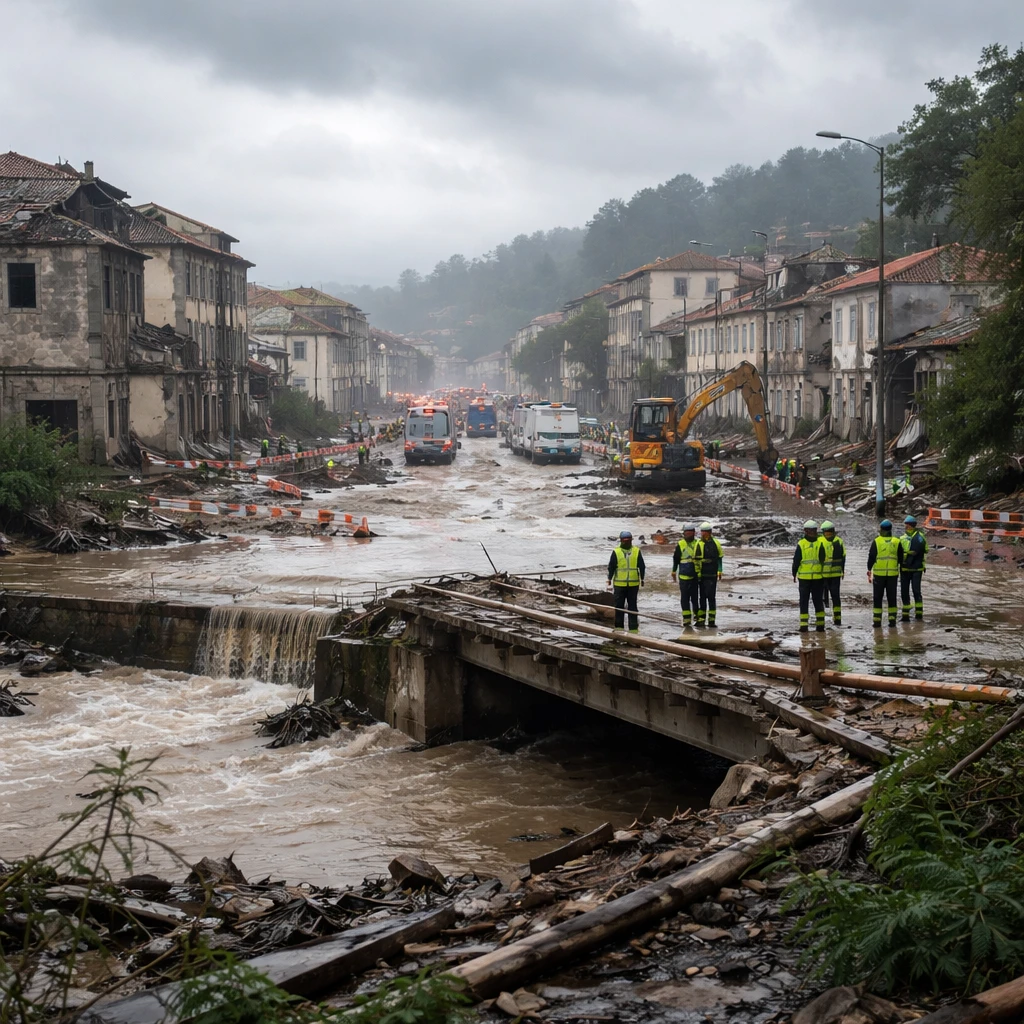
Portugal's drive to deliver a balanced budget this year has been complicated by the economic toll of severe storms in January and February, which the government estimates cost the state €2 billion, or about 0.6% of gross domestic product, Economy Minister Manuel Castro Almeida said on Friday.
Only three weeks earlier, the government had said it expected to achieve a balanced budget this year - with no deficit or surplus - after an earlier projection that had pointed to a small surplus of 0.1%, down from 0.3% in 2025. In parliament, Castro Almeida stressed the difficulty of meeting the new target in light of the storm-related costs.
"The government has not given up on the objective of reaching a balanced budget, but we’re aware that it’s an extremely difficult objective after the €2 billion the storms have cost us," Castro Almeida said in parliament.
The severe storms and ensuing floods struck central areas of mainland Portugal, a region that plays a key role in the national economy. Officials report extensive damage to businesses, homes and public infrastructure. That damage has generated both direct public spending to respond to and repair the destruction and an indirect fiscal hit through lost tax revenue as economic activity in the affected areas slowed.
Castro Almeida pointed to Portugal's broader fiscal metrics as a mitigating factor, noting that debt remains below 90% of GDP. The government also continues to pursue plans to reduce corporate taxation, a combination it says supports foreign investment despite the near-term fiscal pressure from the storms.
Economic activity was subdued in the first quarter, the minister said, citing the dual drag of the weather events and higher energy prices linked to the Iran conflict. Even so, the government maintains a forecast for 2% economic growth this year, compared with a projected 1.9% expansion in 2025.
For policymakers, the immediate challenge is reconciling repair and relief needs with the stated objective of fiscal balance. The storm-related costs, added to other near-term headwinds, complicate that task and will shape discussions over spending priorities and revenue measures in the months ahead.
Summary
The government faces a difficult path to a balanced budget after storms cost the state €2 billion. Damage to central Portugal raised public spending and reduced tax revenue, and the first-quarter economy was affected by the storms and higher energy prices. Debt below 90% of GDP and plans to cut corporate taxes are cited as supports for investment, while the government still expects 2% growth this year.