
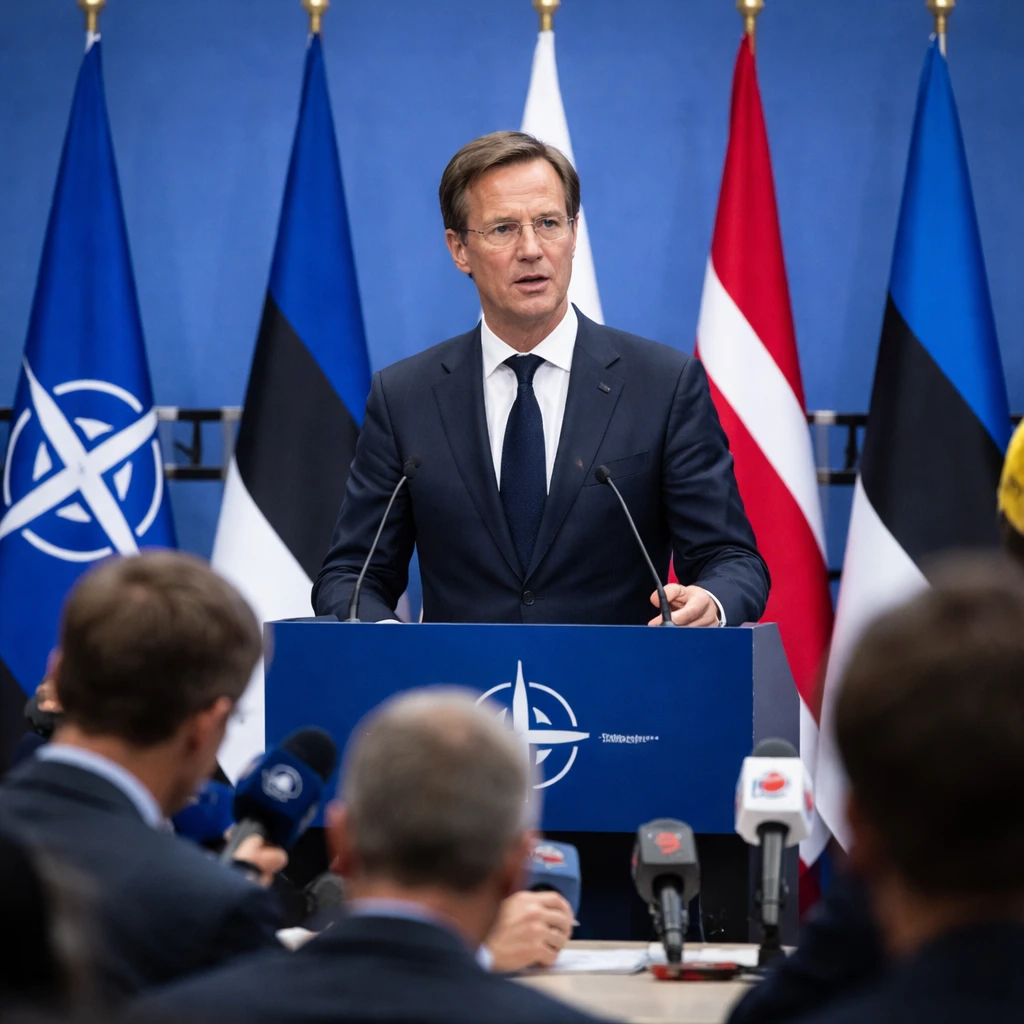
Brussels - NATO Secretary General Mark Rutte on Wednesday rejected Russian claims that Baltic nations are allowing Ukrainian drones to use their airspace to attack Russia, calling the allegations "ridiculous." Rutte addressed reporters in Brussels after the alliance responded to a drone incident in Estonian airspace.
Rutte asserted that drones originating from Ukraine are not operating within Baltic airspace for the purpose Russia alleges, saying this is not because Ukraine intended to route them to Latvia, Lithuania or Estonia. He attributed their presence to what he described as Russia's illegal full-scale attack.
The secretary general described the alliance's handling of the situation involving a Ukrainian drone that was shot down on Tuesday as calm, decisive and proportionate. According to Rutte, a Romanian fighter jet intercepted and shot down the drone while it was in Estonian airspace.
Responding directly to Moscow's statements that Latvia is permitting its territory to be used for Ukrainian drone attacks on Russia, Rutte called those claims "totally ridiculous." He emphasized NATO's assessment and response to the incident in Estonia.
Key takeaways
- NATO leadership rejects Russian assertions that Baltic states are facilitating Ukrainian drone attacks, labeling those accusations as unfounded.
- A drone tied to Ukraine was shot down in Estonian airspace on Tuesday by a Romanian fighter jet; NATO described its response as calm, decisive and proportionate.
- Rutte linked the presence of Ukrainian-origin drones to Russia's illegal full-scale attack, framing the activity as a consequence of that action.
Risks and uncertainties
- Ongoing disagreement between NATO and Russia about the use of regional airspace creates diplomatic uncertainty for Baltic states and allies.
- Incidents involving drones and military intercepts risk further tensions between regional military forces if assessments and accusations continue to diverge.
- Public claims and counterclaims over territorial use could complicate airspace management and defensive postures in the affected countries.
Context noted by NATO
Rutte's comments reflect the alliance's publicly stated position following the Tuesday incident in Estonian airspace. He maintained that NATO's actions in response to the downed drone were measured and appropriate given the circumstances.
Beyond the immediate statements, the situation underscores continuing friction over incidents in and around NATO member airspace, and differing narratives presented by Moscow and the alliance. The secretary general's characterization of Russian claims as "ridiculous" and "totally ridiculous" indicates a sharp rejection of the specific allegation that Latvia or other Baltic countries are complicit in facilitating Ukrainian strikes on Russian territory.
The account presented by NATO centers on the downing of the drone by a Romanian jet and on Rutte's attribution of drone presence to Russia's full-scale attack. Additional developments or third-party verification were not provided in the remarks reported from the Brussels briefing.