
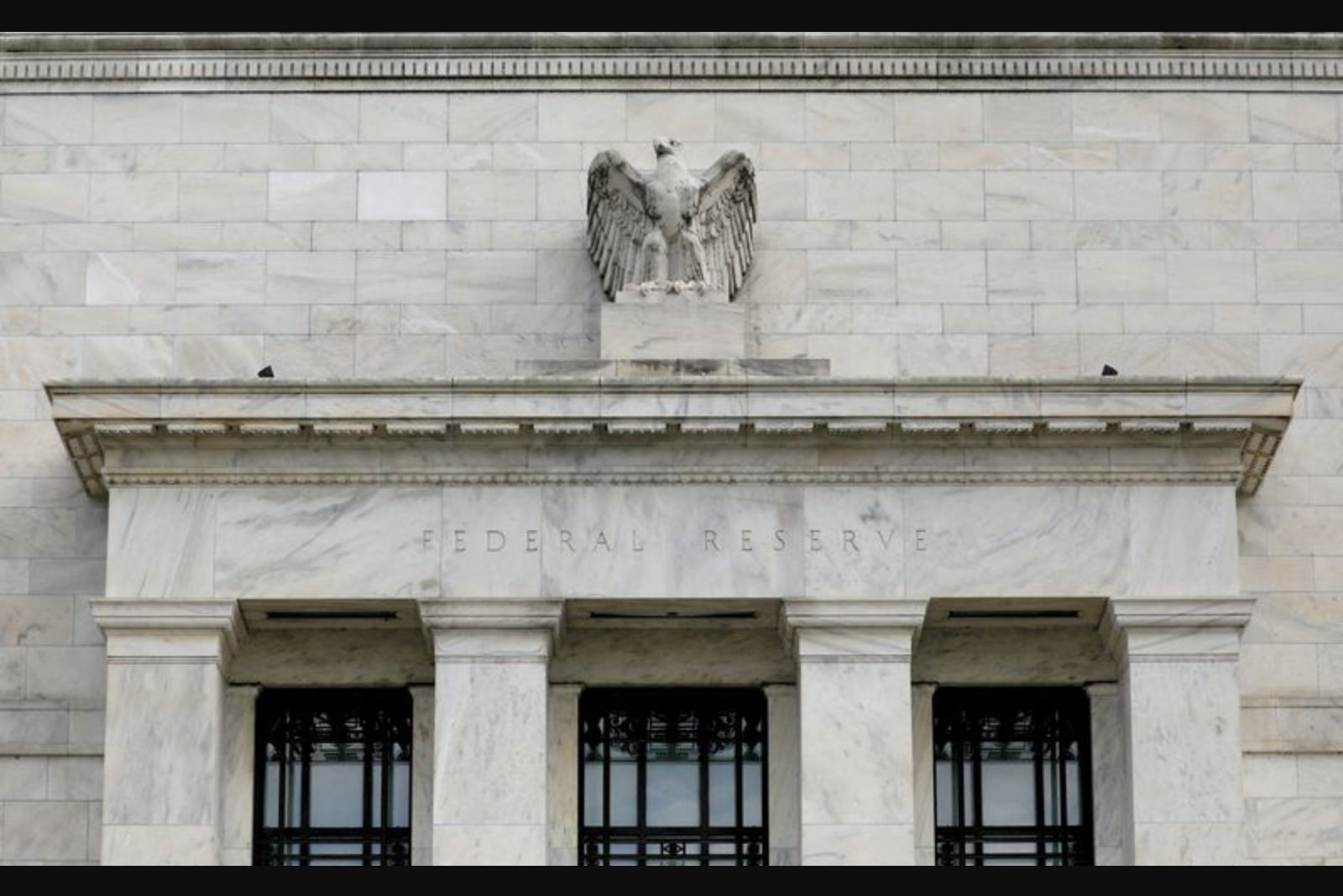
May 19 - Economists surveyed between May 14 and May 19 overwhelmingly anticipate that the Federal Reserve will hold interest rates steady this year, moving previously common expectations for policy easing into the following year. The federal funds rate has been maintained in a 3.50%-3.75% band since December, and fewer than half of respondents now foresee any cut before year-end.
The change in outlook is sharp compared with just a month earlier, when a clear majority had expected at least one reduction. Instead, the latest poll shows 83 of 101 economists predict the key rate will remain at 3.50%-3.75% through the third quarter - a near-85% majority - compared with just over half expecting the same in the prior month and roughly 70% in March who had looked for at least one cut by this point.
Market pricing is sending a mixed signal. Interest rate futures markets are narrowly putting in a one-in-some-possibility pricing for a 25-basis-point hike by end-January, while the 10-year Treasury yield has surged to its highest level in more than a year, topping 4.6%.
Forecasters broadly attribute the shift to an energy-fuelled jump in inflation that began after the onset of the war in Iran roughly two and a half months ago. Despite that upward pressure, most economists in the survey still characterize the spike as temporary and not likely to spread widely into other consumer price categories.
"Both hikes and cuts are feasible...the base case is a hold, and it’s a close call between the other two options, to be honest. It feels like if they are going to have their next move as a cut, it’s more likely to be next year than this year," said Aditya Bhave, head of U.S. economics at Bank of America.
Officials at the Fed have signalled caution in recent weeks. At the April policy meeting, three officials dissented in favour of removing a bias to cut rates from the policy statement, while one voted in favour of an immediate reduction. Since that meeting, Fed commentary has stressed a wait-and-see approach, citing uncertainty linked to the ongoing U.S. war on Iran.
Economists note that incoming Fed Chair Kevin Warsh is unlikely to produce the rate reductions sought by President Donald Trump. There is no single consensus on where the policy rate will finish the year. A near-50% minority - 49 of 101 respondents - now predict no movement in rates this year, up from about one-third in the prior survey. Nearly a third of economists still expect one cut within the year, most commonly pencilled in for December, while four forecasters anticipate at least one hike.
Inflation forecasts have been revised modestly higher. The Fed's preferred measure, the Personal Consumption Expenditures Price Index, was last reported rising 3.5% year-on-year, the strongest annual rate since May 2023. The poll shows the PCE gauge now projected to increase to 3.9% in the second quarter, 3.7% in the third quarter and 3.4% in the fourth quarter - each roughly 25 basis points above last month’s projections and marking a third consecutive upward revision.
Even with those adjustments, a large majority in a smaller sample view the current inflation pressures as transitory. Still, forecasters are divided on whether that assessment could change if shocks persist. "There are certainly risks of higher inflation...we are not geopolitical experts or commodities forecasters. There’s a lot of uncertainty around our forecast for sure," Bhave added.
Scott Anderson, chief U.S. economist at BMO Capital Markets, cautioned about forecasters' recent record on inflation. "Our track record as economists hasn’t been great on inflation lately. There is a big risk we’re in this new kind of era where you’re going to see more frequent shocks," he said.
Other macro variables in the poll were largely steady. Joblessness is expected to average about 4.3% or slightly higher in the coming years, roughly where it stands now, while growth forecasts point to roughly 2% on average. The steadiness in unemployment and growth expectations contrasts with the revisions to inflation, underscoring the influence of energy and geopolitical developments on price dynamics and monetary policy expectations.
Summary
Most economists polled May 14-19 now expect the Fed to keep rates on hold at 3.50%-3.75% through the third quarter and defer most forecasts of cuts until next year. An energy-driven rise in inflation since the start of the war in Iran has prompted modest upward revisions to PCE forecasts, but the majority of the smaller sample still treat these pressures as transitory. Markets, however, show rising Treasury yields and some pricing for future rate moves.
Key points
- Majority view: 83 of 101 economists predict the policy rate will remain at 3.50%-3.75% through the third quarter.
- Inflation revisions: PCE inflation is now forecast at 3.9% in Q2, 3.7% in Q3 and 3.4% in Q4, each about 25 basis points higher than last month.
- Market reactions: The 10-year Treasury yield has risen above 4.6%, and futures imply a possible 25-basis-point move by end-January.
Risks and uncertainties
- Geopolitical risk - Ongoing war in Iran is cited as a source of uncertainty that could affect energy prices and inflation, with knock-on effects for monetary policy and markets.
- Inflation persistence - While many economists consider current inflation pressures transitory, a material broadening of price increases would challenge that view and alter rate expectations.
- Forecasting limits - Economists acknowledge a weak recent track record on inflation forecasting, which raises the possibility that unforeseen shocks could render current projections inaccurate.