
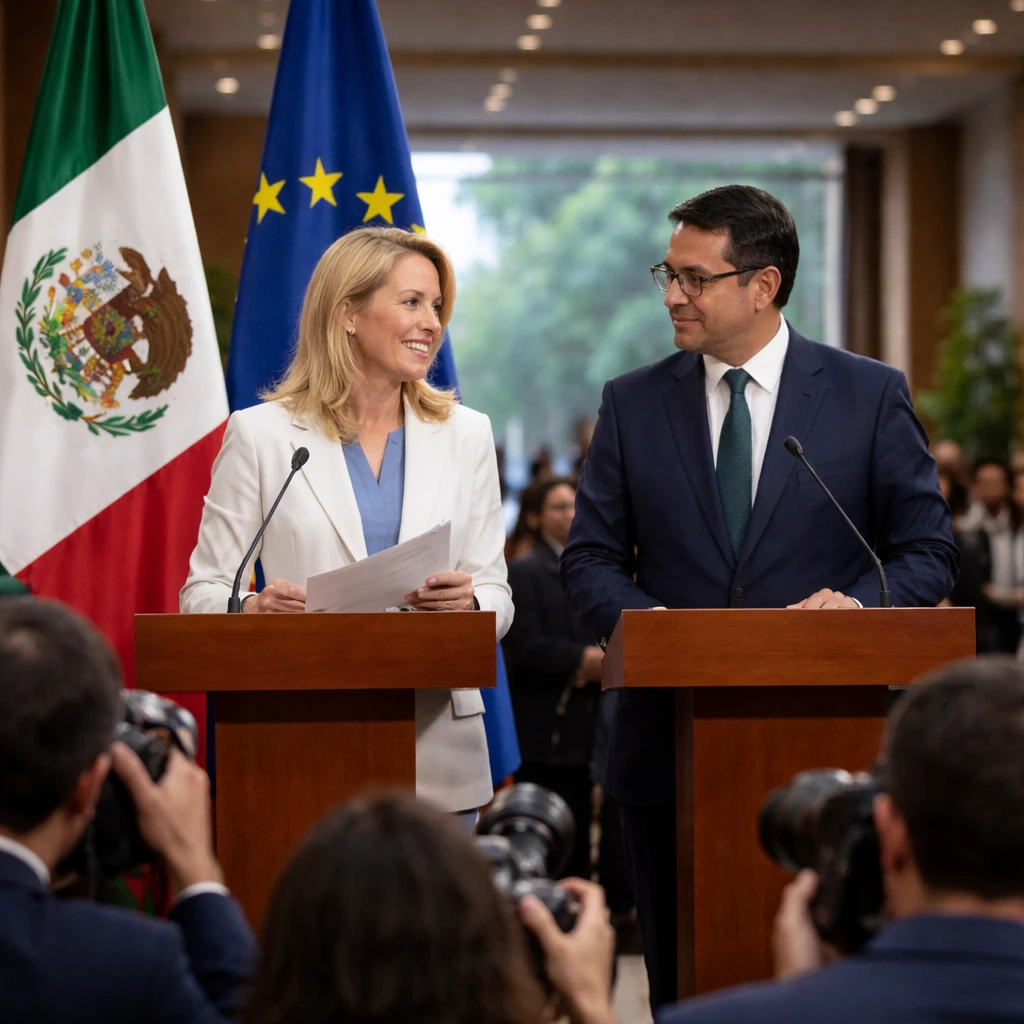
Mexico and the European Union will sign a trade agreement on Friday with the stated goals of diversifying trade flows and lowering supply chain risks, Kaja Kallas, the EU’s foreign affairs chief, announced during a press conference held in Mexico City.
Kallas, speaking alongside Mexico’s Foreign Affairs Minister Roberto Velasco, highlighted the shared interest in bringing the two sides into a closer cooperative framework. The officials described the agreement as a vehicle to expand commercial links and stimulate investment between Mexico and the EU.
Velasco reiterated that the pact is intended to boost trade and investment between Mexico and the EU and explicitly said the agreement will not affect Mexico’s relationship with the United States. The ministers framed the move as complementary to existing diplomatic ties rather than as a substitution or replacement of other partnerships.
Both parties used the press appearance to confirm their ongoing commitment to maintaining humanitarian assistance to Cuba. That commitment was stated as part of the broader conversation around regional cooperation and shared responsibilities.
On the situation in Venezuela, Kallas said her position is that Venezuelans should seek a democratic resolution to the country’s challenges. Her comment was offered during the same public briefing that focused primarily on the trade accord.
When asked about diplomatic representation for the United States at the upcoming FIFA World Cup opening scheduled to take place in Mexico City, Velasco said he does not yet know who will represent the U.S. government at the event. His response left that particular diplomatic detail unresolved at the time of the announcement.
The officials presented the agreement as a step toward deeper economic cooperation while reiterating discrete regional policy positions on humanitarian aid and political developments. The public remarks provided a broad outline of intent but did not include detailed steps for implementation or further technical specifics about how the stated aims of diversifying trade and reducing supply chain vulnerability will be achieved.