
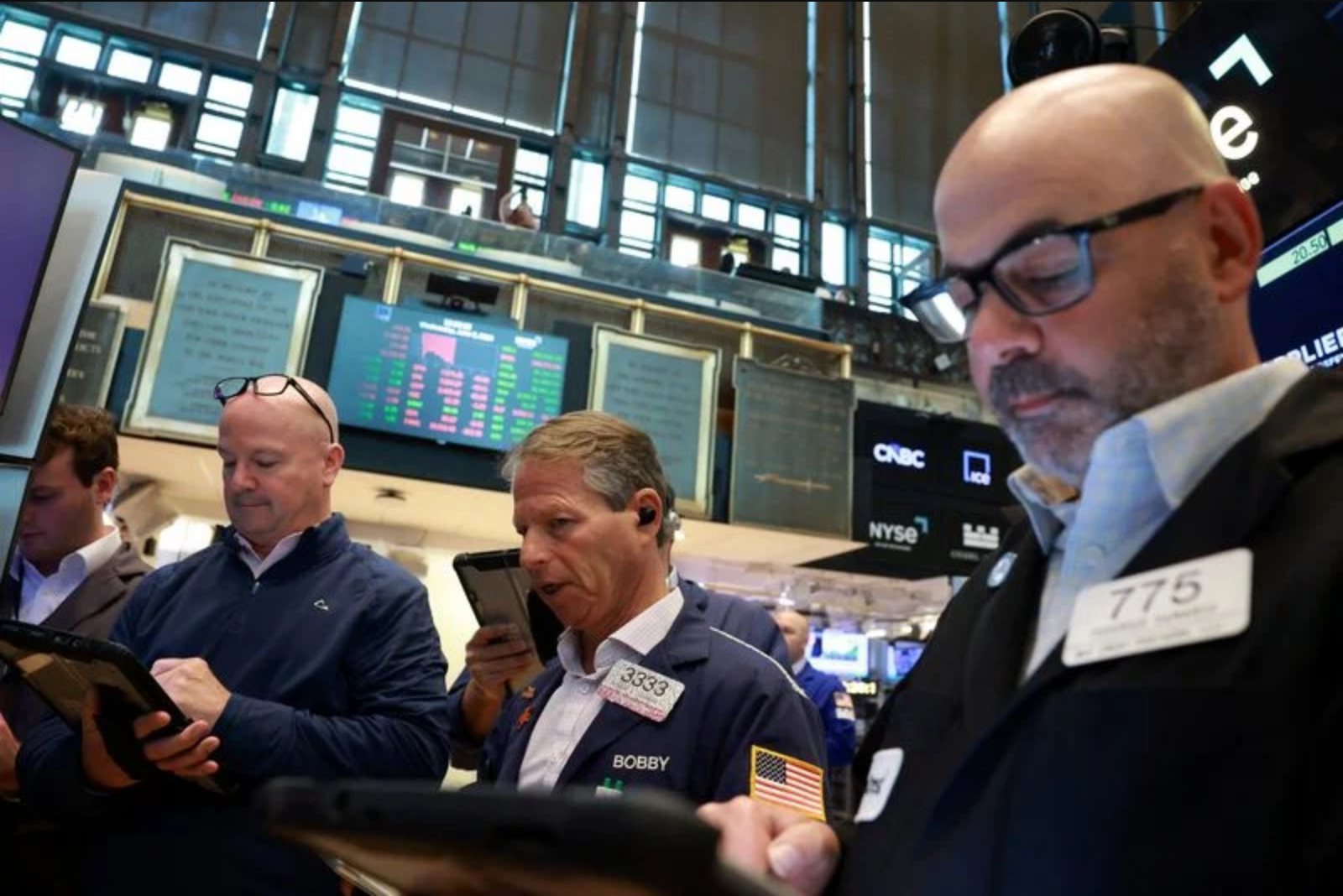
Markets moved back into risk-off territory as investors confronted competing developments in the Middle East and political signalling in Washington. A ceasefire accord between Israel and Lebanon offered only muted relief because it is conditional and comes against a backdrop of continuing U.S.-Iran tension.
Brent crude futures fell 0.7% to $97.12 a barrel after Lebanon and Israel agreed to implement a ceasefire - a deal that is contingent on a complete cessation of fire from the Iran-aligned Hezbollah militia and the evacuation of all its operatives from the South Litani sector. The two parties had struck a ceasefire last month, but fighting persisted despite that prior agreement.
At the same time, the Republican-led U.S. House of Representatives approved a war powers resolution intended to block President Donald Trump from continuing the conflict against Iran. The measure is largely symbolic at this stage: it must also pass the Senate to become effective and would then require a two-thirds majority in both chambers to override what is widely expected to be a presidential veto.
Compounding market unease, U.S. officials told the Wall Street Journal that Trump privately told aides he would consider ending the ceasefire with Iran if Tehran were to kill American troops. The report, which cited U.S. officials, added to investor caution.
Equity futures reflected the caution. S&P 500 e-mini futures were down 0.5%, putting them on track for a second consecutive day of declines after hostilities in the Middle East flared again and negotiations between Tehran and Washington showed little progress. Regional equity gauges also struggled: MSCI's broadest index of Asia-Pacific shares outside Japan fell 1.8%, while Japan's Nikkei 225 slumped 2%.
In early European trading, pan-region futures were lower by 0.5%, German DAX futures sank 0.4% and FTSE futures were 0.4% weaker. Currency markets saw the yen strengthen, moving away from the 160 level that many market participants regard as an informal intervention threshold after it flirted with that mark earlier in the week.
Tokyo signalled a tighter alignment between the government and the Bank of Japan after the government said it expects the BOJ to coordinate policy steps with it, following hawkish commentary from Governor Kazuo Ueda the previous day. Some analysts noted that Tokyo's recent market intervention is better understood when considered over a two-decade horizon, an observation that adds nuance but not immediate clarity for traders.
Events and supply potentially influencing markets on Thursday
- Economic releases: Germany - HCOB Construction PMI for May; France - HCOB Construction PMI for May; UK - S&P Global UK Construction PMI for May and new passenger car registrations for May.
- Debt supply: France plans auctions of 11-year, 12-year, 16-year and 31-year government debt.
These data points and auctions, together with geopolitical headlines and central bank signalling, are likely to shape risk sentiment and short-term positioning across oil, FX, equity and sovereign bond markets.