
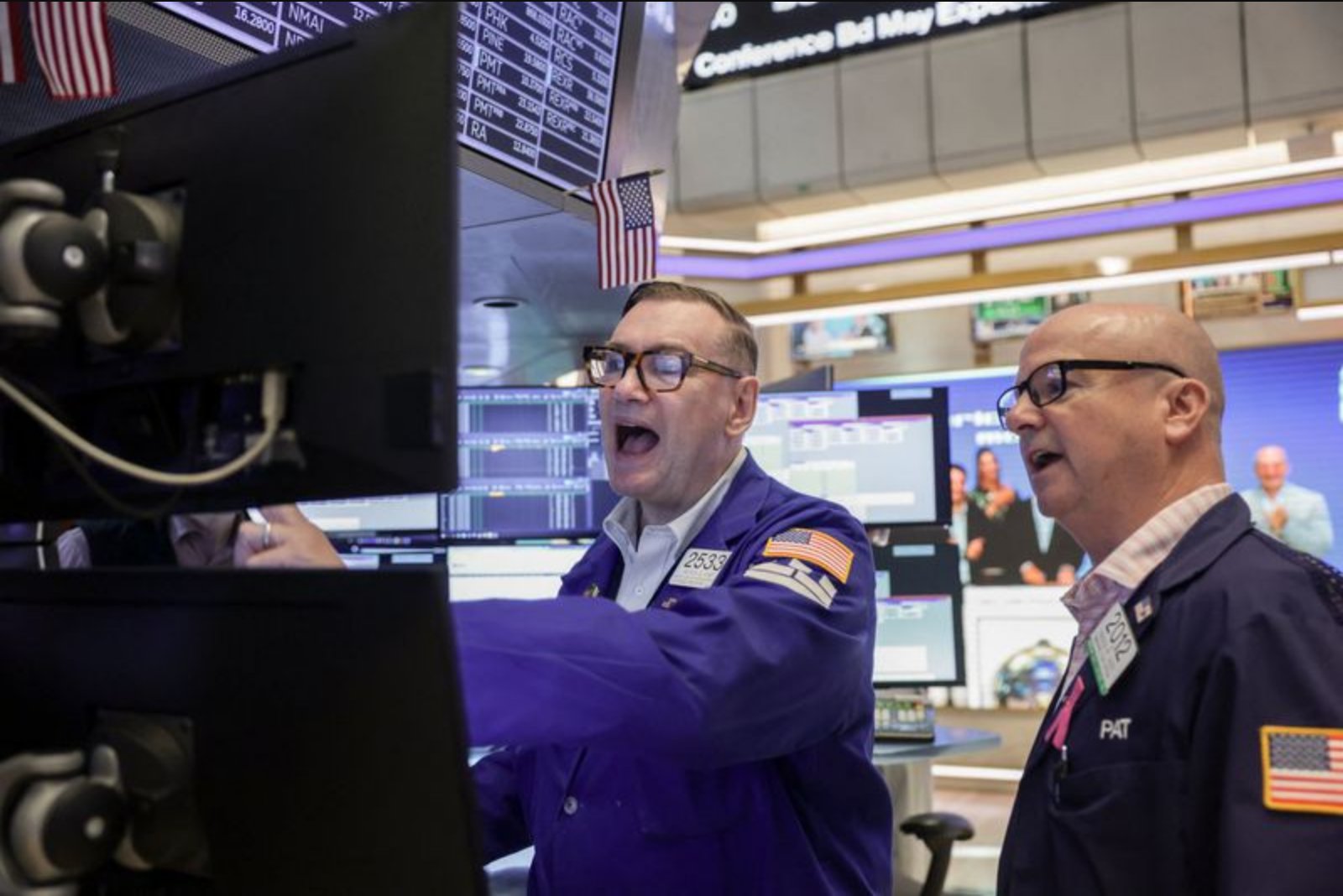
On Wednesday, global equity markets demonstrated resilience, with several indices reaching new heights despite a backdrop of geopolitical tension and upcoming economic milestones. While the S&P 500, the U.S. dollar, and Treasury securities remained largely stable, the broader market landscape was shaped by conflicting reports regarding diplomatic progress in the Middle East and growing anticipation for U.S. inflation metrics scheduled for release on Thursday.
Market Performance Overview
The performance across global exchanges was varied. In Asia, South Korean markets saw a significant surge, rising 3% to achieve new highs, whereas Chinese markets experienced a decline of 1%. European markets remained largely flat, with the UK seeing a marginal increase of 0.1%. Wall Street exhibited mixed results: the Dow Jones Industrial Average and the Russell 2000 both recorded new record highs, but the S&P 500 and the Nasdaq stayed essentially unchanged.
Within the S&P 500, sector performance was split, with five sectors gaining ground while six sectors declined. Notably, the consumer discretionary sector rose by 1.9%, whereas the energy sector fell by 1.5%. Specific stock movements included a significant jump for United Airlines of 6% and a 3% rise for Procter & Gamble. Conversely, Zscaler saw a sharp decline of 31%, Qualcomm dropped 9%, and JPMorgan Chase fell by 2.4%.
In the foreign exchange markets, the Dollar Index remained flat. The New Zealand dollar emerged as the most significant mover among G10 currencies, gaining 1%. Meanwhile, the Japanese yen reached a four-week low, placing it back within a zone where market intervention might be considered. In commodities, oil prices fell by 4%, and gold prices dipped to a two-month low.
Geopolitical Volatility: The Middle East Factor
A significant driver of market sentiment on Wednesday was the conflicting information surrounding a potential peace agreement between the United States and Iran. Market dynamics often react sharply to such news; typically, suggestions of a deal lead to rallies in stocks and a decline in oil prices, while denials can reverse those trends. On Wednesday, Iranian state television reported an unofficial memorandum of understanding that suggested a framework for a deal could see the Strait of Hormuz reopened within one month.
However, the White House characterized these reports as a "complete fabrication." Despite this official rejection, market behavior appeared to lean toward optimism regarding a potential resolution. Oil prices fell below the $100 mark, and equities maintained their record-high positions, suggesting that investors may be pricing in the possibility of a diplomatic breakthrough despite the contradictory statements.
Economic Indicators: The PCE Inflation Milestone
Investors are closely watching for the release of April's U.S. Personal Consumption Expenditures (PCE) inflation data on Thursday. This report carries significant weight as it represents the first major inflation update during the era of Kevin Warsh at the Federal Reserve. Economists have provided specific forecasts for this data:
- Headline annual PCE is expected to rise to 3.8%, aligning with headline Consumer Price Index (CPI) figures.
- Core annual PCE is projected to increase to 3.3%, which would be notably higher than the current core CPI rate of 2.8%.
While hopes for a resolution to conflict in the Middle East have helped drive down bond yields, oil prices, and expectations regarding Federal Reserve actions, uncertainty remains high. Traders are currently maintaining a 50-50 probability that a rate hike will occur before the end of the year. The outcome of this PCE release is expected to be highly consequential for both the Federal Reserve and broader market direction.
Global Monetary Policy Trends
Central banks worldwide are navigating difficult economic terrain. In New Zealand, the Reserve Bank kept interest rates unchanged on Wednesday, yet the split nature of the decision suggests that rate hikes may be approaching. This follows a pattern of tightening seen in Australia and Norway, alongside hawkish signals from European Central Bank officials and a shift in tone from the U.S. Federal Reserve.
Emerging markets have also shown significant movement. Sri Lanka implemented a 100 bps rate hike this week, which surprised market participants. In Brazil, the path toward easing monetary policy has been complicated by persistent inflation figures. The ability of central bankers to manage these domestic pressures is increasingly tied to global stability, particularly regarding the potential for conflict in the Middle East.
Key Economic Watchlist
As the market prepares for the next session, several high-impact events and data releases are scheduled that could influence volatility across various sectors:
- Geopolitical: Continued developments in the Middle East.
- Monetary Policy & Central Bank Speakers: The South Korean interest rate decision; a speech by Bank of Japan Deputy Governor Ryozo Himino; scheduled appearances by ECB President Christine Lagarde, board member Isabel Schnabel, and chief economist Philip Lane; remarks from Bank of Canada Governor Tiff Macklem; and speeches by U.S. Federal Reserve officials Vice Chair Philip Jefferson and Richmond Fed President Thomas Barkin.
- Economic Data: Euro zone consumer and business confidence for May; Canada's Q1 current account; U.S. weekly jobless claims; April U.S. PCE inflation; April U.S. durable goods; and the second estimate of U.S. Q1 GDP.
- Treasury Activity: A U.S. Treasury auction of $44 billion in 7-year notes.