
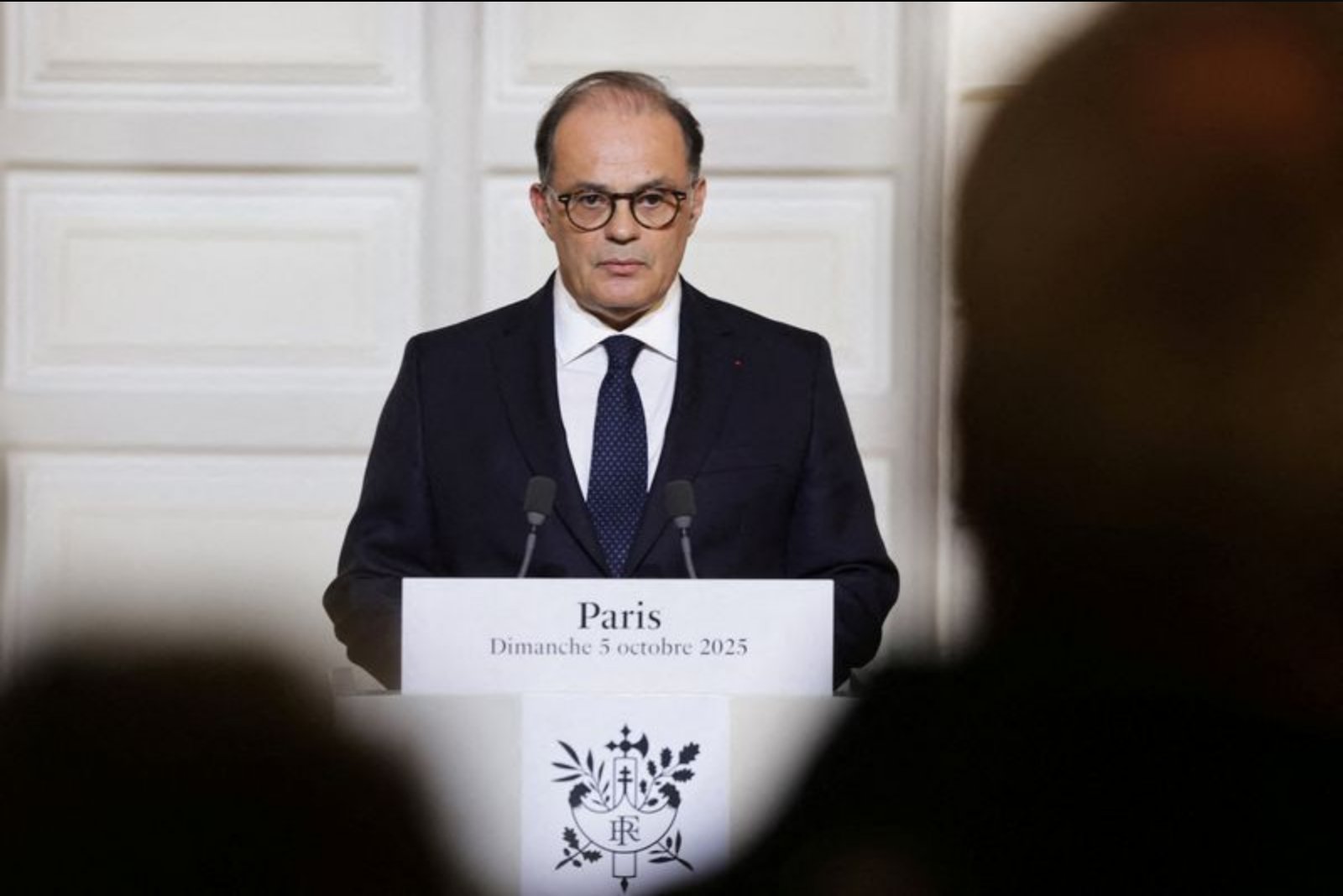
Paris, May 20 - Emmanuel Moulin, President Emmanuel Macron's choice to head the Bank of France and a former chief of staff, told lawmakers on Wednesday that he is confident he would lead the central bank without outside influence as Parliament prepares a narrowly balanced confirmation vote.
Opposition parties have accused the president of nominating allies who could retain influence after he leaves office following a presidential election next April, which opponents say gives the far right a chance of winning. Those concerns have sharpened scrutiny of Moulin's ties to Macron despite his experience in finance.
Moulin, who has worked as a banker and held senior roles at the finance ministry, is viewed as an experienced policymaker with relevant professional credentials. Nevertheless, his connection to the president has left his confirmation uncertain. Members of the finance committees in both houses of Parliament could block his appointment if three-fifths of them vote against him.
The procedure combines the votes from both houses; Moulin will be confirmed provided the total number of negative votes does not exceed 60% of the combined vote. That arithmetic makes the outcome a close-run affair, with opponents on committee panels able to determine his fate.
Addressing the French Senate's finance committee, Moulin sought to reassure lawmakers about his commitment to institutional independence. "I am convinced that I can run in an independent manner an institution proud of its history and looking to the future, in the service of a trusted currency and of a strong and stable economy," he said.
If appointed governor of the 226-year-old Bank of France, Moulin would take a seat on the European Central Bank's rate-setting governing council and would also be responsible for oversight and regulation of French banks.
On questions about monetary policy, Moulin said he could not state in advance how he would vote at the ECB's upcoming June meeting because that decision would depend on economic data released in the run-up to the meeting. He noted the period is particularly unsettled, with volatility in energy markets adding to uncertainty.
Moulin pointed to several indicators that would shape his approach at the June session. First, he said any signs of inflation expectations becoming unanchored would be central to policymakers' deliberations. Second, he emphasized the need to monitor underlying inflation, which excludes volatile components like energy and food. Third, he highlighted wage trends as a key input to assess whether recent pressures were persistent.
Regarding the economic effects of the conflict in the Middle East, Moulin said policymakers should distinguish between shocks that are persistent and large-scale and those that are temporary. "If the shock is persistent and large-scale, we will clearly need to react," he told senators. "If it is large-scale but not persistent, perhaps moderate action will be necessary if the shock is merely transitory."
The confirmation vote in Parliament thus carries implications not only for leadership at the Bank of France but also for France's voice at the ECB and for domestic bank regulation, at a time when inflation dynamics, wage developments and energy market volatility are weighing on central bank decision-making.