
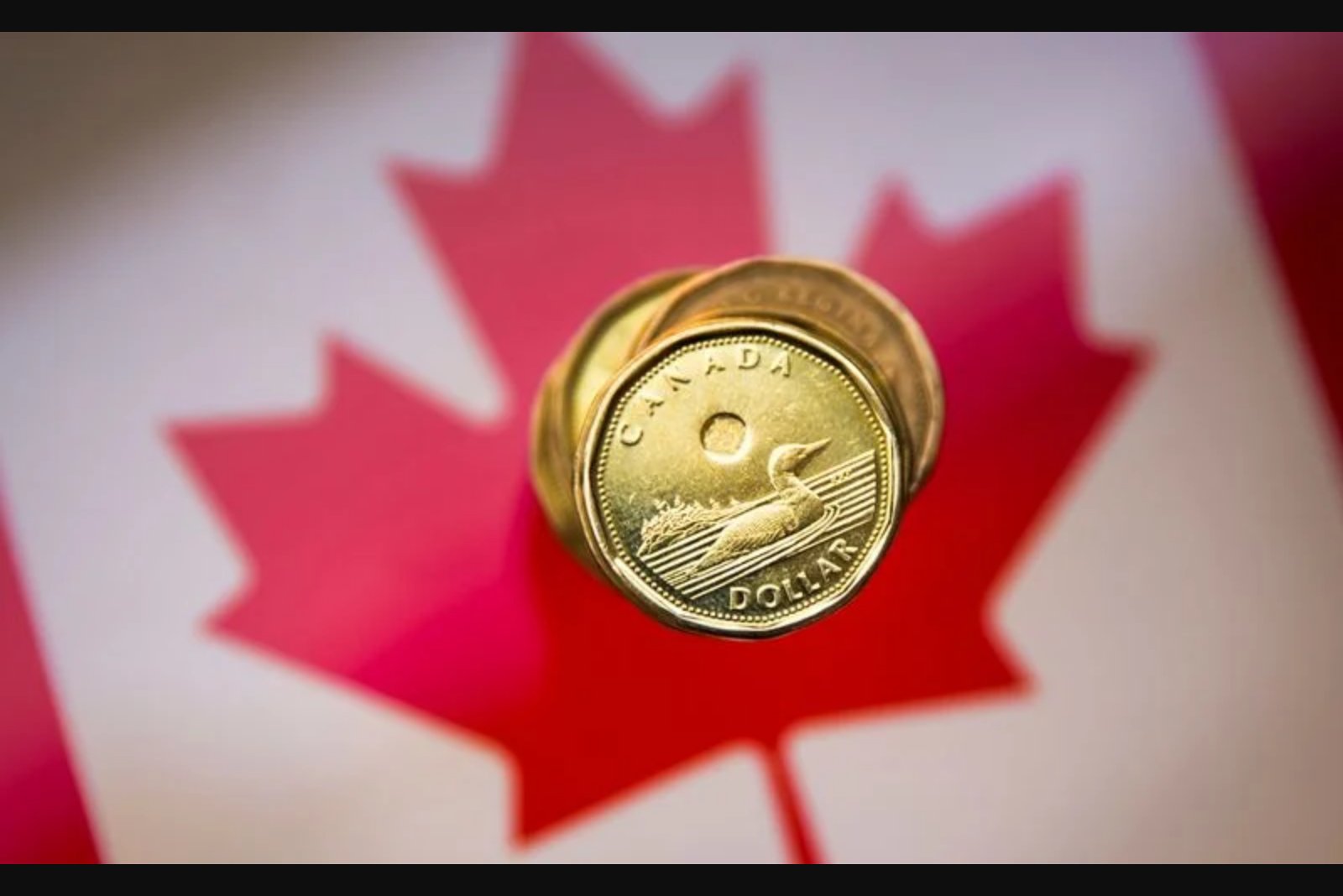
A poll of 31 foreign exchange analysts taken between May 29 and June 3 found a median forecast that the Canadian dollar will gain against the U.S. dollar over the coming year, provided the domestic economy recovers and progress is made in the review of the North American trade agreement.
For the three-month horizon, the median response anticipated the Canadian dollar to strengthen 1.4% to 1.37 per U.S. dollar, equivalent to 72.99 U.S. cents. That short-term forecast is slightly weaker than the 1.3667 projection recorded in the previous month's survey. Looking out 12 months, the poll placed the loonie at 1.3400 per U.S. dollar, a 3.7% appreciation from current levels and marginally firmer than the prior 1.3433 forecast.
Officials involved in the trade review signaled some progress. Dominic LeBlanc, the minister responsible for Canada-U.S. trade, said a meeting in Washington produced positive results in the review of the United States-Mexico-Canada Agreement. The trade pact has, in the past, shielded most of Canada’s exports from U.S. tariffs.
Market strategists flagged the USMCA talks as a key conditional factor for a durable loonie rally. "The Canadian dollar needs to see progress and eventually resolution of the USMCA talks before it can strengthen durably," said Benjamin Reitzes, Canadian rates and macro strategist at BMO Capital Markets. He added that the currency faces headwinds until talks advance, noting that the economy is under pressure from uncertainty and that headlines related to U.S.-Iran tensions can move market sentiment sharply.
Global risk considerations also weigh on the outlook. The Organisation for Economic Co-operation and Development warned that the overall global economic projection hinges on the duration of the conflict in the Middle East, underscoring the sensitivity of markets to geopolitical developments.
Domestically, data released on Friday showed the Canadian economy unexpectedly slipped into a technical recession in the first quarter, a development that has reduced expectations for Bank of Canada interest rate hikes this year. That shift comes even as some United States Federal Reserve policymakers have signalled a firmer stance. Over the past month the Canadian two-year sovereign yield has declined roughly 35 basis points further below its U.S. equivalent, leaving a spread near 125 basis points.
Despite the recent contraction, several analysts do not expect the downturn to persist. Mirza Baig, a foreign exchange strategist at Desjardins, said he expects the Canadian economy to stabilize in the second half of this year and to accelerate next year, with the recovery led by a stabilization in the real estate sector, an improving investment climate and supportive fiscal policy.
Policy priorities have been outlined with an eye to reducing economic dependence on the United States. Prime Minister Mark Carney has said he would focus on lowering the cost of living, addressing the housing shortage and advancing major infrastructure projects as part of a strategy to strengthen the domestic economy.
Contextual note: The poll results and official comments frame a conditional path for the Canadian dollar: modest appreciation is possible if trade negotiations progress and domestic activity improves, while geopolitical risks and recent economic weakness leave room for volatility.