
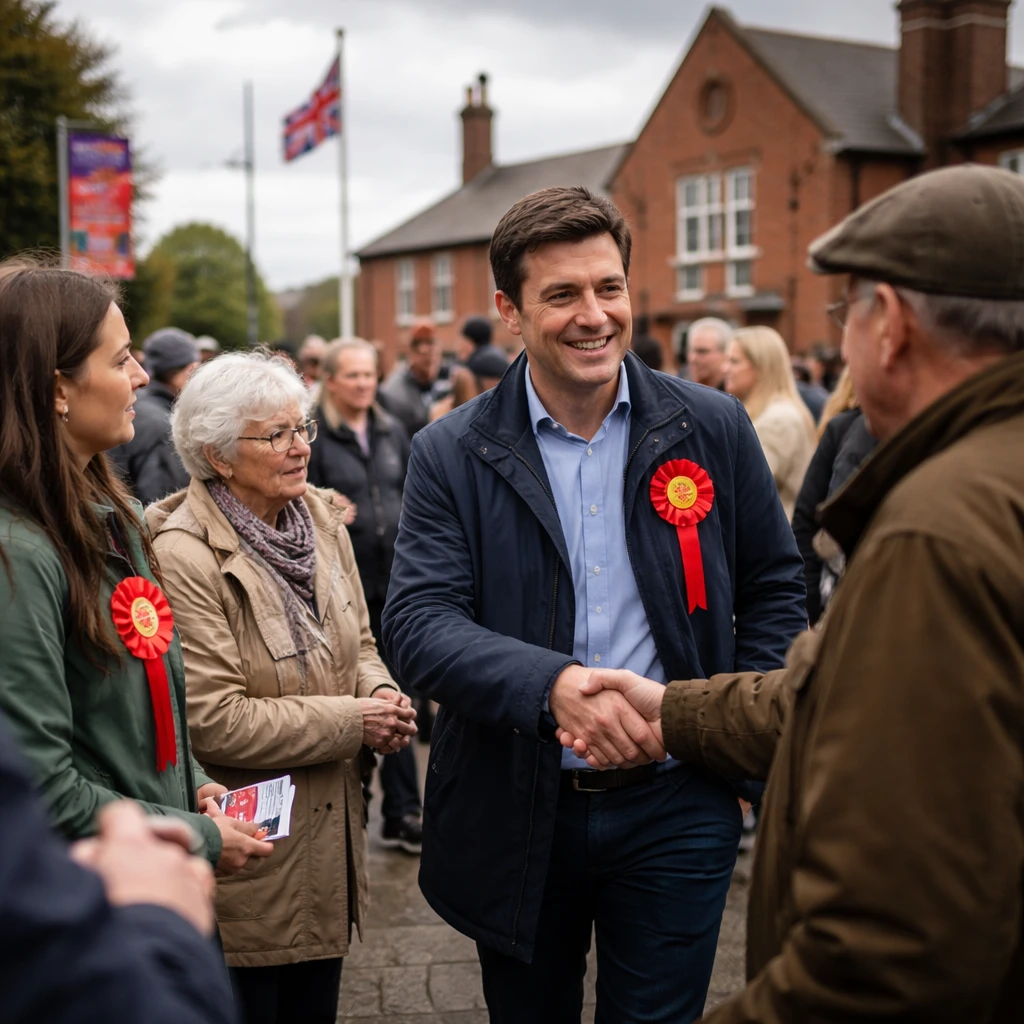
Political uncertainty in Westminster has increased following a development that could pave the way for a Labour leadership contest. The party's National Executive Committee has approved Andy Burnham as a candidate for the Makerfield by-election scheduled on June 18, creating the prospect of his return to Parliament and a challenge to the current leadership.
Burnham, who is presently outside the House of Commons, is seen as a potential "soft left" contender. UBS economist Maelle Quillevere has noted that his re-entry to Parliament could precipitate a leadership contest. Expected figures in any contest include centrist Wes Streeting, outsider Al Carns, and left-leaning figures such as Angela Rayner or Ed Miliband.
The contest is not a foregone conclusion for Burnham. Makerfield has shown strong support for Reform UK in recent local elections, making a Labour victory uncertain. That electoral backdrop has influenced how candidates are positioning themselves on reopened debates, most notably on Britain's relationship with the European Union.
Brexit has re-emerged as a focal point of the campaign. Wes Streeting has described Brexit as a "catastrophic mistake" and has argued that Britain should ultimately seek to rejoin the EU. Burnham has a history of saying he would like the UK back in the EU within his lifetime, but while campaigning in a constituency that voted heavily to Leave he has moderated his public remarks, stating he is "not advocating" rejoining in the near term and reiterating that the 2016 referendum result must be respected.
Public sentiment appears to have shifted. Polling referenced by campaign commentators indicates a majority of Britons would now support rejoining the EU, and an even larger share favor closer alignment with the bloc without full membership. That latter preference is consistent with current government policy.
Despite the renewed debate, differences in policy between the main Labour contenders remain limited. Neither Streeting nor Burnham are campaigning on an immediate programme to re-enter the EU, and Labour's broader stance emphasizes improving ties and deepening cooperation with the EU rather than committing to rejoin the single market or customs union.
Practical barriers to rejoining are substantial. Returning to the EU would require unanimity among member states and lengthy negotiations across numerous policy areas. Any process of readmission would likely take years and could involve less favorable terms than those previously enjoyed, with potential loss of prior opt-outs and requirements for deeper integration.
From a market perspective, UBS has assessed that the resurfacing of Brexit rhetoric is unlikely to materially alter the outlook for the UK economy or its assets. Instead, UBS highlights that near-term volatility in markets and economic performance is more likely to be shaped by the domestic fiscal trajectory and by external developments such as tensions in the Middle East.
What this means going forward: The Makerfield by-election and any subsequent leadership contest will keep questions about the UK's European relationship in political discourse. While rhetoric may intensify, substantive policy change toward rejoining the EU appears constrained by political, legal, and diplomatic hurdles, and market reactions will be guided more by fiscal policy and external geopolitical events than by campaign statements alone.