
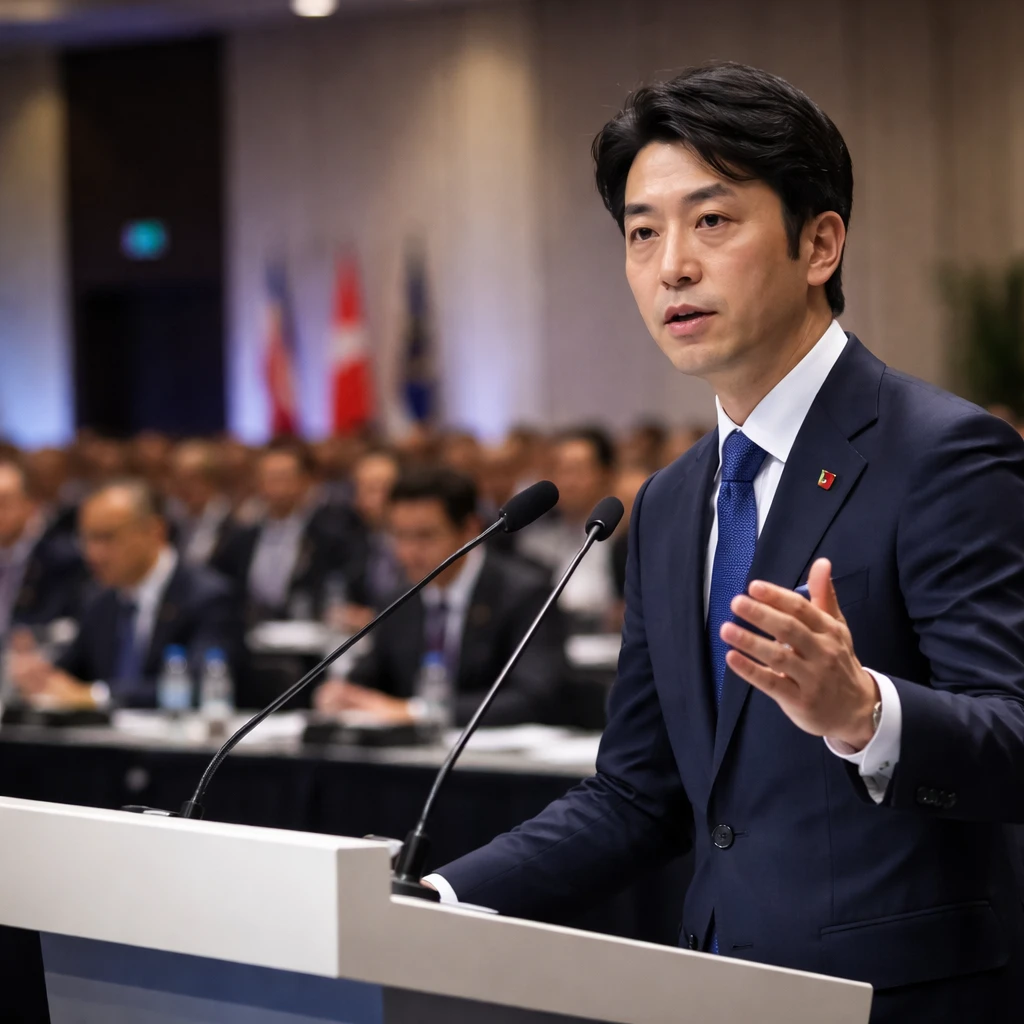
Japan issued a forceful rebuttal to accusations from Beijing that Tokyo is embracing a so-called "new militarism," with Defense Minister Shinjiro Koizumi dismissing that characterization during a speech at the Shangri-La Dialogue security forum in Singapore.
Koizumi questioned the logic of the criticism, pointing out that Japan does not possess nuclear weapons or strategic bombers. "Isn’t it strange that China, who has a huge arsenal of nuclear weapons and strategic bombers, calls out Japan, who has neither of such weapons, for so-called 'new militarism,'" he said.
The defense minister’s remarks represent one of Japan’s most direct public responses to recent statements from Beijing about Tokyo’s defense policy.
Context and specific points of contention
China has intensified its warnings about Japan’s military choices in recent months. That escalation in rhetoric has coincided with a number of policy moves and activities by Japan: the government led by Prime Minister Sanae Takaichi has eased restrictions on weapons exports, Tokyo has taken part in U.S.-led military exercises in the South China Sea, and officials have publicly discussed security risks connected to Taiwan. Beijing has criticized those actions and drawn parallels between Japan’s modern military developments and its wartime past; Koizumi rejected that comparison.
He argued Japan’s defense build-up is intended to deter conflict rather than provoke it, and emphasized that the country’s actions have been transparent. Koizumi also expressed concern about what he described as China’s rising assertiveness in the region and warned about the "weaponization of everything" across the Indo-Pacific.
"We seek a region that can stand against coercion. We seek a region that is not misled by falsehoods. We seek a region that is not influenced by pressure," Koizumi said, reiterating the themes of deterrence, transparency, and resistance to coercion that underpinned his speech.
Alliances and regional cooperation
Koizumi’s comments came as U.S. allies in the Indo-Pacific continue to broaden security cooperation amid growing tensions. Despite uncertainty over President Donald Trump’s "America First" stance, the United States has maintained military engagement with partners such as Japan, South Korea, Australia, and the Philippines. Those countries have expanded defense cooperation and joint military activities in recent years as concerns over regional security have risen.
Within that context, Koizumi said Japan plans to keep strengthening ties with regional partners and indicated he looks forward to further discussions with his Chinese counterpart. Notably, China’s defense minister did not attend this year’s Shangri-La Dialogue forum in Singapore.
What this means going forward
The exchange underscores the heightened sensitivity around defense postures in the Indo-Pacific and the uphill task of managing strategic competition while preserving channels for dialogue. Japan’s public rebuttal signals a willingness to defend its policy choices in international fora while pointing to broader alignments among regional security partners.