
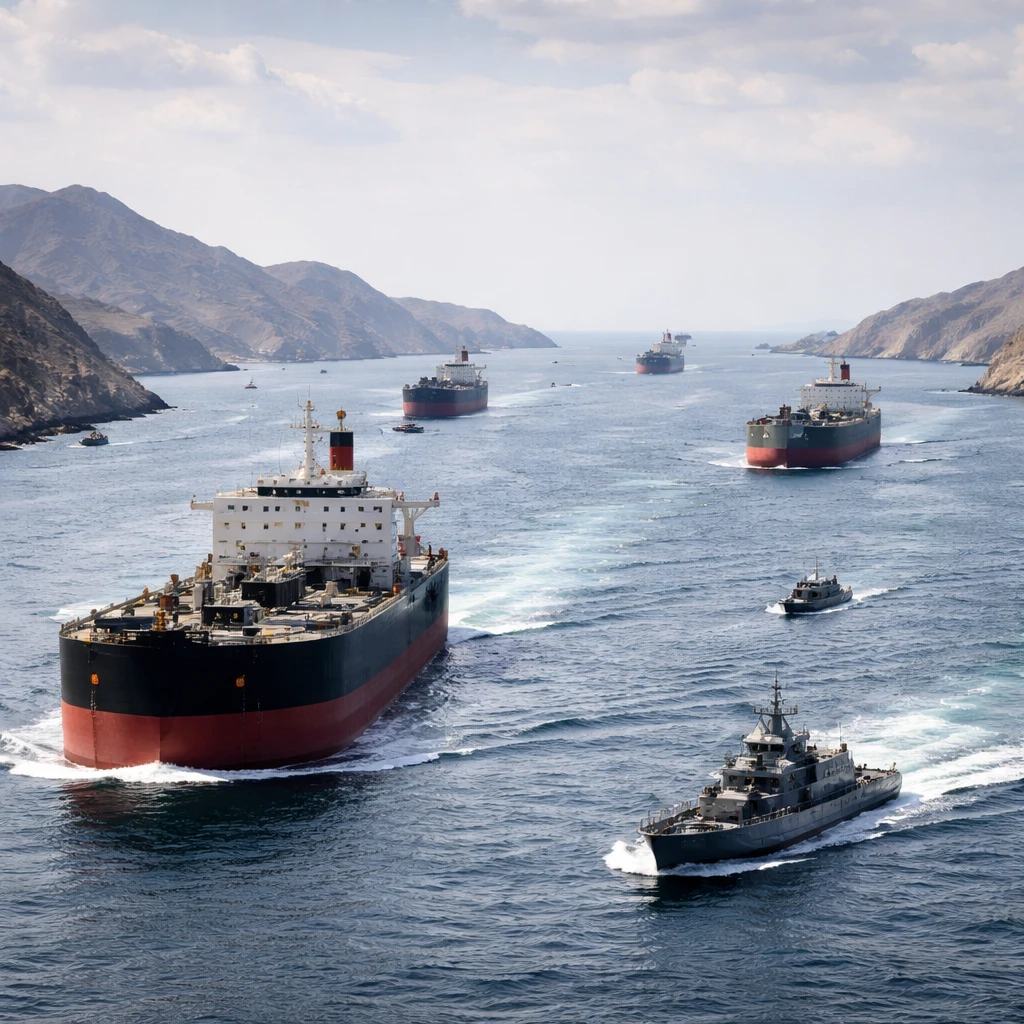
Iran is engaged in discussions with Oman about creating a standing toll mechanism for vessels traversing the Strait of Hormuz, Iran's ambassador to France, Mohammad Amin-Nejad, said. The proposed arrangement would require ships that use the strait to pay fees intended to defray expenses linked to navigation management and the provision of security services.
In remarks delivered in a Bloomberg interview, Amin-Nejad argued that states and entities that profit from maritime traffic through the strait should help shoulder the costs associated with keeping the waterway operational and safe. He said Iran and Oman must mobilize resources to provide security, manage navigation, prevent pollution, and establish order to reduce disruptions to global trade.
"This will entail costs, and it goes without saying that those who wish to benefit from this traffic must also pay their share," Amin-Nejad said. He stressed that Iran does not currently operate a payment or toll system for the strait.
The ambassador noted the geographic and security rationale Iran offers for the proposal, stating that the Strait of Hormuz lies in Iranian territorial waters and that Iran possesses the longest coastline in both the Persian Gulf and the Sea of Oman. For that reason, he said, Iran bears responsibility for regional security.
Amin-Nejad described the potential charges as intended to be clear, transparent, reasonable, and logical, and said the plan would be consistent with Iran's international commitments. He also highlighted that Iran is not a signatory to the 1982 Montego Bay Convention on the Law of the Sea.
On operational conditions in the waterway, the ambassador pointed to a decline in maritime traffic following recent military actions. He said many vessels have halted operations because of sharply higher insurance costs, though he added that transit through the strait has not ceased entirely.
There has been no public response from Oman on the proposal as of the ambassador's comments.
Contextual note - The proposal as described by Amin-Nejad focuses on funding navigation management, security provision and pollution prevention through fees charged to vessels that benefit from passage. Details on implementation, specific fee levels, and the legal or administrative framework were not provided in the ambassador's remarks.