
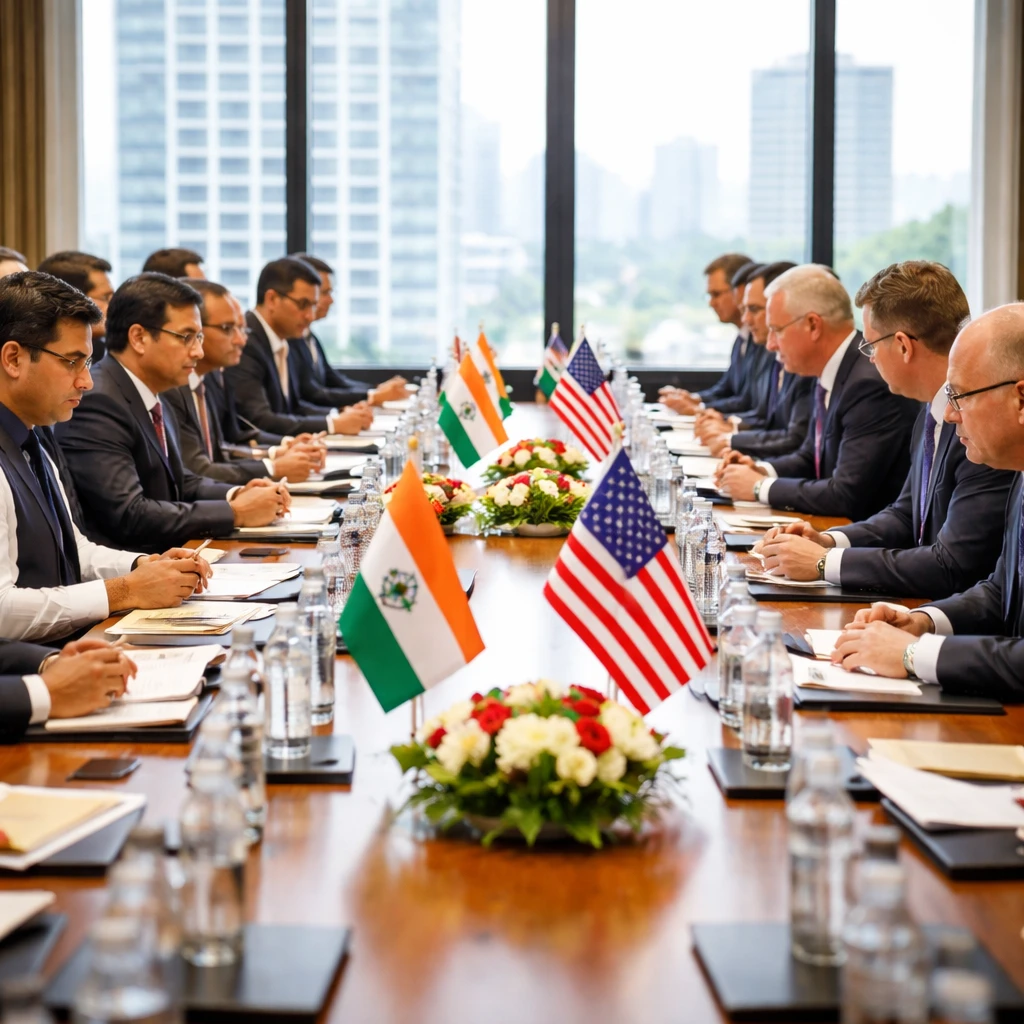
India and the United States are aiming to finalize an interim trade agreement by the middle of July, Commerce and Industry Minister Piyush Goyal said Friday, as Washington moves to impose fresh tariffs on imports from several major trading partners.
Speaking to reporters in Visakhapatnam, Goyal said the two countries should be ready to put into effect "a very vibrant first tranche" by mid-July. He added that the arrangement would give India preferential access relative to competing countries.
The minister's remarks came after a U.S. trade delegation, led by chief negotiator Brendan Lynch, spent June 1-4 in New Delhi to advance negotiations and work through the remaining details of an interim pact.
U.S. President Donald Trump also told reporters in the Oval Office that Washington and New Delhi would reach a long-awaited trade agreement after negotiators completed discussions this week, according to statements released following those comments.
At the same time, the Office of the U.S. Trade Representative has proposed tariffs of at least 10% on imports from 60 trading partners as the outcome of a Section 301 investigation into goods alleged to be produced using forced labor. For products originating in countries that include China, India, Japan, South Korea, and Brazil, the proposal specifies a 12.5% levy.
The Trump administration described the tariff proposal as its biggest move to revive a protectionist trade agenda after reciprocal levies were struck down by the U.S. Supreme Court. India has said it is engaged with Washington on the Section 301 probes.
Goyal told reporters that negotiators are working swiftly to resolve remaining issues, and he noted that a higher-level delegation from the United States is expected to visit India toward the end of this month to continue discussions.
With both the interim agreement talks and the U.S. tariff proposals unfolding concurrently, trade relations and market access remain active areas of engagement between New Delhi and Washington. Officials on both sides are reported to be moving quickly to complete outstanding elements of the interim deal while also addressing the implications of the Section 301 proposals.
Summary of immediate developments:
- India and the U.S. target mid-July for execution of an interim trade tranche, according to Commerce and Industry Minister Piyush Goyal.
- A U.S. trade delegation led by Brendan Lynch visited New Delhi from June 1-4 to advance negotiations.
- The Office of the U.S. Trade Representative has proposed tariffs on imports from 60 trading partners after a Section 301 investigation into forced labor, including a 12.5% proposed levy for several major economies.