
Economy May 22, 2026 06:25 AM

Germany to Allocate Over 4% of GDP to Defense, Seeks Path Toward 5% Target

Foreign minister outlines plans to deepen industrial ties with Ukraine and coordinate allied support as Berlin weighs broader security commitments

By Ajmal Hussain

Germany plans to spend more than 4% of its gross domestic product on defense this year and is aiming toward a 5% ceiling. Foreign Minister Johann Wadephul said Berlin will propose closer defense-industrial cooperation with Ukraine to accelerate production and called on European NATO partners and Canada to help fund Ukraine's needs. He also addressed potential involvement in securing the Strait of Hormuz and commented on U.S. troop movements and missile deployment plans in Europe.

Germany to Allocate Over 4% of GDP to Defense, Seeks Path Toward 5% Target

Key Points

  • Germany will spend more than 4% of GDP on defense this year and is moving toward a 5% target, increasing domestic military outlays.
  • Berlin will propose intensified defense-industrial cooperation with Ukraine to speed up production, asking European NATO allies and Canada to help fund Ukraine’s upcoming needs - relevant to defense manufacturers and government procurement markets.
  • Germany is preparing to join a British-led effort to secure the Strait of Hormuz, while coordinating with the United States on troop movements and urging the U.S. to proceed with planned deployment of long-range missiles to Germany - implications for military logistics and allied defense planning.

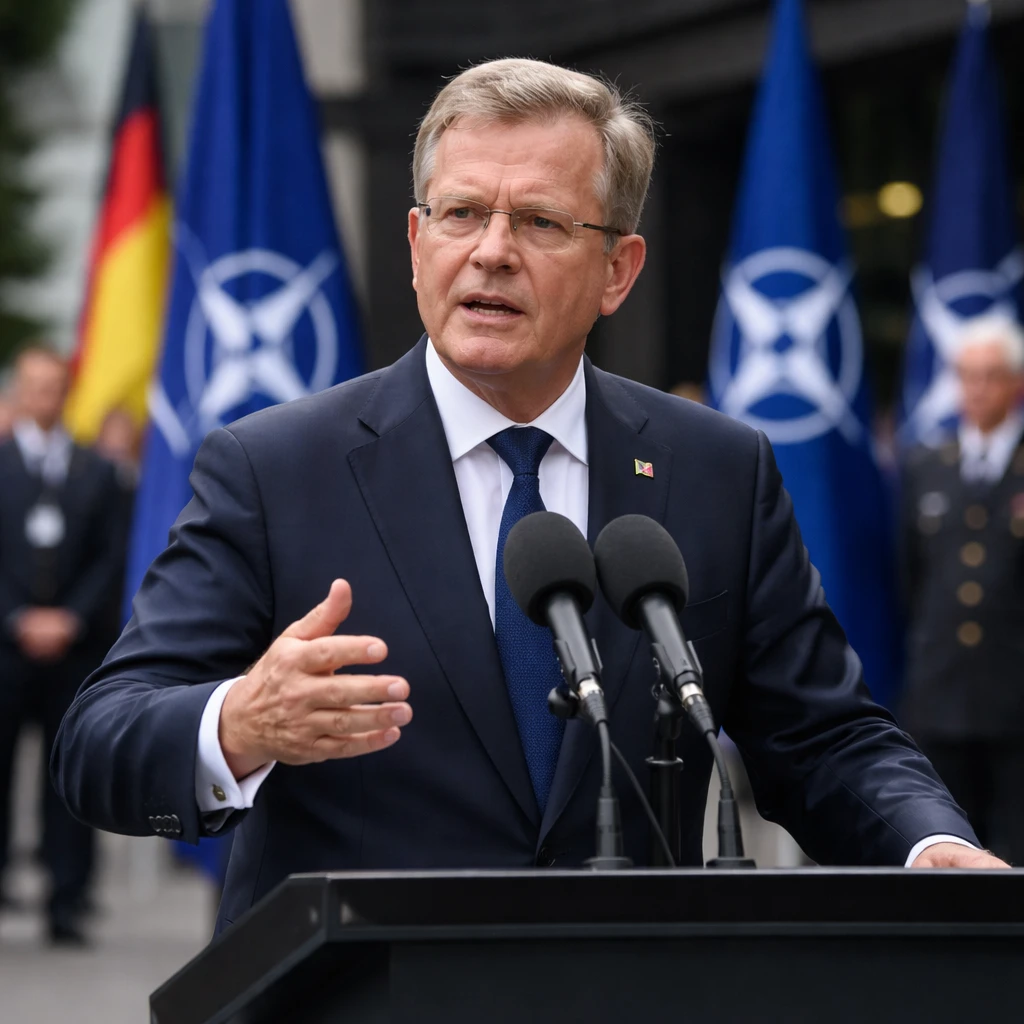
Germany will devote in excess of 4% of its gross domestic product to defense spending this year and is progressing toward a 5% target, Foreign Minister Johann Wadephul said Friday.

Speaking ahead of a NATO meeting in Helsingborg, Sweden, Wadephul said the government intends to propose a stronger industrial partnership with Ukraine aimed at increasing the pace of defense production.

"We suggest to intensify cooperation with Ukraine," Wadephul said. He added that Germany wants to "continuously satisfy the upcoming needs of Ukraine with funding from European NATO allies and Canada."

Wadephul argued that linking Europe’s defense industry with Ukraine’s manufacturing base is necessary to accelerate output. He stressed that negotiations should be approached from a position of strength.

"It is time to be ready for negotiations but we must enter them from a position of strength," Wadephul said.

On wider security contributions, Wadephul said Germany is preparing to take part in efforts to secure the Strait of Hormuz under British leadership, while noting he does not view the initiative as a formal NATO mission.

Regarding the redeployment of U.S. forces, Wadephul said it has long been apparent that the United States will move troops and that Washington has been coordinating burden sharing with Germany.

"All our conversations with the United States point to the fact that the United States will coordinate burden shifting with us," he said.

Wadephul welcomed the U.S. decision to send an additional 5,000 troops to Poland, and he said Germany has invited the United States to adhere to its original plan to station long-range missiles in Germany.

The minister’s comments outline a strategy combining higher national defense spending with closer international industrial coordination and allied burden sharing. They signal Berlin’s intent to both boost domestic military expenditure and to seek collaborative mechanisms to ensure quicker production and sustained logistical support for Ukraine’s needs.

Risks

  • Uncertainty about the formal scope of any mission to secure the Strait of Hormuz, since Wadephul said he does not see it as a NATO mission - this affects planning for participating forces and defense contractors.
  • Dependence on coordinated funding from European NATO allies and Canada to meet Ukraine’s needs introduces potential funding and supply-chain uncertainty for defense producers.
  • Shifts in U.S. troop deployments and reliance on Washington to coordinate burden sharing may create timing and operational uncertainties for allied defense planning.

More from Economy

Australian house price momentum to slow to four-year low as borrowing costs bite Jun 4, 2026 Kevin O’Leary Scales Back Utah Data Center Plan Amid Lawmaker Concerns Jun 4, 2026 Fed's Daly Says AI Could Exert Downward Pressure on Prices Over Several Years Jun 4, 2026 Putin Says Moscow Willing to Make Concessions if Kyiv Reciprocates Jun 4, 2026 Putin Says Moscow and Beijing Near New Energy Deals, Offers Few Details Jun 4, 2026