
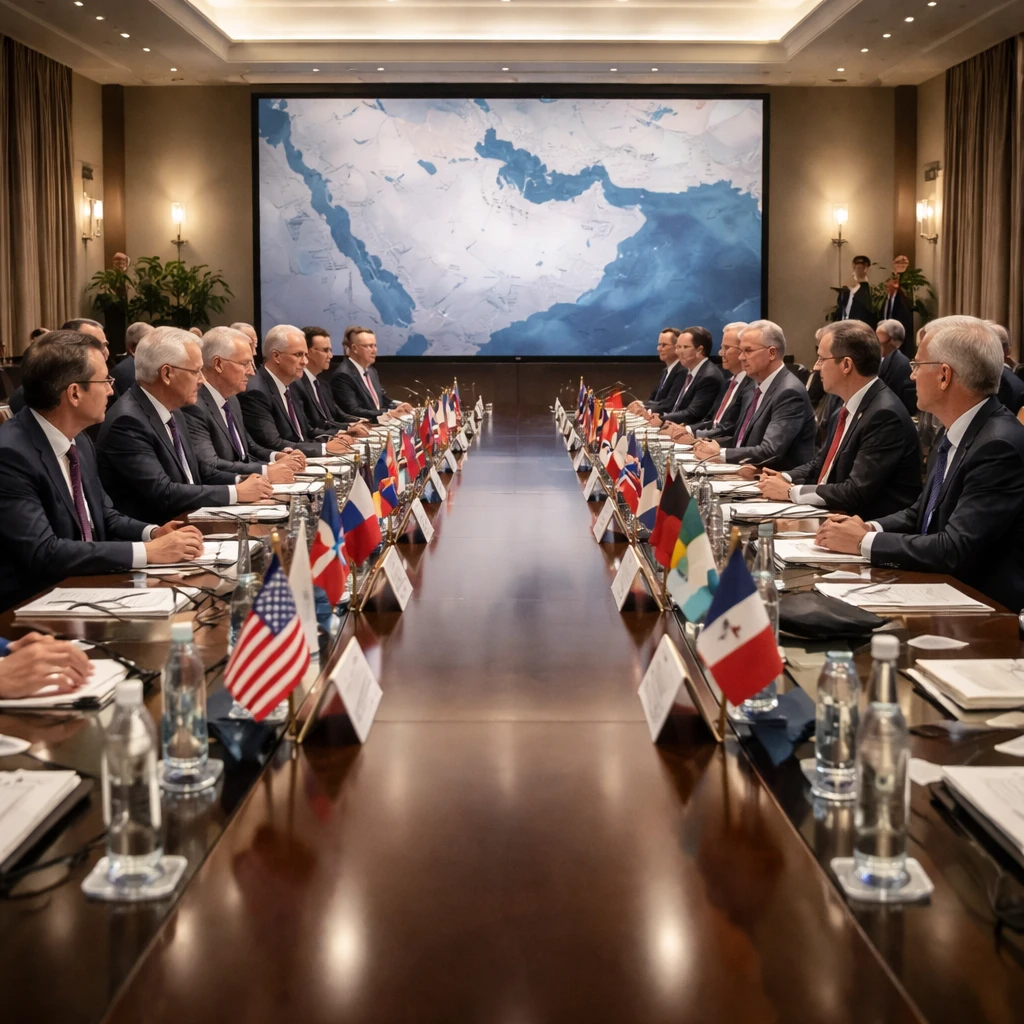
Finance ministers from the Group of Seven convened for what they described as a productive and candid discussion of the global economic and financial outlook, issuing a joint statement that emphasized both immediate and structural risks to the world economy.
The ministers - representing Canada, France, Germany, Italy, Japan, the United Kingdom and the United States - singled out the ongoing conflict in the Middle East as a driver of heightened uncertainty. In their joint statement they said this uncertainty has elevated risks to economic growth and inflation and underlined the imperative to reopen the Strait of Hormuz.
Alongside the call to restore passage through the waterway, the ministers committed to closely monitor developments and their effects on global growth and financial market conditions. They reiterated a shared commitment to multilateral cooperation in addressing threats to the global economy and stressed their support for stable energy markets.
The statement also included a direct appeal to countries to avoid arbitrary export restrictions. Ministers warned that such measures could compound disruptions and hamper efforts to keep markets functioning.
Turning to global trade imbalances, the G7 finance chiefs urged nations running large and persistent external deficits to pursue policies aimed at strengthening domestic savings and undertaking fiscal consolidation. The communiqué welcomed coordinated action to tackle global current account imbalances and noted that significant and persistent imbalances have the potential to intensify trade tensions.
To address these structural concerns, the ministers called for enhanced surveillance of external imbalances through the International Monetary Fund’s bilateral and multilateral frameworks. They further requested that both the IMF and the Organisation for Economic Co-operation and Development bolster their analysis of imbalances.
Finally, the G7 ministers expressed support for coordinated responses by development institutions, welcoming a joint statement from seven multilateral development banks pledging aligned assistance to address fallout from the Middle East conflict. The ministers also reaffirmed their unwavering support for Ukraine.
The communiqué reflects a blend of short-term crisis response - including the push to reopen a key maritime passage - and longer-term economic policy priorities such as fiscal consolidation and stronger international surveillance of external imbalances.