
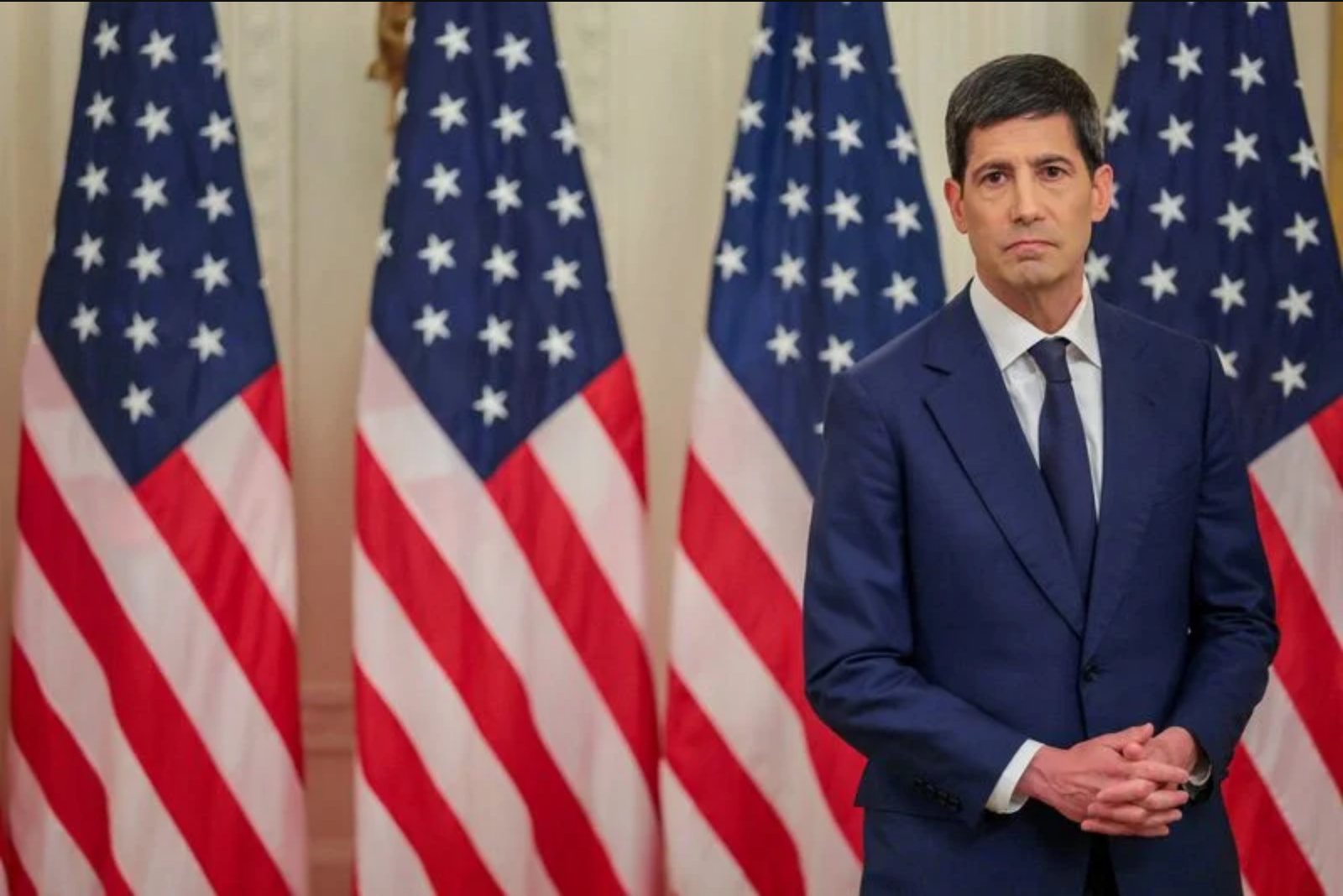
The Federal Reserve is set to hold its benchmark interest rate steady at the conclusion of the first policy meeting chaired by Kevin Warsh, with a new policy statement and updated economic projections expected to underscore growing concern about inflationary pressures tied to the Iran conflict even as crude prices have eased on hopes for a peace agreement.
Recent labor market data showing robust hiring, a 4.3% unemployment rate, and inflation well above the Fed's 2% goal have strengthened the case for the central bank to remove language in the statement referring to "additional adjustments" to the policy rate. That phrase has traditionally signaled the prospect of future rate cuts; many analysts now expect it to be deleted.
Warsh has publicly expressed skepticism about forward guidance on monetary policy, and several Fed officials had already been moving toward dropping what has been called an "easing bias" in the statement in favor of wording that is more neutral and that permits the possibility of additional rate increases if necessary. Market pricing currently assigns a meaningful probability to a quarter-percentage-point rate hike in December.
Michael Feroli, chief U.S. economist at JP Morgan, anticipated a shift toward neutrality ahead of the meeting. "We expect a more neutral bias," he wrote, adding that the committee under Warsh might take a sharp approach to the statement and eliminate guidance on future policy entirely - a change Feroli described metaphorically as taking a "cleaver" to the statement. Whether the wording is quietly softened or excised outright, such adjustments could also bring the three officials who dissented at the April 28-29 meeting back in line, potentially delivering a unanimous vote in Warsh's first policy decision.
The Fed's rate decision, the accompanying policy statement and the updated projections from policymakers are scheduled for release at 2 p.m. EDT (1800 GMT). Warsh, who succeeded Jerome Powell last month, will hold a press conference 30 minutes after the announcement, following the cadence set by his predecessor for now.
In his Senate confirmation hearing, Warsh said he believes Fed officials tend to "talk too much and add too little" to policy discussions. That posture suggests he may reduce the volume of public communications and potentially limit the frequency of his own public appearances. Warsh, 56, was confirmed last month to a four-year term as Fed chair and to a 14-year term on the Board of Governors.
Warsh assumed the top role amid strained relations between the former Fed chair and the White House, which had pressed for larger rate cuts than Powell was willing to deliver. That tension was evident in attempts by the administration to exert greater control over the central bank, including a move to remove a governor and an investigation that has since been dropped. The U.S. Supreme Court is set to rule this month on whether Governor Lisa Cook can retain her seat; while the ruling is expected to favor her, the outcome could have implications for Fed governance going forward. Powell, who attended Cook's Supreme Court hearing, has been widely praised for resisting political pressure on policy decisions. Warsh has not directly commented on the Cook matter or the earlier campaign of pressure against his predecessor.
Although the new chair may begin with a measure of political latitude, the near-term path toward rate reductions looks narrower. The Fed's quarterly projections are anticipated to show that, at the median, officials no longer foresee policy rates falling this year. Instead, the committee is expected to project the federal funds rate to remain in the current 3.50%-3.75% target range, reflecting higher projected inflation and a possible downward revision in the year-end unemployment rate. Some individual policymakers are likely to include a rate increase in their personal projections.
Aside from headline macro metrics, Fed officials will also be watching developments tied to the recent conflict in the Middle East. The apparent end of the U.S.-backed phase of the war with Iran and progress toward reopening the Strait of Hormuz have driven global oil prices down toward levels seen before the flare-up in late February. That shift in energy markets injects a degree of uncertainty into inflation forecasts: central bankers must assess how much inflationary momentum remains from the earlier jump in energy costs and how quickly global commodity shipments through the strategic waterway will normalize.
David Mericle, chief U.S. economist at Goldman Sachs, assessed the current situation in an analysis timed to the Fed meeting. With global crude trading around $80 a barrel and some market participants hopeful that a ceasefire could hold, Mericle concluded that so far the impact on inflation "looks more like the usual pass-through from large oil shocks," and therefore is unlikely to force Warsh to raise rates at this meeting.
Still, Mericle emphasized that rate cuts are unlikely to be imminent. His outlook suggests that the Fed will keep policy on hold until at least mid-next year, if cuts come at all, because headline inflation is forecast to rise above 4% in the months ahead and to stay above 3% through 2026. "A long pause would increase the probability that the FOMC could instead decide that the (federal) funds rate is already in an appropriate place if the economy continues to perform well," he wrote. "We see a flat path as a plausible alternative."
Warsh's first press conference will likely feature broad questions about his policy intentions. During the run-up to his nomination, he criticized the previous Fed leadership on several fronts, including its communication approach, the size of the central bank's holdings of financial assets, and the need for institutional reform. Those themes may resurface as markets and the public seek clarity on how the new chair intends to balance transparency, operational prudence and the Fed's longstanding mandates.
For now, the immediate operational picture is straightforward: an unchanged policy rate, a revised statement likely stripped of explicit easing language, and projections that reflect a higher inflation outlook and the option for further tightening by some officials. How the committee frames that stance - whether with a more neutral bias or with no guidance at all - will shape market expectations heading into the second half of the year.
What to watch
- Release of the Fed's policy statement and updated projections at 2 p.m. EDT (1800 GMT).
- Warsh's press conference 30 minutes after the release for clues on communication strategy and longer-term policy stance.
- Market reaction to any removal of the "additional adjustments" language and the potential elimination of an "easing bias."