
European equities are expected to struggle to extend the rally seen earlier in 2026, according to a Reuters poll of 14 analysts conducted from May 19-26. The median projection places the STOXX 600 at 645 points by year-end - about 2.6% higher than current levels - reflecting market caution driven by conflict-related energy risk and constrained exposure to the most celebrated AI-related stocks.
The poll found the euro zone blue chip index is also forecast to rise only marginally, by a little over 2% by the end of the year. Much of the STOXX 600’s 6.1% gain so far this year was concentrated in the first two months of 2026, before the U.S.-Israel war with Iran started. Subsequent developments tied to that conflict have blunted further upside.
Renewed hopes for a deal to reopen the Strait of Hormuz - a major shipping chokepoint through which about a fifth of the world’s energy supply passes - along with some exposure to the global technology rally, have helped European equities edge back toward prewar highs. Still, poll respondents cautioned that even if the waterway reopens quickly, the earnings outlook for many European companies is already set to take a hit.
Monetary policy adds another layer of uncertainty. The European Central Bank is widely expected to raise interest rates in an effort to prevent a surge in energy costs from feeding into broader inflation. Analysts and investors surveyed in the poll judged European stocks to be comparatively vulnerable to the combined effects of higher energy prices and tighter policy.
"The major topics on a three-month horizon will be the Iran war, monetary policy and the earnings statements for Q2...With respect to all three, we think Europe has some disadvantages compared to other regions like North America or emerging markets," said Jörn Spillmann, head of investment strategy at Zürcher Kantonalbank.
One view captured in the poll noted: "Assuming that the Iran war will not escalate further, we expect the European market to perform positively, but worse than the global benchmark." That assessment points to an outlook where Europe can still post gains but likely lags other markets.
Looking beyond 2026, respondents were more optimistic. The median forecasts put the STOXX 600 at 670 points by mid-2027 and 694 points by the end of 2027 - roughly 6.6% and 10.4% higher than current levels respectively. Michael Field, Morningstar’s chief equity strategist, summarized the tone: "Our outlook for European equities isn’t as rosy as it was at the beginning of the year... That said, many sectors of the economy are muddling through ok, and valuations are relatively supportive, with around 5% upside to European equities."
Across markets, analysts singled out Europe’s relatively small representation among the stocks benefiting from artificial intelligence excitement. While the S&P 500 has risen more than 9% year to date and MSCI’s broad Asia Pacific index excluding Japan has gained about 22%, Europe’s direct exposure to the biggest AI beneficiaries remains limited.
"The overall impact (of AI) for the (European) stock market has mostly manifested in the form of foreign outflows," said Rajat Agarwal, an equity strategist at Societe Generale. European technology shares have rallied almost 20% this year, but they account for only around 10% of the STOXX 600, constraining the index-level benefit from the tech advance.
Within Europe, prospective returns vary by country according to energy market developments and sector composition. The poll’s median view placed Britain’s FTSE 100 at 10,700 points by year-end, a 1.9% gain from current levels. Duncan Toms, a multi-asset strategist at HSBC, suggested the U.K. could be a relative beneficiary if energy prices stay elevated, given the market’s higher exposure to energy and Basic Materials compared with other European equity regions.
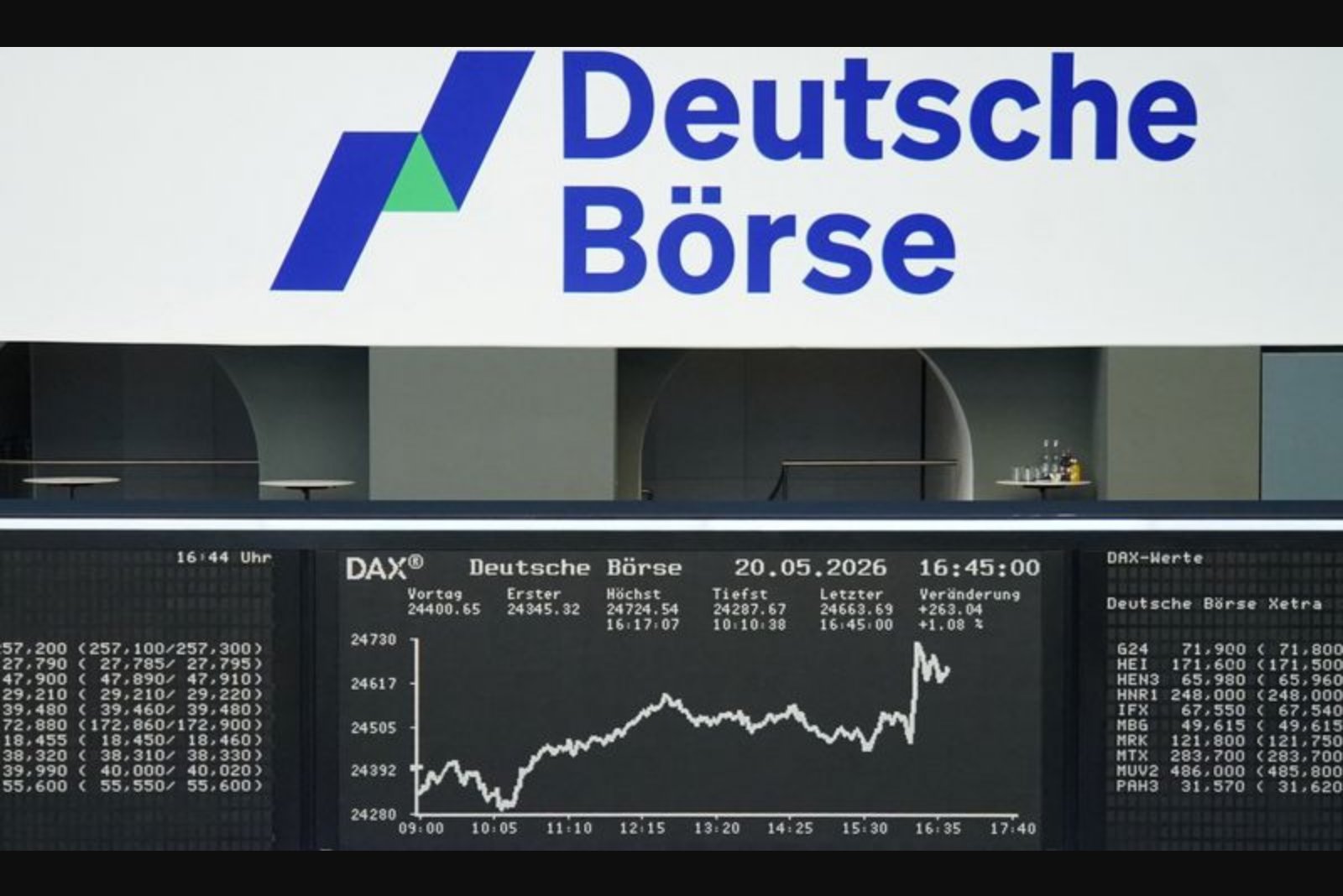
The outlook diverges for Germany. The DAX, with a heavy industrial orientation, is seen as more vulnerable to energy-driven cost pressures. The poll’s median forecast for Germany’s DAX was 25,600 points by year-end, roughly a 1.6% rise from current levels.
Overall, the poll captures a market environment where short-term gains are expected to be limited as geopolitical risk, potential ECB tightening and a narrower domestic participation in the AI rally weigh on performance. Still, medium-term projections show modest further upside as valuations and select sector resilience provide some support.
Summary
- Reuters poll of 14 analysts projects STOXX 600 at 645 points by year-end - a roughly 2.6% gain from current levels.
- Key headwinds are the economic fallout from the Iran war, likely ECB interest rate increases in response to energy-driven inflation, and Europe’s limited exposure to top AI winners.
- Longer-term median targets are 670 points by mid-2027 and 694 by end-2027, implying modest further gains.
Key points
- Market-level forecast: STOXX 600 anticipated to rise modestly to 645 by year-end; euro zone blue chips expected to gain a little over 2%.
- Drivers: Iran war and energy-price risk, ECB monetary tightening, and subdued index exposure to AI-related technology stocks.
- Sectors impacted: Energy and Basic Materials may benefit if higher energy prices persist; industrials and broad European exporters face more pressure from energy-driven cost increases.
Risks and uncertainties
- Escalation of the Iran war could further disrupt shipping through the Strait of Hormuz and push energy costs higher, weighing on corporate earnings and market sentiment - energy and industrial sectors are particularly exposed.
- ECB interest-rate increases aimed at preventing energy-driven inflation from broadening could squeeze corporate profit margins and reduce equity valuations - financial conditions and earnings across many sectors are at risk.
- Limited European representation among the largest AI beneficiaries may lead to relative underperformance versus markets with greater AI exposure, potentially prompting foreign outflows from European equities and pressuring tech-linked segments of the market.