
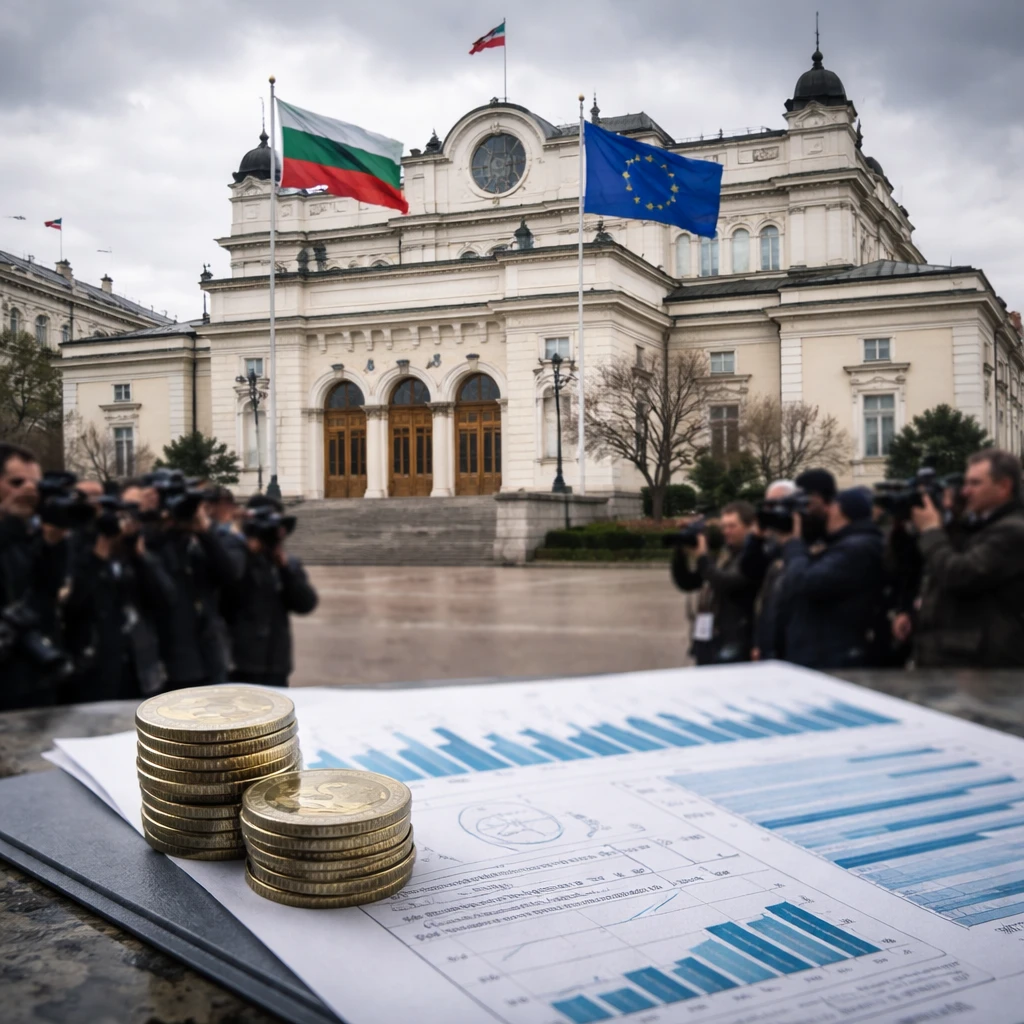
The European Commission on Wednesday recommended that Bulgaria be placed on the list of member states in breach of EU budget balance rules, a move coming roughly six months after the country switched to the euro. The commission said it expects Bulgaria's budget deficit to exceed the 3% of GDP ceiling in 2026, and recommended opening an excessive deficit procedure.
According to the commission's assessment, last year’s budget complied with the threshold once the recent rise in defence spending was excluded. Looking ahead, the EU executive forecasted a deficit of 4.1% of GDP for 2026, rising to 4.3% in 2027. The commission attributed the deterioration to continued structural increases in public sector wages and social benefits that have not been offset by compensatory measures.
In Sofia, Finance Minister Galab Donev told reporters the government would not wait for Brussels’ recommendations or possible sanctions before acting. "We’ll take on responsible policy to limit government expenses within reasonable margins," he said.
The comments come as a new cabinet, led by former President Rumen Radev, moves to implement campaign pledges. The government, which secured an outright majority in April elections, has pledged to cut spending and tackle high inflation. On Wednesday the cabinet approved raising the debt ceiling and signalled it may access markets as early as June to secure an additional €3.8 billion ($4.4 billion) in funding.
Bulgaria has generally kept budgets within EU rules and entered the euro area in January after years of effort, benefiting from one of the bloc’s lowest debt ratios relative to economic output. That fiscal track record was noted by the commission, which contrasted it with more recent developments that have pushed the country toward a breach of the deficit limit.
Political instability has been a recurring factor. A prolonged crisis, marked by eight general elections since 2021, has interrupted efforts to maintain balanced budgets. No government this decade has completed a full year in office, and politicians have repeatedly expanded social spending and raised public sector wages in an effort to attract votes. The country also still lacks an approved budget bill for 2026 after a draft published in December provoked mass protests and led to the fall of the government.
Implications for markets and public finances
The commission’s move could trigger closer EU oversight and potential corrective steps under the excessive deficit mechanism. In the near term, the government’s plan to raise its debt ceiling and potentially borrow €3.8 billion ($4.4 billion) may shape sovereign funding needs and interactions with market investors. The commission’s deficit forecasts and the government’s immediate policy response underscore the tension between fiscal commitments made during repeated election cycles and the need to comply with EU fiscal rules.
For now, Sofia has signalled a willingness to tighten spending and to seek financing to bridge short-term funding gaps, while the commission prepares its formal stance under EU procedures.