
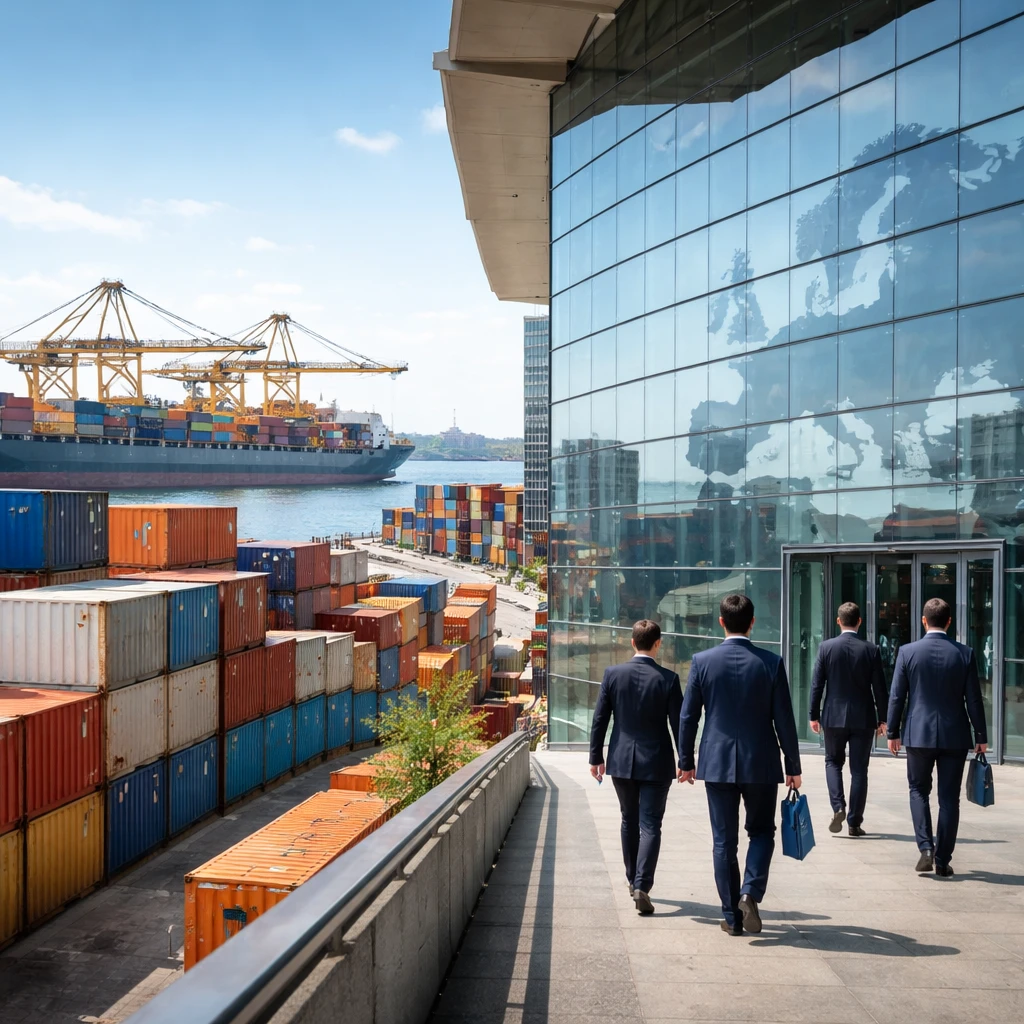
European Union industry commissioner Stephane Sejourne Friday publicly rebuked a number of European businesses for not moving fast enough to diminish their dependence on China, calling for a more urgent overhaul of corporate planning to reflect geopolitical and supply chain risks.
Speaking to reporters in Brussels after a meeting of EU trade ministers, Sejourne said that too few companies in Europe are incorporating geopolitical vulnerabilities into their strategic decisions. He pressed industry to modernize business plans so they better account for the risks posed by concentrated supply links.
The European Commission - which oversees trade policy across the bloc - has repeatedly urged member states and firms to broaden their sourcing, with particular emphasis on critical materials. The Commission has framed diversification as a way to reduce the economy's exposure to potential supply shocks tied to concentrated suppliers.
Officials highlighted the broader concern that Europe remains vulnerable to supplies originating in China, noting that Beijing has in past instances used export controls as a lever in political disputes. Those dynamics underpin the Commission's push to identify and mitigate risky dependencies.
EU economy chief Valdis Dombrovskis told Bloomberg News earlier this week that the Commission will pursue discussions in coming days aimed at reducing what he described as risky dependencies on Beijing. Dombrovskis emphasized that bolstering resilience and security will carry a cost, but that diversification is important in the current geopolitical environment to prevent the exploitation of vulnerabilities and dependencies.
In December, the Commission issued its first economic security doctrine, which asked firms to incorporate a security premium into decision making as a means of lowering vulnerability. Despite that directive, both officials and representatives from industry report that many companies are not following the guidance, prioritizing short-term competitiveness and profit targets instead.
Echoing the warnings, Poland's undersecretary of state Michal Baranowski told attendees in Brussels that the war in Ukraine had made clear the danger of depending on a single supplier, drawing a parallel with Europe's prior reliance on Russian energy.
While the Commission continues to press the issue at the policy level, the day-to-day choices of firms - in procurement, sourcing and cost management - remain a pivotal factor in determining how quickly Europe can reduce concentrated dependencies.