
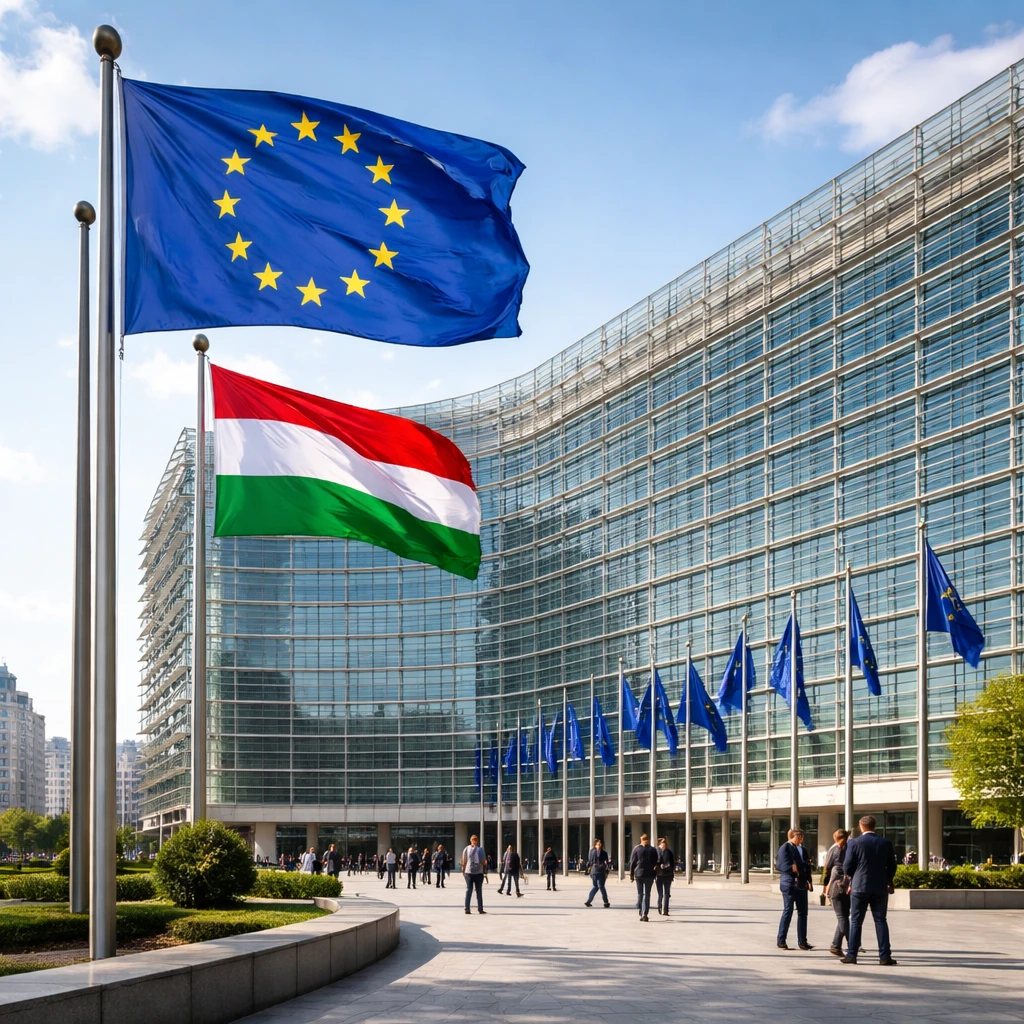
The European Union reached a deal with Hungary to restore access to €16.4 billion ($19.1 billion) in frozen funding, contingent on reforms, providing an immediate fiscal relief to Budapest's budget. The agreement was announced by European Commission President Ursula von der Leyen in Brussels alongside Hungarian Prime Minister Peter Magyar.
Von der Leyen said the funding package will be composed of roughly €10 billion from a post-pandemic aid program, €4.2 billion from cohesion funds, and €2.2 billion linked specifically to measures aimed at restoring academic freedoms. She described "strong signals" that Hungary is "turning the page" and said both sides had found a mutually acceptable "landing zone" for the arrangement.
The accord represents a political victory for the 45-year-old leader who campaigned on repairing Hungary's ties with the European Union and tackling the corruption issues that led Brussels to suspend about $20 billion in funding. That suspension followed concerns in Brussels about governance and misuse of EU resources. Under the new deal, the released funds remain conditional on Hungary carrying out the agreed reforms.
Financial markets reacted to the announcement. The Hungarian forint strengthened, trading near its strongest level against the euro in four years following the news. The market response suggests investor relief at the prospect of restored EU support and the mitigation of fiscal uncertainty tied to the funding suspension.
Summary
The EU and Hungary have agreed on a conditional release of €16.4 billion in previously frozen aid. The package is split across post-pandemic recovery funds, cohesion funding, and allocations conditioned on academic freedom reforms. The move is presented by EU officials as a sign of progress in relations between Brussels and Budapest and was followed by a notable appreciation in the forint.
Key points
- The EU will release €16.4 billion ($19.1 billion) to Hungary, contingent on agreed reforms - sectors affected include public finance and sovereign debt markets.
- Breakdown of the package: approximately €10 billion from post-pandemic aid, €4.2 billion from cohesion funds, and €2.2 billion linked to restoring academic freedoms - relevant to government budgeting and education sector funding.
- The deal is framed as a political win for Hungary's new leader and prompted a near four-year high for the forint versus the euro - an immediate market impact for currency and financial markets.
Risks and uncertainties
- The funds are conditional on reforms - failure to implement agreed measures could lead to re-freezing of the support, affecting public finances and investor sentiment.
- Addressing corruption concerns is a stated objective of the agreement - persistent governance issues could undermine the restoration of full EU relations and continued access to funds, with implications for fiscal planning.