
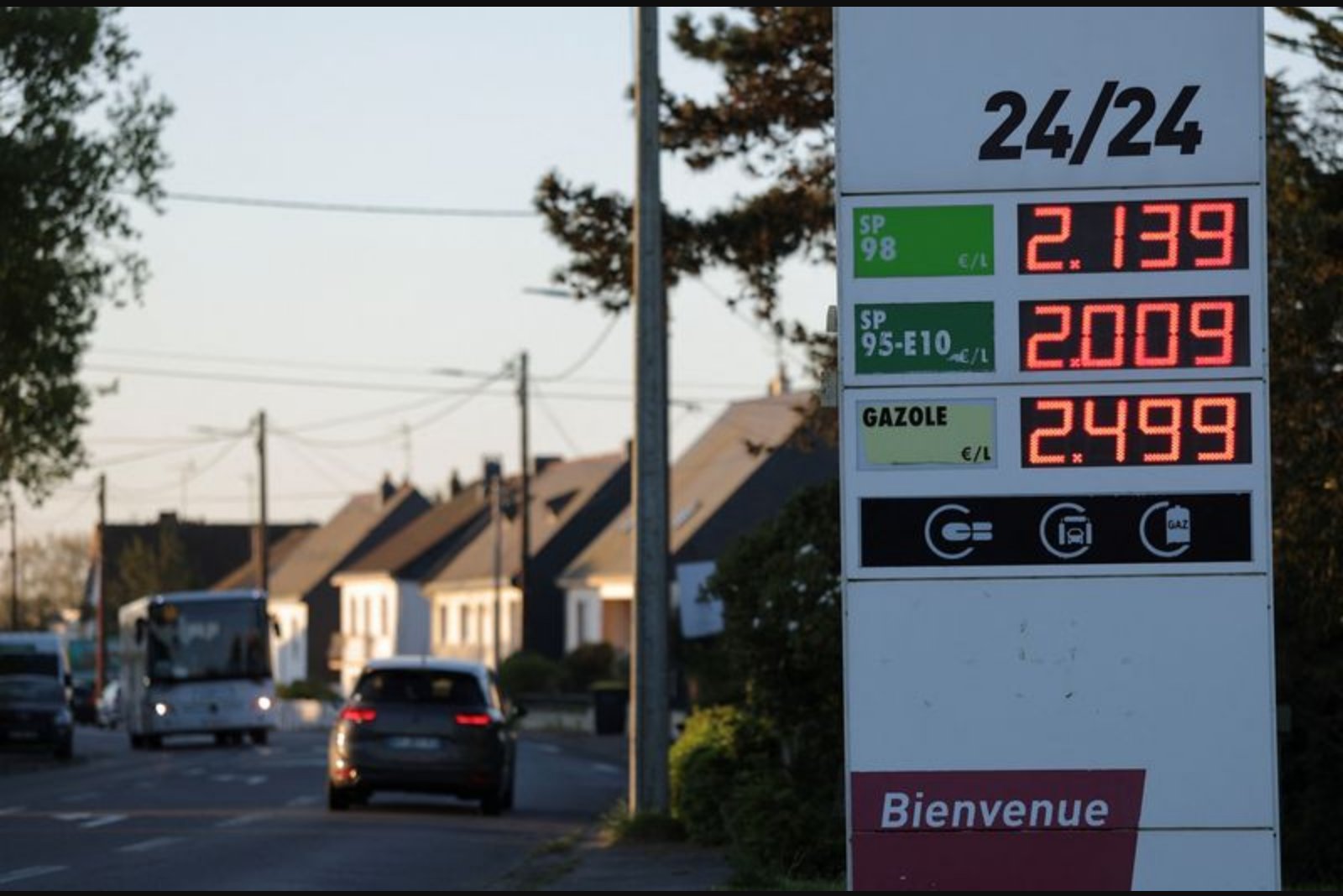
The fallout from the Iran conflict is increasingly being felt through European markets and businesses, with recent data showing the energy-related shock is both restraining growth and pushing consumer costs higher. That combination presents a policy dilemma for central banks and governments as they weigh interest rate decisions against the need to shield households from higher fuel bills.
S&P Global’s flash reading for the euro area signaled a notable deterioration in activity in May. The Flash Euro Zone Composite Purchasing Managers' Index fell to 47.5 from 48.8, its lowest point since October 2023, and below a Reuters poll that had expected no change from April. The reading marked the second straight month in which the bloc’s private sector contracted, with any PMI below 50 indicating slowing activity.
Alongside the weakness in output, price pressures intensified. Input price inflation reached a three-and-a-half year high in the composite survey, while the pace of prices charged to customers rose at the fastest rate in 38 months, though only slightly ahead of April’s pace. S&P Global cautioned that those price gauges suggest inflation could run close to 4.0% in coming months.
Economists stressed that the current pattern differs from the classic 1970s stagflation experienced during that decade, but warned it deepens the post-COVID cost of living crisis already weighing on millions of households. That deterioration is complicating decisions over whether to tighten monetary policy further or to step in with targeted support.
Activity and demand
The contraction in the euro area was driven by a sharp hit to services activity, which is the principal engine of consumer demand across the bloc. Services PMI fell to 46.4 in May from 47.6 in April, the sharpest pace of contraction since February 2021 and significantly below a poll forecast that had anticipated a modest increase to 47.7. New business in services dropped sharply, and overall new orders for the private sector declined at their fastest rate in 18 months. New export orders also weakened, sliding at the steepest pace since January 2025.
Manufacturing showed a loss of momentum as well. The overall manufacturing PMI and its output sub-index both eased, with reported delivery delays masking some of the weakness by inflating PMI readings - delivery times stretched to their worst levels since the disruptions seen during the COVID-19 period.
National highlights
Germany, the euro zone’s largest economy, recorded a second consecutive month of private-sector contraction in May. In France, the headline PMI fell to its weakest level in five-and-a-half years, with firms citing rising fuel and energy costs along with broader economic caution as drivers of lower output. The Bundesbank said inflation in Germany was trending upward and that economic growth was likely to be flat in the second quarter.
Labour market and prices
Labour market indicators deteriorated further: firms in the euro area cut payrolls for the fifth month running, with the pace of job losses the steepest since November 2020 - and, excluding the pandemic period, the most pronounced since August 2013. Services companies reduced headcount for the first time since early 2021, while manufacturing payrolls declined again.
Input cost pressures were widespread. The composite PMI’s input price gauge accelerated to its highest level in three-and-a-half years, and firms raised the prices charged to customers at the fastest rate in 38 months. S&P Global’s survey analysis warned those readings point to higher underlying inflation in the near term.
Policy implications
The European Central Bank left rates unchanged at its late-April meeting, but market participants and analysts widely expect a 25 basis point increase in June. Still, the persistence of weakness in activity raises the question of whether the ECB will feel compelled to pause again after a June tightening.
"There is nothing here to put the ECB Governing Council off its plans to raise rates by 25 basis points in June, nor anything to ease concerns about the risks of a recession," said Andrew Kenningham at Capital Economics in reaction to the survey data, underlining the tension facing policymakers.
Official headline inflation in the euro area held at 3.0% in April, above the ECB’s 2.0% target and a reminder of the monetary authority’s mandate to restore price stability while navigating slowing demand.
Official forecasts and downside risks
The European Commission on Thursday trimmed its growth outlook for the euro area. It now expects output to rise 1.3% in 2025 and then slow to 0.9% in 2026, with a 1.2% increase pencilled in for 2027. In its previous forecasts published in November, the Commission had anticipated growth of 1.2% in 2026 and 1.4% in 2027.
Commission officials underscored the possibility of weaker outcomes under an adverse energy scenario. European Economy Commissioner Valdis Dombrovskis said that if energy prices do not peak until late 2026, the Commission’s growth projections could be roughly halved.
Broader regional picture
Beyond the euro area, businesses in the United Kingdom also signalled mounting strain. Companies there recorded their broadest drop in activity in more than a year, with the combined effect of the Iran-related energy shock and domestic political uncertainty weighing on demand and business sentiment.
The combination of rising energy-related costs, weakening demand, and job losses paints a challenging near-term picture for households and firms across Europe. The data underline an uncomfortable trade-off for authorities - a need to contain inflation while preventing further deterioration in output and employment.
Policymakers will be monitoring upcoming releases closely for evidence that the recent surge in input costs is moderating or, conversely, that the price shock is seeping further into wage and consumer price dynamics. For now, the readings point to elevated inflationary pressures alongside a weakening growth backdrop, complicating the policy mix across the region.