
Economy May 27, 2026 07:48 AM

ECB Reaffirms 2% Inflation Goal, Makhlouf Stops Short of Confirming Next-Meeting Rate Move

Irish central bank chief says policy will follow the evidence as markets price in a quarter-point hike; he flags indirect inflation channels and recent commodity moves

By Maya Rios

European Central Bank Governing Council member Gabriel Makhlouf reiterated the bank's commitment to a 2% inflation target while declining to state whether that would necessitate a rate increase at the ECB's upcoming meeting. Speaking in Dublin, Makhlouf said policymakers will act as required to meet the target and will base decisions on incoming evidence. Markets have moved to price a quarter-point rise at the next meeting, and Makhlouf highlighted the absence of observed second-round effects while noting attention to indirect price pressures such as on fertilizer and food. He also said gas prices have drifted nearer to baseline assumptions, whereas oil remains above adverse-scenario levels.

ECB Reaffirms 2% Inflation Goal, Makhlouf Stops Short of Confirming Next-Meeting Rate Move

Key Points

  • ECB Governing Council member Gabriel Makhlouf reiterated the central bank's commitment to achieving a 2% inflation target; markets have priced that commitment into expectations - impacts: fixed income, equity markets.
  • Investors and economists expect a quarter-point rate hike at the ECB's next meeting in roughly two weeks, while some council members favor a meeting-by-meeting decision process - impacts: banking sector, lending rates.
  • Makhlouf reported no clear evidence of second-round inflation effects but highlighted indirect pressures such as fertilizer and food prices and noted gas prices moving closer to baseline while oil remains above adverse scenarios - impacts: energy, agriculture, consumer prices.

Dublin - Gabriel Makhlouf, a member of the European Central Bank's Governing Council, restated on Wednesday that the ECB remains committed to delivering on its 2% inflation target, but he did not indicate whether achieving that goal would require a rate increase at the bank's next policy meeting.

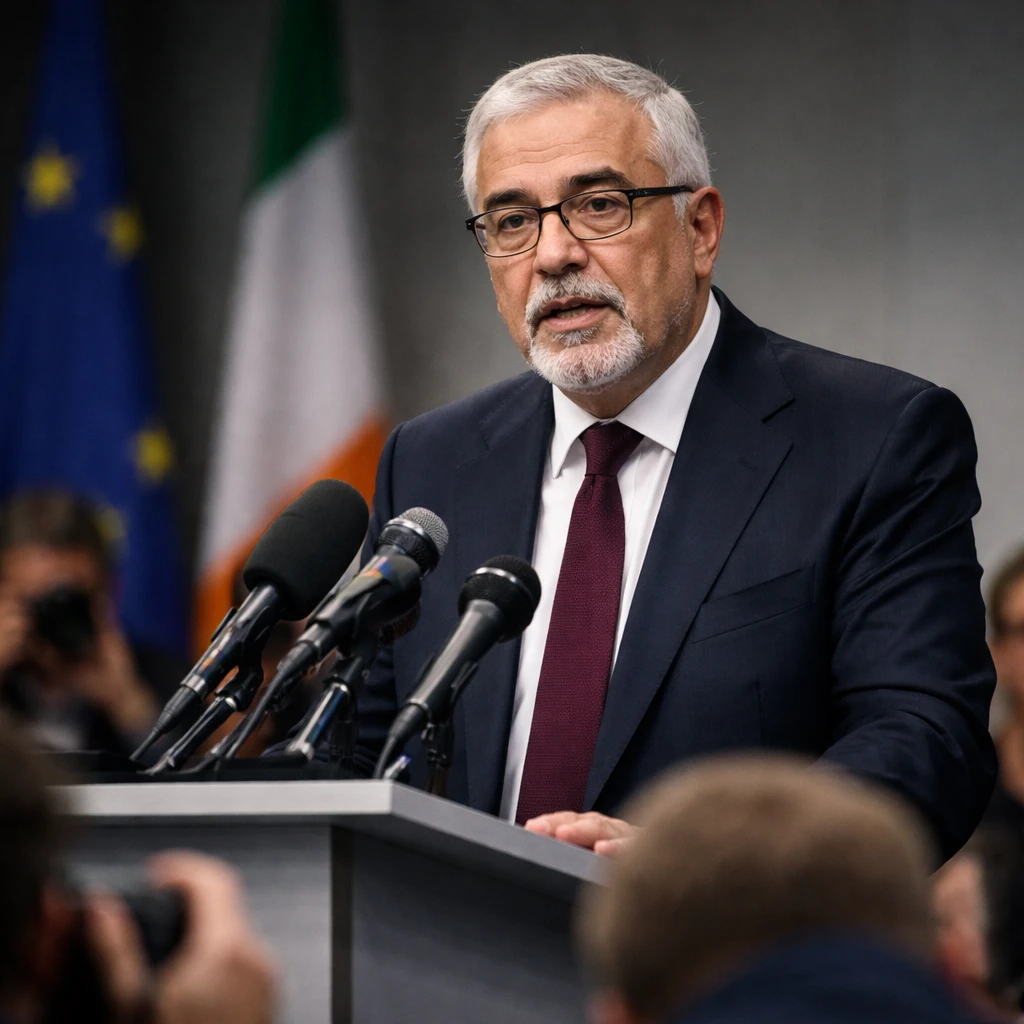
Speaking to reporters in Dublin, Makhlouf emphasized that the institution's objective is clear - to reach the 2% inflation benchmark - and that the ECB will take the actions it deems necessary to accomplish that aim. He noted that markets have adjusted pricing to reflect the bank's stated commitment.

With the ECB's next policy session scheduled in about two weeks, investors and economists are widely expecting a quarter-point tightening. Makhlouf acknowledged those market expectations, while pointing out that some of his Governing Council colleagues have openly supported such a move and others have underscored a meeting-by-meeting approach to setting policy.

Aligning himself with the more cautious, evidence-driven perspective, the Irish central bank chief said the ECB will judge its path forward on the basis of all available data at the time of decision-making. That approach, he suggested, keeps options open and ties any action to the incoming economic picture.

On the question of second-round inflation effects - where wage and price responses propagate further inflation - Makhlouf said he has not observed clear evidence of them so far, while conceding they could nevertheless be present. He singled out the need to monitor indirect channels beyond direct fuel costs, explicitly mentioning potential impacts on fertilizer and food prices as areas of particular interest.

Makhlouf also described recent commodity price movements relevant to the bank's assessment. He said gas prices have moved closer to the baseline assumptions used by policymakers, while oil prices continue to sit above what the ECB considers its adverse scenarios. Those distinctions inform how the bank weighs upside and downside risks to inflation.


Bottom line - The ECB's stated dedication to the 2% inflation goal remains firm, yet the timing and size of any near-term rate action will depend on the evolving data set, with commodity trajectories and potential indirect price pressures under close watch.

Risks

  • Uncertainty over whether the ECB will raise rates at the next meeting creates near-term policy risk for markets and the banking sector.
  • Potential second-round inflation effects, if present, could amplify price pressures in sectors tied to wages and input costs, notably food and agriculture through fertilizer price pass-through.
  • Elevated oil prices relative to adverse scenarios pose an upside risk to inflation compared with gas, which has moved nearer to baseline assumptions; this keeps commodity-linked inflation uncertainty elevated for energy- and commodity-sensitive sectors.

More from Economy

Market Resilience Amidst Sector Shifts: Dow and Russell 2000 Reach New Heights Jun 4, 2026 Australian house price momentum to slow to four-year low as borrowing costs bite Jun 4, 2026 Kevin O’Leary Scales Back Utah Data Center Plan Amid Lawmaker Concerns Jun 4, 2026 Fed's Daly Says AI Could Exert Downward Pressure on Prices Over Several Years Jun 4, 2026 Putin Says Moscow Willing to Make Concessions if Kyiv Reciprocates Jun 4, 2026