
June 2 - Ahead of the European Central Bank's June 11 policy meeting, a number of ECB officials have made public comments underscoring a heightened concern about inflation and the potential need to tighten monetary policy.
Financial markets have fully priced in a rate increase by July at the latest, and economists polled expect a move as early as June. Policymakers' statements over late May and early June reflect these expectations and underline the risks posed by energy-related disruptions and possible spillovers into broader price-setting behavior.
Key policymakers and their recent comments
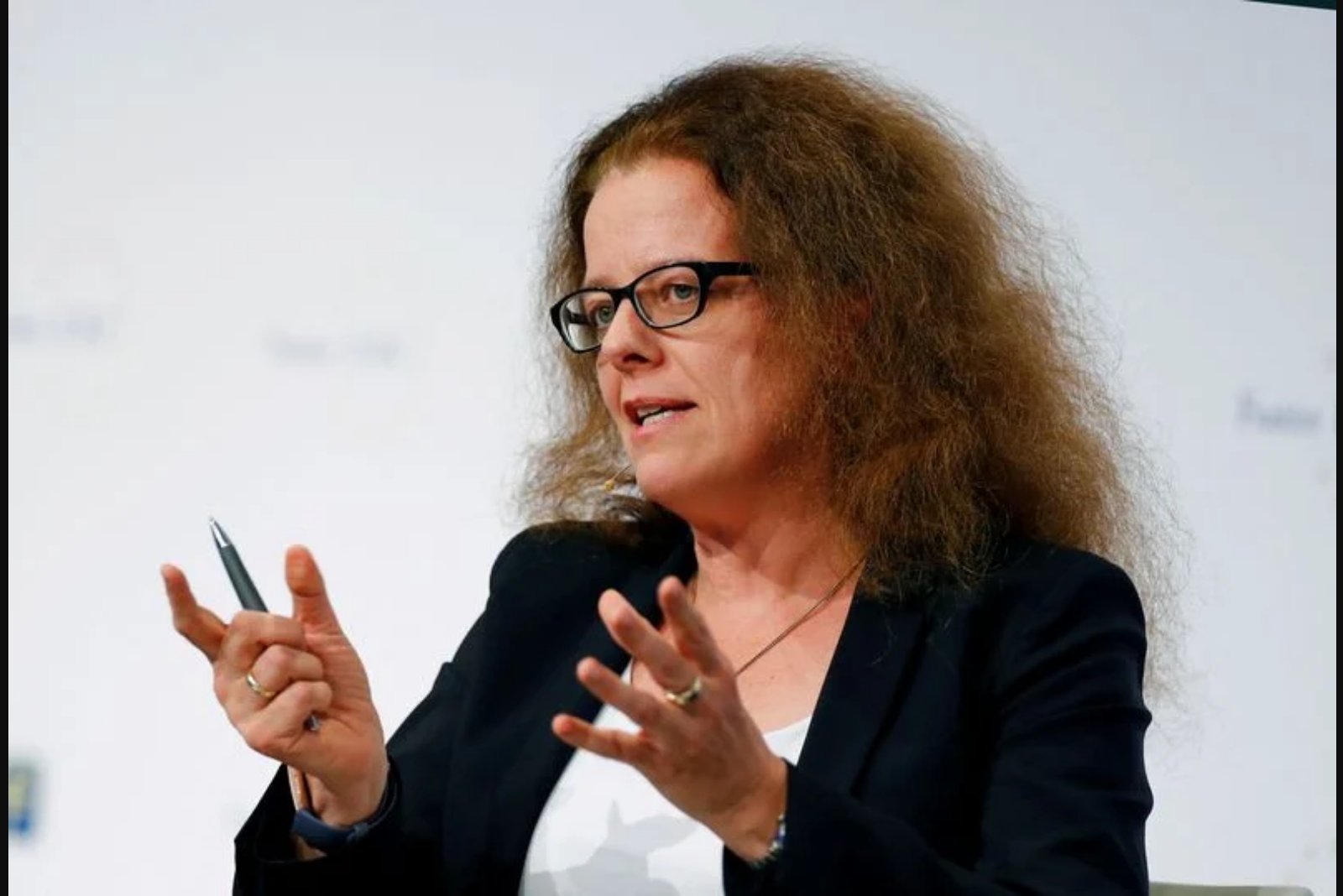
Isabel Schnabel, ECB board member, May 26
"Given the size and the persistence of the current shock, looking through is no longer an option in my view.
"Even if the war ended today, a lot of damage has already been done to energy infrastructure and global supply chains. So, even then, I believe that a monetary policy reaction would be needed.
"From today’s perspective, I think a rate hike in June will be needed."
Schnabel emphasized that the magnitude and longevity of the shock mean monetary policy cannot simply 'look through' the present developments. She noted that even a swift end to the conflict would leave substantial damage to energy infrastructure and supply chains, and that, from her current perspective, a June rate increase would be required.
Philip Lane, ECB chief economist, May 26
"We are likely to make a further upward adjustment to the inflation forecast in June.
"We do expect indirect effects beyond energy prices. Our surveys suggest many firms expect that they will have to raise prices. If this develops from an energy shock into a broader inflation problem, that would be a major issue."
Lane flagged an expectation for an upward revision to the inflation outlook at the ECB's next forecast round. He also pointed to survey evidence indicating firms anticipate raising prices, and warned that an extension of the shock from energy into broader inflation would represent a significant concern.
Fabio Panetta, Italian central bank governor, May 29
"The forward-looking picture seems to call for a recalibration of the monetary policy stance to counter the risk of persistent inflationary tensions.
"Even in the event of a rapid resolution of the conflict, a swift normalization of oil and gas prices seems unlikely."
Panetta argued the outlook suggests the need to adjust policy to offset risks of sustained inflationary pressure. He added that even if the conflict were resolved quickly, he does not expect oil and gas prices to normalize rapidly.
Yannis Stournaras, Greek central bank governor, May 25
"In the event of a significant but temporary overshooting of the inflation target, the response should be balanced; a cautious adjustment of monetary policy in a more restrictive direction, capable of limiting the intensity of second-round effects, without, however, harming economic activity disproportionately."
Stournaras set out a cautious approach: in his view, if inflation temporarily overshoots the target, the ECB should respond in a balanced way that leans restrictive enough to restrain second-round effects while avoiding undue harm to economic activity.
Álvaro Santo Pereira, Portuguese central bank chief, May 31
"Our concern right now is inflation; we need to look at the data very closely. But I also think, looking at what happened in the past, that we need to act sooner rather than later, to avoid a greater second-round impact.
"When there is an inflationary spiral, I prefer that we act swiftly and decisively."
Santo Pereira stressed that close attention to incoming data is required and signaled a preference for prompt and decisive action to prevent escalating second-round effects if an inflationary spiral takes hold.
Olli Rehn, Finnish central bank chief, May 21
"From the standpoint of medium-term orientation, the critical thing is whether we see evident signs of second-round effects, and/or de-anchoring of inflation expectations.
"If you look at those two things, we see some vibration in the short-term inflation expectations, but no significant deviation in medium- to long-term inflation expectations."
Rehn noted that the medium-term focus should be on signs of second-round effects and any weakening in longer-term inflation expectations. He observed some short-term volatility in expectations but no material shift in medium- to long-term expectations.
Martin Kocher, Austrian central bank governor, May 11
"If the situation does not improve significantly, there will be no avoiding an interest rate move in the near future."
Kocher warned that, absent a material improvement in conditions, an interest rate adjustment in the near term would be unavoidable.
Peter Kazimir, Slovak central bank governor, May 4
"We are not committed to any fixed path, but we remain firm in our approach. On this basis, policy tightening in June is all but inevitable."
"It has been a part of our baseline since March and the events have, sadly, not surprised us in a positive way."
Kazimir reiterated that while the ECB is not bound to a predetermined sequence of moves, his view is that tightening in June is effectively inevitable and that the events since March have reinforced that baseline.
Implications
The combined remarks from board members and national central bank governors point to a consensus forming around the need to respond to elevated inflationary pressures, particularly those stemming from energy markets and their knock-on effects for broader price-setting. Markets and many economists are aligned behind a near-term rate liftoff, and policymakers' language indicates they are preparing to recalibrate the policy stance accordingly.