
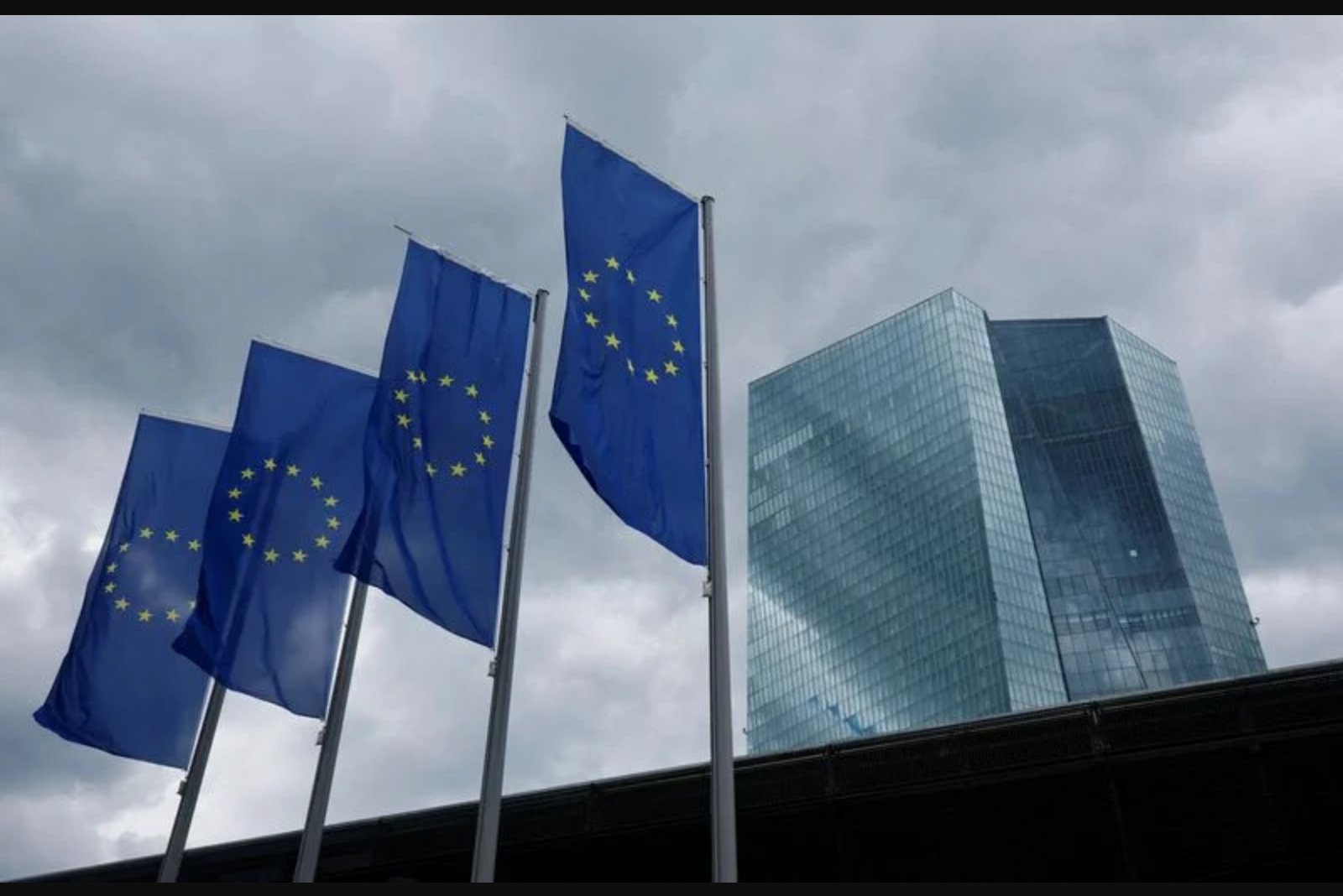
FRANKFURT, June 3 - Senior economists at the European Central Bank argued in a blog post published on Wednesday that it cannot be taken for granted that the present inflation shock confronting the euro area will be milder than the surge seen in 2022. The post notes several countervailing forces: some initial conditions appear less inflationary now, but others flag heightened risks compared with that earlier episode.
Euro area inflation rose to 3.2% last month, well above the ECB's 2% objective. The blog links this spike primarily to higher energy costs after the war in Iran drove energy prices up sharply. It says parts of the energy-driven increase are already filtering into the wider economy through services, creating upside pressure on prices beyond the direct energy component.
That dynamic has made a modest rate increase later this month almost certain, the economists said, although they noted that market expectations and policy commentary generally do not foresee aggressive tightening afterwards on the basis that current conditions are not seen as favourable to a swift acceleration in price growth.
Still, the authors - a group of senior ECB economists that includes Óscar Arce, head of the central bank's economics directorate - urged caution about assuming lower risks overall. They wrote: "Some features point towards lower inflationary risks now than they did in 2022." At the same time, they added that "a number of other initial conditions flag larger inflationary risks now compared with 2022." The blog is the view of its authors and is not necessarily the official stance of the ECB.
The analysis highlights several moderating forces. The price shock is concentrated mainly in oil while gas prices have remained considerably lower, which also helps keep electricity costs down. Greater deployment of renewable generation is cited as a factor that has helped limit upward pressure on electricity prices. Domestically, the post notes that household demand is weaker than in the prior episode, the labour market has softened, and both fiscal and monetary policies are tighter now than at the start of the 2022 shock - all elements that restrain inflation momentum.
Counterbalancing those moderating features, the economists point to a broader, more global nature of the present shock. They warn that a global shock - if it proves larger, broader or more persistent than expected - raises the risk of "strong non-linear amplification." In their words: "A global shock has larger indirect effects on inflation, as cost pressures build more broadly along global value chains." Such a pattern, they explain, would tend to push import prices higher and allow the energy price shock to transmit more forcefully into domestic price dynamics.
The blog further notes behavioural and fiscal considerations that could amplify inflation. Households, having recently experienced sharp price rises, may adapt their inflation expectations more quickly, which can influence wage and price-setting behaviour. Additionally, governments now have less fiscal space than they did during the earlier episode to offset rising prices, reducing policymakers' ability to cushion the shock.
Taken together, the authors portray a balanced but cautious picture: several domestic and policy-related factors point to reduced upside risk, while the shock's composition - oil-focused, global and with stronger potential transmission channels - leaves room for more persistent or amplified inflation outcomes than many currently expect.