
Economy May 21, 2026 02:31 PM

Cuba Condemns Rubio, Says US Officialry Is Stoking Threats of Military Confrontation

Havana accuses Marco Rubio of spreading false terrorism claims and of seeking to provoke violence and economic collapse

By Priya Menon

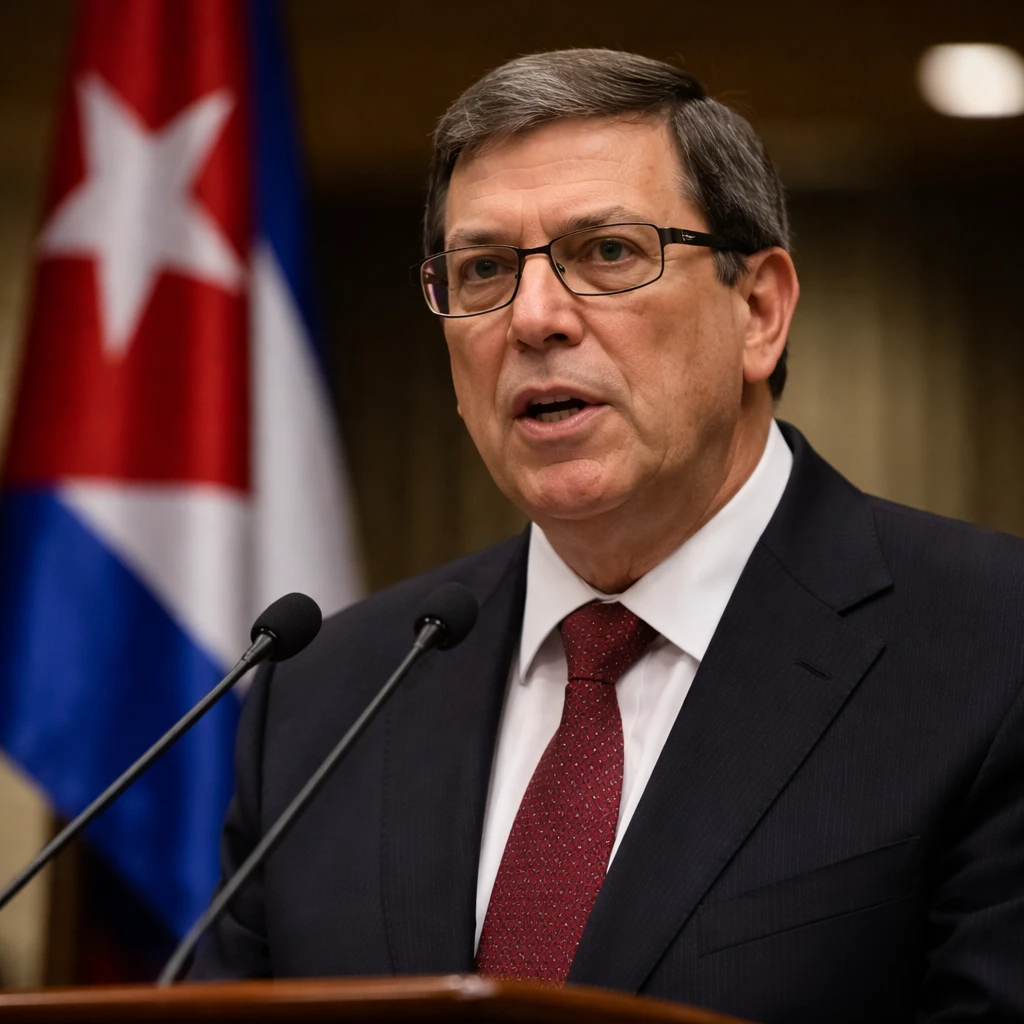
Cuba's foreign minister, Bruno Rodriguez, accused U.S. Secretary of State Marco Rubio of lying to stir up military hostility between the two countries, saying Rubio has falsely branded Cuba a state sponsor of terrorism and is seeking to provoke violence and economic collapse that would harm both Cuban and American lives.

Cuba Condemns Rubio, Says US Officialry Is Stoking Threats of Military Confrontation

Key Points

  • Cuban Foreign Minister Bruno Rodriguez accused U.S. Secretary of State Marco Rubio of lying to provoke military aggression between the two countries.
  • Rodriguez said Rubio has falsely labeled Cuba as a state sponsor of terrorism and warned such claims could lead to Cuban and American casualties.
  • The Cuban government alleges Washington has sought to cause economic collapse and social desperation in Cuba, citing unilateral coercive measures as the main obstacle to Cuba's economic development - implications for diplomatic, defense, and trade-related sectors.

Cuban Foreign Minister Bruno Rodriguez on Thursday leveled strong accusations at U.S. Secretary of State Marco Rubio, saying the U.S. official is manufacturing falsehoods to incite military confrontation between Havana and Washington.

Rodriguez asserted that Rubio has been falsely characterizing Cuba as a state sponsor of terrorism and suggested that these allegations are part of an effort to set the countries on a collision course that could generate casualties on both sides.

"The U.S. Secretary of State lies once again to instigate a military aggression that would provoke the shedding of Cuban and American blood," Rodriguez said.

In addition to disputing the terrorism label, the foreign minister insisted that Cuba poses no threat to U.S. security. He accused Washington of deliberately pursuing measures intended to bring about economic collapse and social despair inside Cuba.

Rodriguez went on to say that Rubio understands that unilateral coercive measures are the principal barrier to Cuba's economic progress, and he accused the United States of actively promoting conditions of desperation among the Cuban population and contributing to the breakdown of the country's economy.

The remarks reiterate Havana's long-standing position that pressure from U.S. policy - described by Rodriguez as unilateral coercive measures - is central to the country's economic difficulties and to mounting social strain.

Rodriguez's comments were delivered in clear, forceful language and focused on two linked themes: that specific statements by Rubio are both untrue and dangerous, and that U.S. actions have broader economic and societal consequences for Cuba. Beyond those assertions, the foreign minister emphasized the prospect of human costs - both Cuban and American - if tensions escalate into military confrontation.

The statements represent a pointed diplomatic rebuke and frame the dispute in terms of both national security rhetoric and economic coercion, as described by the Cuban government.


Clear summary: Cuba's foreign minister accused U.S. Secretary of State Marco Rubio of lying to provoke military aggression, of falsely labeling Cuba a state sponsor of terrorism, and of seeking to impose unilateral coercive measures that hinder Cuba's economic development and create social desperation.

Risks

  • Risk of heightened military tensions - Rodriguez warned that the alleged instigation could 'provoke the shedding of Cuban and American blood,' indicating a risk of violent confrontation affecting national security and defense sectors.
  • Economic destabilization risk - Cuba alleges that U.S. measures are intended to produce economic collapse and social desperation, potentially harming trade and economic activity connected to the island.
  • Policy-driven development constraints - Rodriguez stated that unilateral coercive measures represent the main obstacle to Cuba's economic development, creating uncertainty for sectors tied to economic recovery and external engagement.

More from Economy

Australian house price momentum to slow to four-year low as borrowing costs bite Jun 4, 2026 Kevin O’Leary Scales Back Utah Data Center Plan Amid Lawmaker Concerns Jun 4, 2026 Fed's Daly Says AI Could Exert Downward Pressure on Prices Over Several Years Jun 4, 2026 Putin Says Moscow Willing to Make Concessions if Kyiv Reciprocates Jun 4, 2026 Putin Says Moscow and Beijing Near New Energy Deals, Offers Few Details Jun 4, 2026