
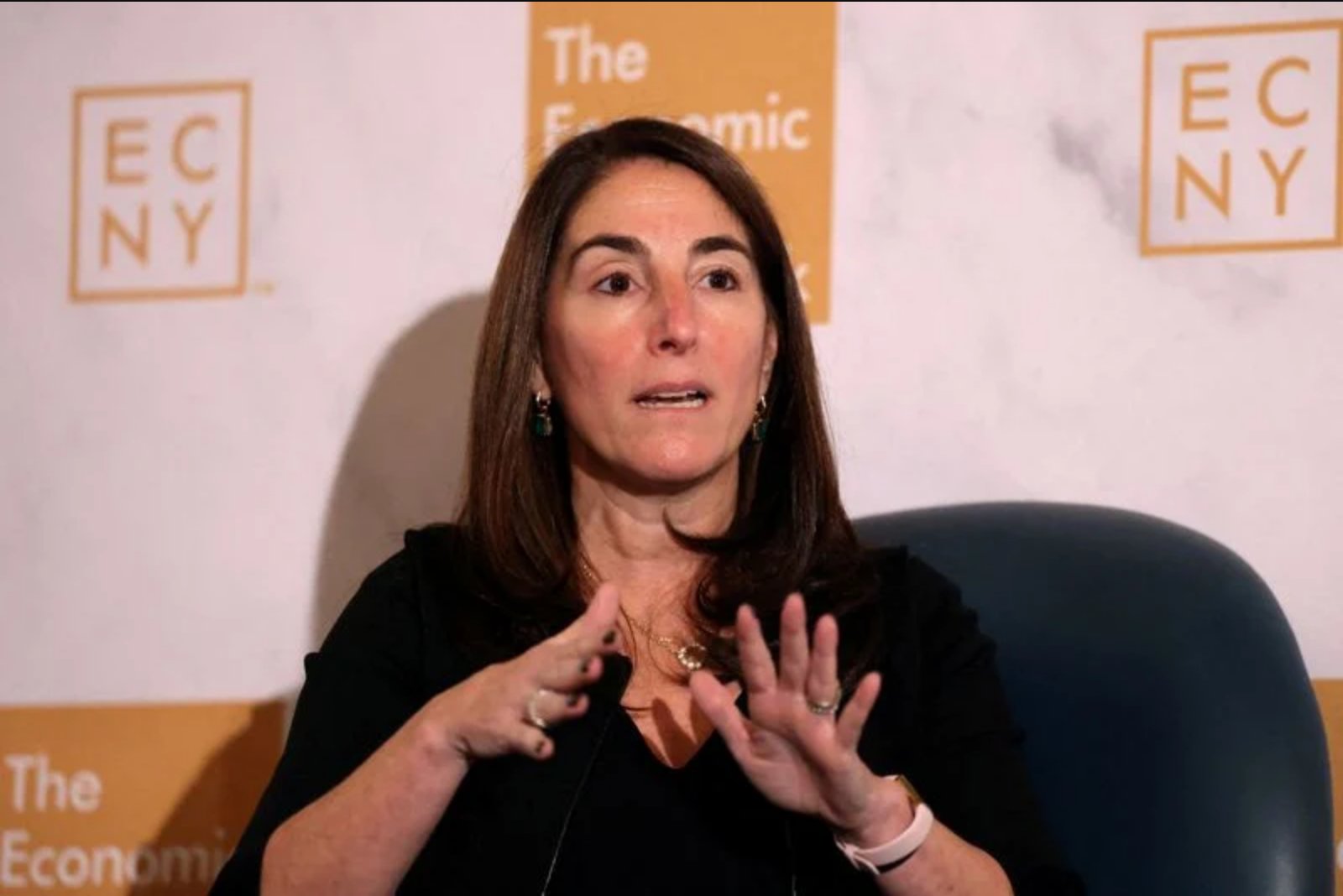
Federal Reserve Bank of Cleveland President Beth Hammack told listeners Tuesday that the U.S. central bank could be compelled to tighten policy in the near term if inflation does not retreat. In remarks prepared for delivery before the City Club of Cleveland, Hammack said she was increasingly worried about the risk that elevated inflation could become persistent.
"Based on the data, I’m more concerned about the growing risks of persistently elevated inflation than the risks to full employment and also that monetary policy may not be sufficiently restrictive to bring inflation down to 2 percent," Hammack said in the speech.
Hammack warned that waiting for clear-cut evidence that high inflation has become entrenched could force policymakers into "larger policy adjustments, at greater cost." At the same time, she told her audience that given current uncertainties in the economic outlook, "it’s reasonable to keep rates steady" for now. Yet she added that "if recent trends continue, it may soon be appropriate to act."
The Federal Open Market Committee is set to meet on June 16-17, in what is expected to be a meeting that leaves the policy interest-rate target unchanged at 3.5% to 3.75%. Hammack holds a vote on the FOMC this year. The meeting will be the first held under the leadership of Kevin Warsh, who has advocated for rate cuts but whose view is at odds with an economic backdrop where price pressures have been rising after remaining above the Fed’s 2% inflation target for years.
Hammack highlighted recent developments that have elevated inflationary pressures. She pointed to the U.S.-Israeli war against Iran as a factor that has disrupted global energy flows, contributing to higher energy costs on top of already elevated price levels. That rise in energy prices, she said, has intensified upward pressure on inflation and prompted discussion within the Fed about the possible need to raise rates if relief does not arrive.
In describing the current inflation profile, Hammack observed that "the picture for inflation is not encouraging. Inflation is too high and is moving higher," adding that data reveal "relatively broad-based price pressures across goods and nonhousing services."
She singled out specific drivers of inflation, saying there are forces coming from electricity costs, health insurance and software. Hammack also raised the prospect that, without quick declines in energy prices, there is "a growing risk that inflation could remain elevated if energy costs do not come down quickly and if businesses feel they have no choice other than to raise prices."
At the same time, Hammack described the broader economy as resilient and the labor market as stable, with the unemployment rate near full employment. She noted that "measures of financial conditions are supportive of growth rather than holding it back."
Interest rate futures markets have been pricing in the possibility of a future Fed increase should inflation relief fail to materialize. Hammack’s remarks underscore the tension Fed officials face between containing inflation and monitoring labor-market outcomes and financial conditions as they consider the timing and magnitude of any policy moves.
Context and implications
Hammack’s comments emphasize the Fed’s dual focus: bringing inflation back to the 2% target while weighing risks to employment and growth. Her choice of phrasing - that policy "may not be sufficiently restrictive" - signals concern that the current stance could be inadequate if price pressures persist, and that a delay in action could necessitate steeper responses later on.
The Fed’s June meeting is expected to hold rates steady, but Hammack’s warning makes clear that future adjustments will depend closely on incoming inflation data, energy price movements and whether businesses begin to pass higher costs to consumers on a broad scale.