
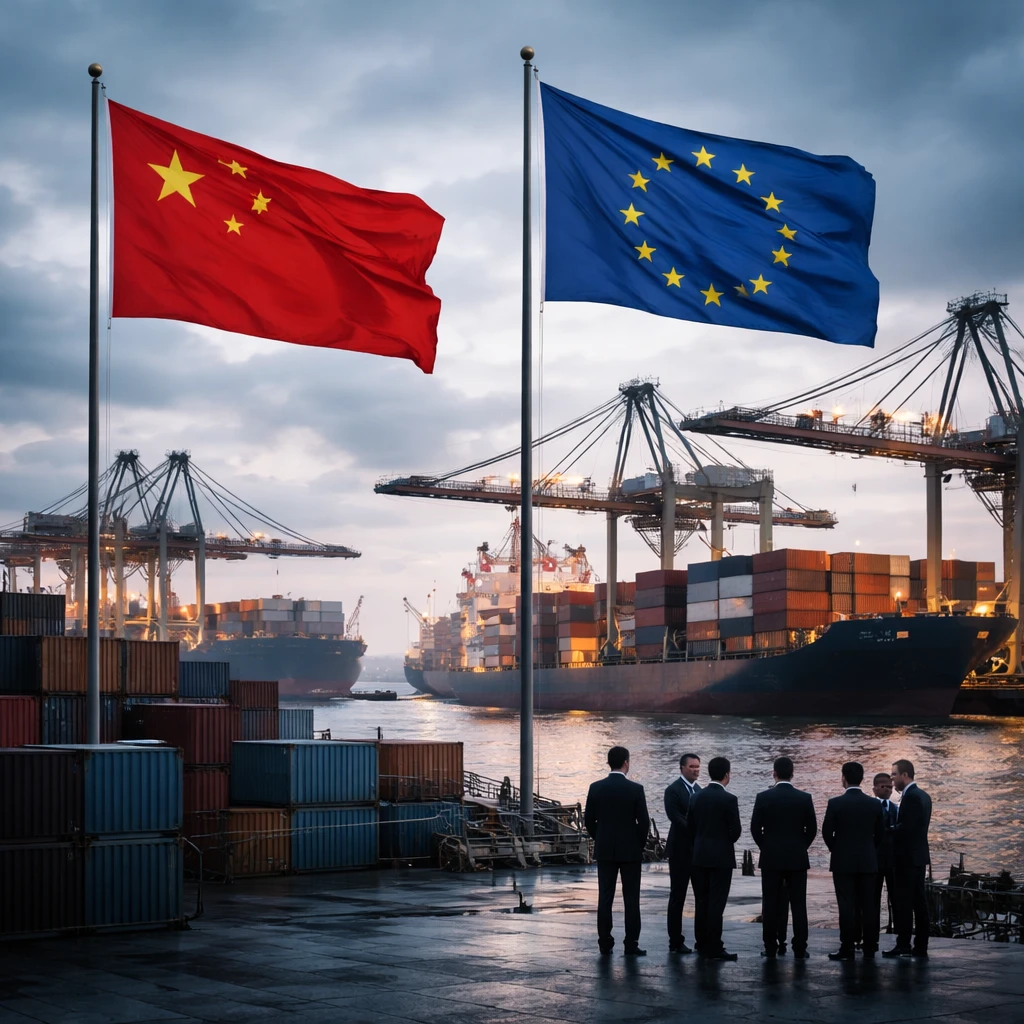
China said on Saturday it would respond with countermeasures if the European Union introduced new trade restrictions that it views as discriminatory toward Chinese companies, heightening tensions between two of the world's largest trading partners ahead of scheduled economic discussions.
In a statement reacting to talks held by the European Commission on ties with China, the Chinese commerce ministry reiterated its expectation that the EU conduct itself in accordance with World Trade Organization rules, defend free trade and fair competition, and resist protectionism and unilateral approaches.
The ministry highlighted the mutual importance of China-EU economic and trade relations and noted that both sides are exploring the establishment of a consultation mechanism to cover trade and investment matters. The move signals an interest in structured channels for addressing bilateral economic issues.
"We hope the European side will meet China halfway," a commerce ministry spokesperson said, calling on both parties to manage disagreements through dialogue and consultation and to take steps that foster steady economic relations.
At the same time, Beijing made clear it would not accept measures it deems discriminatory. "Should the European side insist on unilaterally introducing new trade instruments and adopting discriminatory restrictions, the Chinese side will resolutely take countermeasures and adopt effective measures to safeguard its own interests," the spokesperson added.
The comments come as Brussels has signaled a firmer approach to trade policies with China, pointing to concerns around market access, industrial subsidies and economic security. Those issues were cited as the rationale for the EU's tougher posture during recent discussions.
Context and implications
While the statement emphasizes a preference for negotiated solutions, it also leaves open the prospect of concrete reciprocal actions if the EU presses ahead with what China considers unilateral or protectionist steps. The two sides appear to be weighing a mix of institutional engagement - through a potential consultation mechanism - and stern diplomatic signaling.
Given the commerce ministry's comments, future EU measures described as "new trade instruments" or "discriminatory restrictions" are likely to be focal points in upcoming exchanges between Beijing and Brussels.