
Economy May 23, 2026 09:47 PM

China Prepares Shenzhou-23 Launch Targeting Extended Orbital Stay

The upcoming mission marks a potential milestone for long-duration spaceflight as China advances its lunar exploration roadmap.

By Derek Hwang

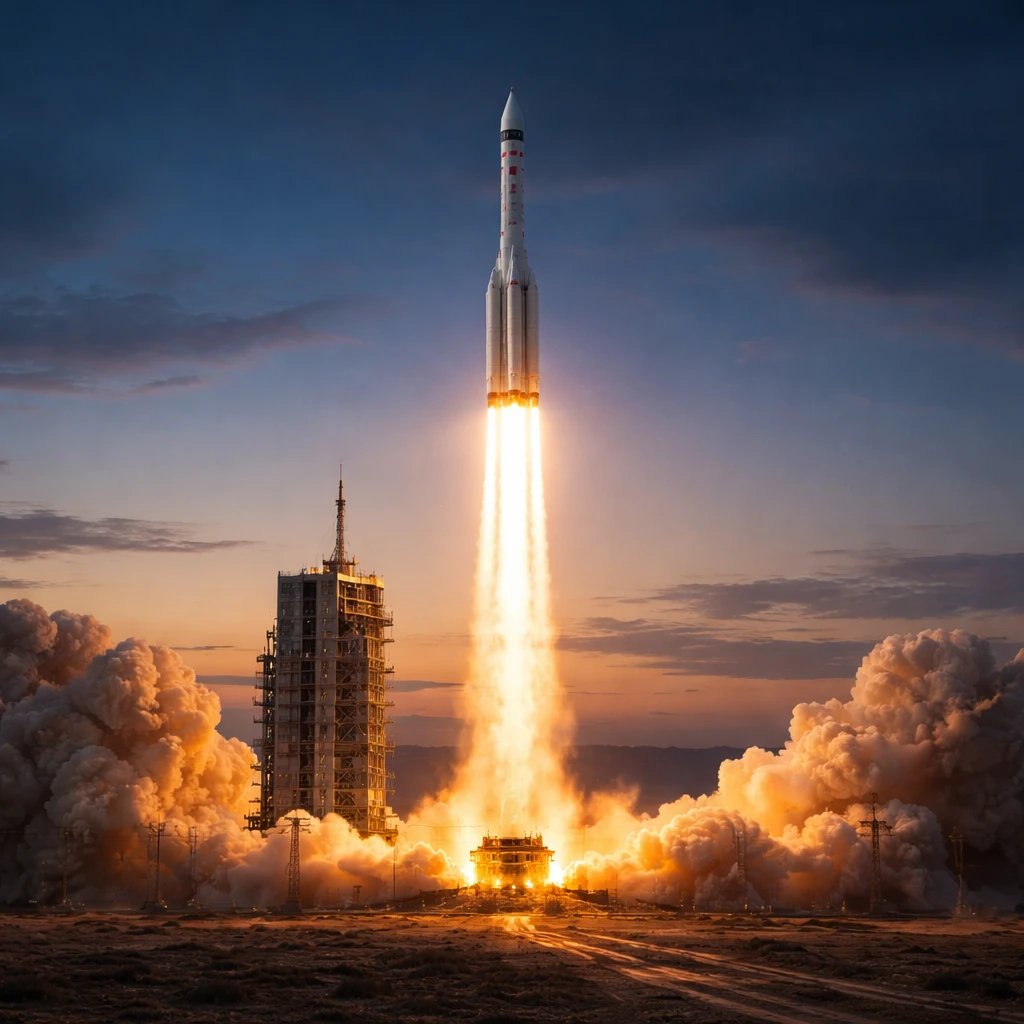
China is preparing to launch the Shenzhou-23 mission this Sunday, an undertaking that could redefine the parameters of human presence in low Earth orbit. The mission involves transporting three astronauts to the Tiangong space station via a Long March-2F Y23 rocket. According to the China Manned Space Agency, the flight is scheduled to depart from the Jiuquan Satellite Launch Center located in northwestern China.The crew for this specific mission consists of commander Zhu Yangzhu, pilot Zhang Yuanzhi, and payload specialist Li Jiaying. Notably, Li Jiaying, a former inspector with the Hong Kong police, will participate as the first astronaut from Hong Kong to be involved in a Chinese space mission. A significant aspect of this flight is the possibility of an extended stay; officials have indicated that one crew member could remain on the Tiangong station for a full year. This would represent a substantial increase over the six-month missions that have characterized the country's space station operations since 2021. The specific astronaut designated for this year-long mission will be identified at a later stage during the flight itself.

China Prepares Shenzhou-23 Launch Targeting Extended Orbital Stay

Key Points

  • The mission aims to test a potential one-year human stay in orbit, significantly longer than previous six-month missions.
  • Technical milestones include the first autonomous rapid rendezvous and docking with Tiangong's core module.
  • The mission supports China's long-term roadmap for crewed lunar landings by 2030 and a permanent lunar base by 2035.

The Shenzhou-23 mission represents a critical step in China's broader strategic objectives within the aerospace and defense sectors. As the nation moves toward its goal of landing astronauts on the moon by 2030, this mission serves as both a testing ground for human endurance and a technical demonstration of orbital capabilities.


Key Mission Objectives and Economic Implications

  • Long-Duration Human Research: Scientists intend to utilize this mission to investigate the physiological and psychological impacts of prolonged spaceflight. Specific areas of study include bone density loss, radiation exposure, and psychological stress on the human body.
  • Advanced Orbital Maneuvers: The Shenzhou-23 flight will feature the first autonomous rapid rendezvous and docking procedure with the core module of the Tiangong station. This technical capability is viewed as a foundational element for future lunar operations.
  • Lunar Program Development: China is actively developing the necessary hardware for its 2030 lunar landing goals, which includes the Lanyue lunar lander, the Mengzhou spacecraft, and the Long March-10 rocket. Recent testing of these systems is part of the ongoing preparation for crewed lunar missions.

From a market perspective, these advancements underscore the growing importance of the aerospace and defense industries. The expansion of China's space program, which included returning samples from the far side of the moon via robotic mission in 2024, highlights the heavy capital allocation toward high-technology infrastructure and orbital logistics.


Risks and Uncertainties

  • Competitive Timeline Pressures: The mission occurs amidst a period of intense competition for lunar dominance. While China targets 2030 for crewed lunar landings, the United States is working toward a 2028 crewed lunar landing through NASA's Artemis program.
  • Operational Complexity: Moving from standard six-month missions to a potential one-year stay introduces new variables in mission management and astronaut health monitoring.
  • Geopolitical Cooperation Dependencies: China’s future plans include working with Russia to establish a permanent lunar base by 2035, suggesting that long-term success may rely on international collaborative frameworks.

These factors introduce technical and strategic uncertainties that could impact the pace of development and capital expenditure within the global space economy and related defense sectors.

Risks

  • Increased complexity in managing human health, such as bone density loss and radiation exposure, during extended stays.
  • Heightened competition with the US Artemis program's 2028 target for crewed lunar landings.
  • Reliance on technical successful execution of new hardware like the Long March-10 and Lanyue lander.

More from Economy

Japanese Real Wages Rise for Fourth Straight Month, Strengthening Case for Monetary Tightening Jun 4, 2026 Market Resilience Amidst Sector Shifts: Dow and Russell 2000 Reach New Heights Jun 4, 2026 Australian house price momentum to slow to four-year low as borrowing costs bite Jun 4, 2026 Kevin O’Leary Scales Back Utah Data Center Plan Amid Lawmaker Concerns Jun 4, 2026 Fed's Daly Says AI Could Exert Downward Pressure on Prices Over Several Years Jun 4, 2026