
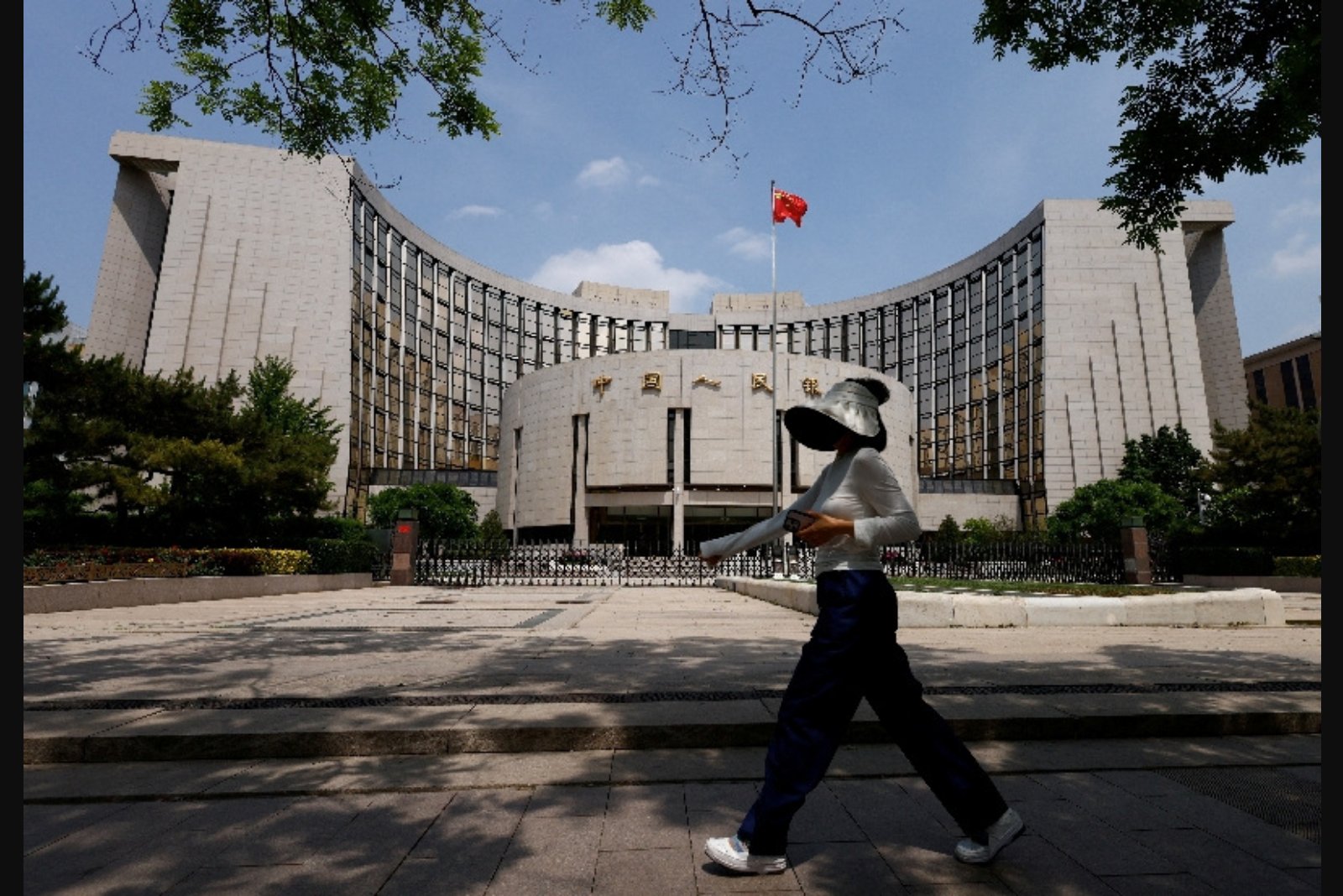
Market participants expect China to maintain its benchmark lending rates unchanged in May for the 12th consecutive month, according to a recent survey. Ample supplies of cash in the interbank market have reduced pressure on policymakers to lower rates despite weak economic activity and subdued lending.
Respondents to the poll said the seven-day reverse repo rate - the tool that anchors loan prime rate (LPR) pricing - is likely to remain on hold, implying little immediate incentive for the central bank to cut lending rates. The LPR itself is set each month after 20 designated commercial banks submit proposed rates to the National Interbank Funding Center. In the survey of 24 market participants, all forecast that at the upcoming review the one-year and five-year LPRs would remain at 3.00% and 3.50%, respectively.
Analysts at Huachuang Securities noted that with interbank rates trading beneath the policy rate, "the PBOC has little incentive to cut reserve requirement ratios or lower interest rates." The average rate on overnight repurchase transactions in the interbank market - a common gauge of cash conditions - has been around 1.2% over the past month, its lowest level since August 2023.
In its latest communications the central bank reiterated a policy posture described as "moderately loose." However, unlike language in the fourth-quarter report, the most recent quarterly policy implementation report issued last week made no explicit call for cuts to reserve requirements or interest rates.
Global developments have also entered the policy calculus. The U.S.-Israeli war on Iran has pushed commodity prices higher and elevated imported inflation risks on the central bank's radar, though market participants broadly judge this is insufficient to alter the overall accommodative stance.
Ding Liang, an advisor to research firm Macro Hive, said the central bank is likely to remain focused on maintaining ample liquidity in the face of global energy and growth shocks. He added that weak credit demand and low bank funding costs are expected to put a lid on long-term bond yields.
Domestic economic indicators have shown signs of cooling. China's growth momentum slowed in April, with industrial output losing pace and retail sales falling to their weakest levels in more than three years as the economy grappled with higher energy costs linked to the Iran conflict and persistently weak domestic demand.
Inflation metrics painted a mixed picture. Producer prices rose faster than expected, reaching a 45-month high in April, while consumer inflation also accelerated. Despite these moves, China's domestic bond market has largely held steady, supported by its low correlation with global markets and limited inflation concerns compared with other regions where bond yields are rising.
Key context and market takeaways:
- Expectations of unchanged LPRs for one-year and five-year tenors at 3.00% and 3.50% signal limited near-term monetary easing.
- Low interbank repo rates (about 1.2%) point to abundant short-term liquidity and lessen pressure for policy rate cuts or reserve requirement reductions.
- External energy-driven inflation risks are noted but not deemed sufficient by markets to force a policy shift away from an accommodative stance.
Sectors likely impacted: Banking and financial intermediation, fixed-income markets, and consumer-facing industries sensitive to domestic demand and energy costs.