
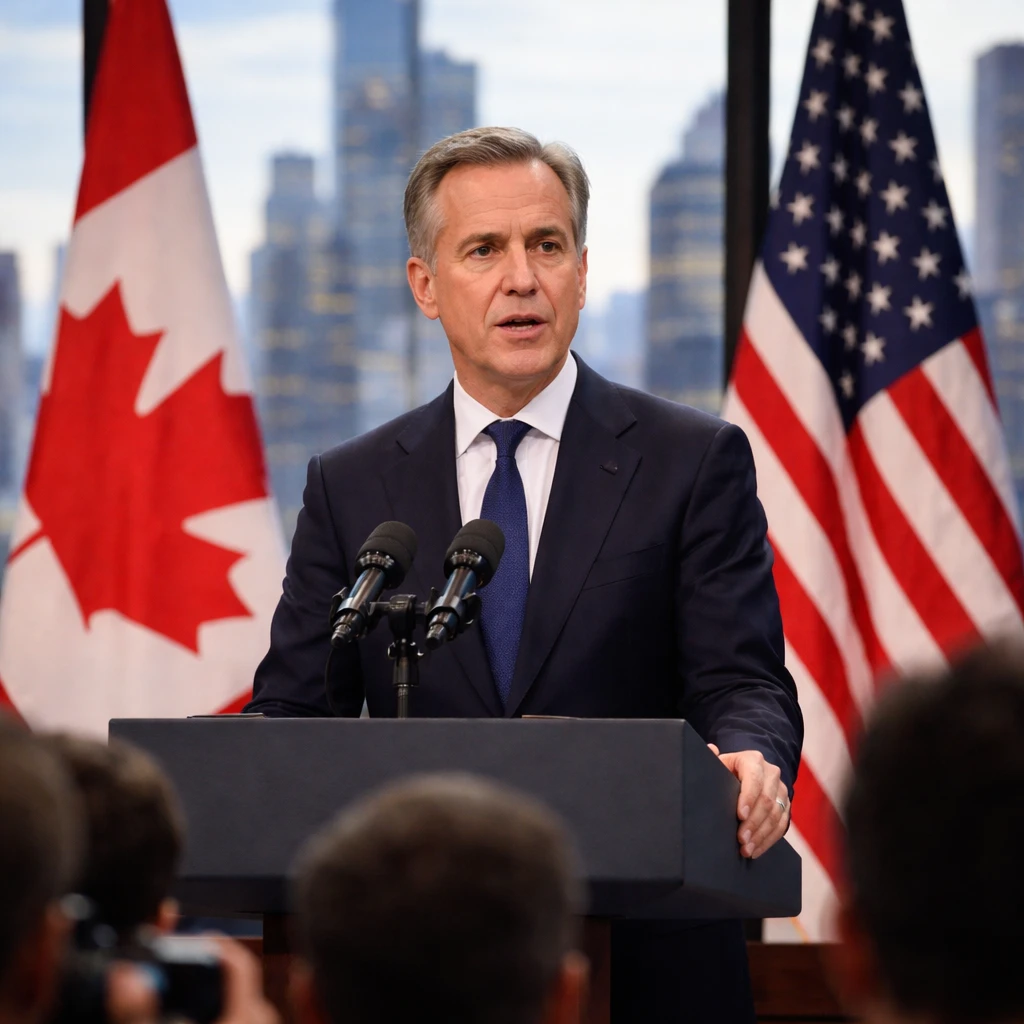
Canadian Prime Minister Mark Carney used a speech in New York on Thursday to propose a "new partnership" with the United States, saying closer cooperation would "help make America great again." He framed the appeal against the backdrop of what he termed a global "rupture," a moment in which the U.S. is altering its commercial relationships.
Carney suggested that tighter collaboration in specific industries - including aluminum, automobiles and critical minerals - would reinforce the economic strength of both nations. He emphasized focused sectoral ties rather than a broad-sweeping integration, arguing that such alignment would benefit Canada and the United States alike.
The prime minister reiterated Canada's recent trade strategy amid persistent tensions with the U.S. He has pledged to double Canadian exports to other markets over the next decade and noted that, over the last year, he signed more than 20 economic and security agreements intended to broaden Canada’s external ties.
Carney referenced recent provocations by the U.S., noting President Donald Trump’s threats to annex Canada as the 51st state. He characterized longstanding ties between the two countries as containing "weaknesses we must correct," saying the United States had "fundamentally changed its approach to trade," and had raised tariffs to levels "last seen during the Great Depression."
Earlier this year in Davos, Carney had described "American hegemony," warning that deeper integration with great powers could produce "vulnerabilities to be exploited." In his New York remarks, however, he adopted a more conciliatory tone toward the United States, calling it "the most dynamic, resilient and inventive country the world has ever known."
He said the founding American values of liberty, democracy, justice and openness "should continue to serve as guides to its future and that of the world." Carney acknowledged that the two neighbours have had disputes over time but pointed out that they have historically managed to resolve them. He reiterated his view that a stronger Canada would "help make America great again," and pressed for deeper cooperation in the aluminium, automobile and critical mineral sectors.
Key takeaways:
- Carney called for a targeted U.S.-Canada partnership focused on aluminum, automobiles and critical minerals.
- He framed the appeal amid a broader "rupture" in global commercial relations and noted the U.S. has changed its trade approach, raising tariffs substantially.
- Canada is pursuing export diversification and has signed more than 20 economic and security agreements in the last year.
Contextual risks and uncertainties:
- Ongoing trade tensions with the United States could complicate cooperation in affected sectors such as aluminum and automotive manufacturing.
- Shifts in U.S. trade policy, including elevated tariffs, introduce uncertainty for cross-border supply chains and critical minerals trade.
- Political rhetoric and threats between leaders may strain negotiations even as both countries historically resolve disputes.