
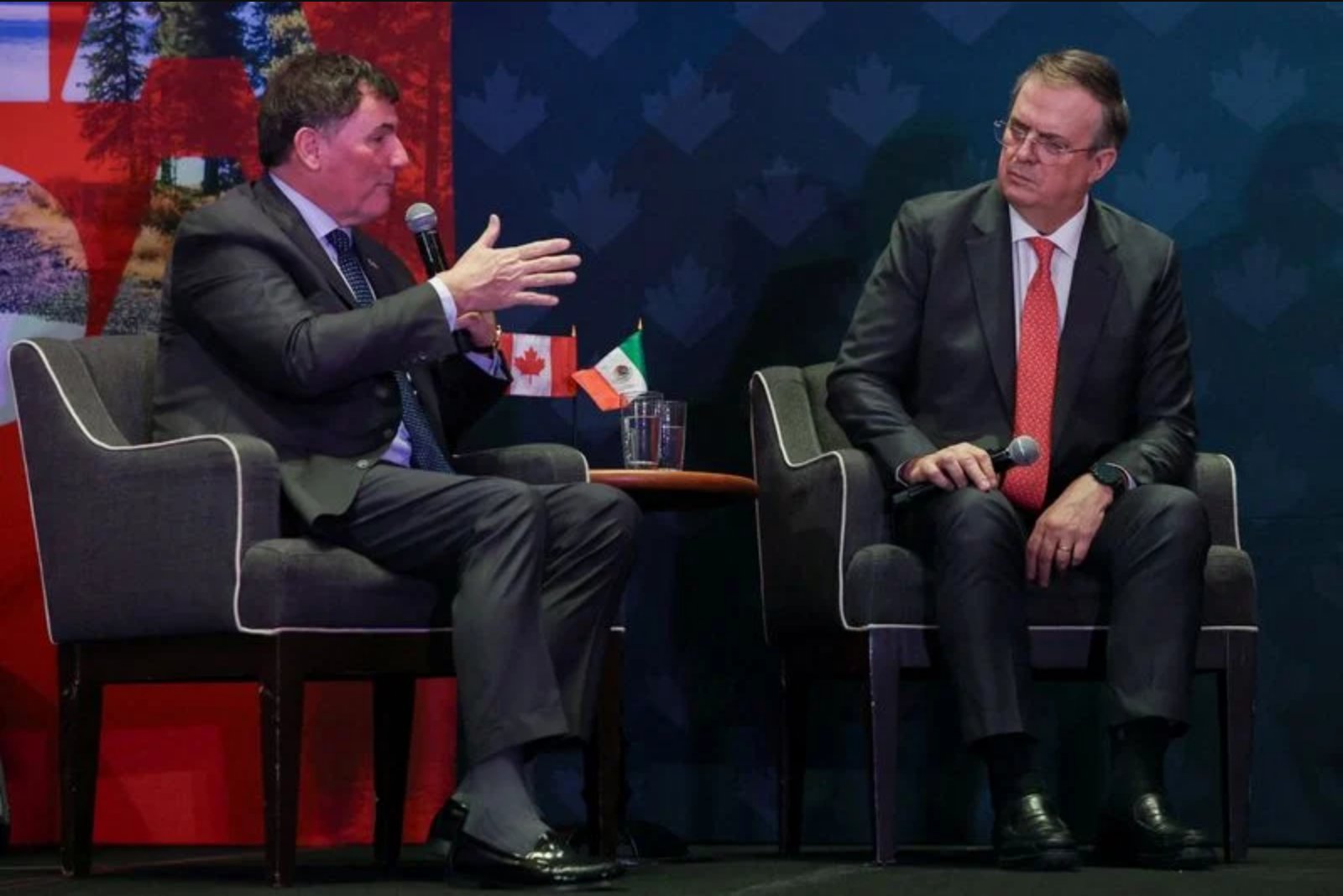
Canada sent a formal letter to the United States and Mexico on Tuesday setting out its recommendations to extend the United States-Mexico-Canada Agreement for 16 years and to hold parallel negotiations on sectoral tariffs, ahead of a scheduled meeting between Canadian and U.S. trade officials later the same day.
Dominic LeBlanc, the minister responsible for Canada-U.S. trade, was due to meet with U.S. Trade Representative Jamieson Greer. Janice Charette, Canada’s chief trade negotiator to the United States, was to accompany LeBlanc to the talks. The meeting follows a period in which Canada was excluded from recent bilateral discussions between the U.S. and Mexico.
In the letter, Ottawa described the Joint Review process as a chance to evaluate the agreement and identify potential improvements to keep pace with changing economic conditions. The letter stated:
"The Joint Review process provides us an opportunity to review the Agreement to assess whether there are ways to strengthen it and consider where improvements may be warranted to keep up with evolving economic conditions,"and it emphasized that addressing sectoral tariffs concurrently with the agreement review is essential.
Among the tariff issues Ottawa highlighted are U.S. levies on steel, aluminium and autos, measures that the letter said have harmed Canada’s economy. Discussions on those specific tariffs are positioned by Canada as a necessary complement to the broader review of the USMCA.
This encounter represents LeBlanc’s second face-to-face meeting with Greer since their initial meeting in March. The government said the two officials have also maintained occasional telephone contact, including a call last week.
Canadian businesses have publicly criticized their government for moving too slowly to initiate the USMCA review process, which must be completed in its official form by July 1. By contrast, Mexico has been more active in engaging with U.S. officials over the past weeks, according to the letter and government commentary.
The article noted a prior break in talks late last year, when then-President Trump suspended all discussions with Canada after the province of Ontario aired an advertisement featuring former President Ronald Reagan that warned tariffs can lead to trade wars.
Commenting on the bilateral dynamics, Prime Minister Mark Carney told reporters that the U.S. has a set of technical issues with both Mexico and Canada, and that those differences have produced a bifurcated discussion. He said:
"In terms of the discussions with the U.S., there is a series of technical issues that they have with Mexico, they have with us, which is why there is a bifurcated discussion,"according to government remarks.
In a speech in New York last week, Carney was quoted as saying that a stronger Canadian economy would support growth in the United States and stated, "Canada Strong will help make America great again," a comment that reportedly won praise from the U.S. ambassador to Canada.
The United States and Mexico completed their first round of bilateral talks on revising the USMCA last week, focusing on automotive rules of origin, trade in steel and aluminium, and issues related to economic security, the U.S. Trade Representative’s office said. If the three parties cannot agree to extend the pact for the period Canada is proposing, the agreement would instead default to annual reviews through 2036.
U.S. Trade Representative Greer has suggested Canada may need to accept some tariff measures as part of any engagement on the agreement's review. Greer has also advocated for stricter automotive rules of origin and for greater access for U.S. firms to Canadian markets in areas such as dairy. Ottawa and Washington have also clashed over restrictions on liquor sales imposed by Canadian provinces, which Washington views as a point of friction.
Summary
Canada has proposed a 16-year renewal of the USMCA and requested that sector-specific tariff discussions - particularly on steel, aluminium and autos - proceed alongside the agreement review. The proposal arrives as Canadian and U.S. negotiators prepare to meet and against a backdrop of criticism about the pace of Ottawa's engagement in the trilateral review process.
Key points
- Canada formally recommended extending the USMCA for 16 years and urged parallel talks on sectoral tariffs that it says have harmed its economy - sectors affected include metals and autos.
- Dominic LeBlanc was scheduled to meet U.S. Trade Representative Jamieson Greer with chief negotiator Janice Charette in attendance; this follows Canada being left out of recent U.S.-Mexico bilateral talks.
- The USMCA review must be completed officially by July 1; failure to reach a trilateral extension would trigger annual reviews through 2036, affecting trade certainty across multiple sectors including automotive, agriculture and spirits.
Risks and uncertainties
- Timing and pace of negotiations - Canada has faced criticism for being slow to engage, which could affect the completion of the official review by the July 1 deadline and create uncertainty in sectors reliant on cross-border supply chains, notably autos and metals.
- Potential concessions on tariffs - U.S. indications that Canada may need to accept certain tariffs could have economic consequences for Canadian industries exposed to steel, aluminium and automotive costs.
- Market access disputes - Ongoing U.S. demands for greater access to Canadian sectors such as dairy and concerns over provincial liquor restrictions add uncertainty for agricultural and beverage exporters seeking clearer market rules.