
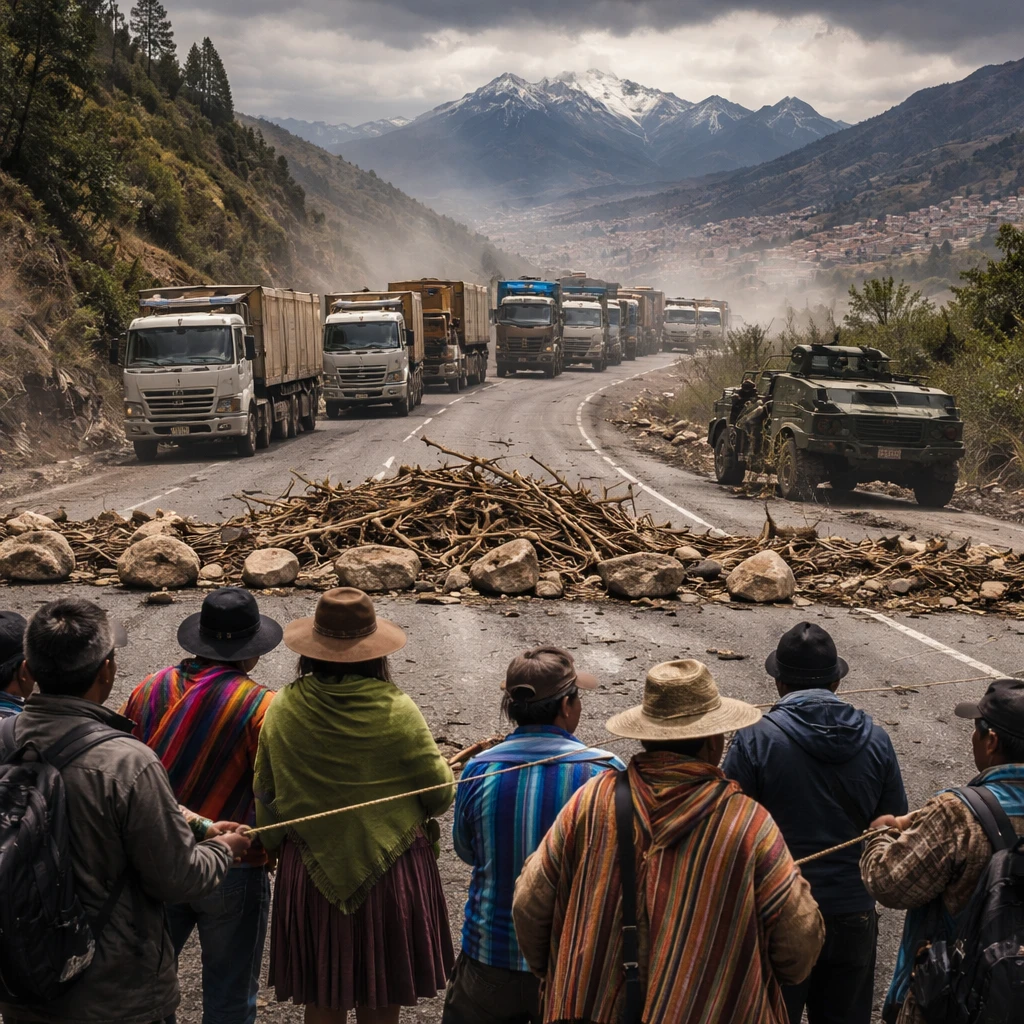
Bolivian sovereign debt continued to weaken on Tuesday, marking a 10th consecutive day of declines as protesters maintained road blockades that have cut off essential deliveries to the administrative capital, La Paz.
Dollar-denominated sovereign notes have lost more than five cents over the past two weeks, a drop that stood as the weakest showing among emerging market sovereigns in that period. The yield on the bond maturing in 2031 rose to 10.6%, up from the 9.75% level set at issuance three weeks ago. Notes with a 2030 maturity slipped by just over a cent on Tuesday. Barclays has advised a sell recommendation on the 2031 issue.
Authorities say nearly 60 blockades are in place across six of Bolivia's nine departments, concentrated mostly in the western regions. The stoppages have disrupted supply chains into La Paz, cutting flows of food, fuel and medical supplies and raising the prospect that the city’s economy could be paralyzed. Observers also note the potential for higher consumer prices in a country where inflation is already in double digits.
The protests are focused on calls for the resignation of President Rodrigo Paz, who assumed office seven months ago. Leading the demonstrations are the national labor union, the La Paz farmers' federation and supporters of former President Evo Morales. Organizers say repeated requests for dialogue from the president have been ignored.
Complicating the political backdrop, Morales has been sheltering in Lauca Ñ since October 2024 to avoid arrest warrants alleging statutory rape and human trafficking. Tensions escalated on Monday when coca growers stormed an army base in Cochabamba, searching for foreigners they claimed were plotting to capture Morales.
Responding to the unrest, Bolivia’s Senate approved legislation on Tuesday that would relax procedures for declaring a state of emergency, a move that would allow authorities to suspend certain individual rights. The bill has advanced to the lower chamber where it is now under debate.
The combination of prolonged road blockades, heightened political tension and moves to adjust emergency powers has translated into pressure on sovereign bond prices and yields, while the flow of essentials into La Paz remains constrained. Market participants and residents alike are watching whether the blockades will persist and how lawmakers in the lower chamber will act on the emergency measures.