
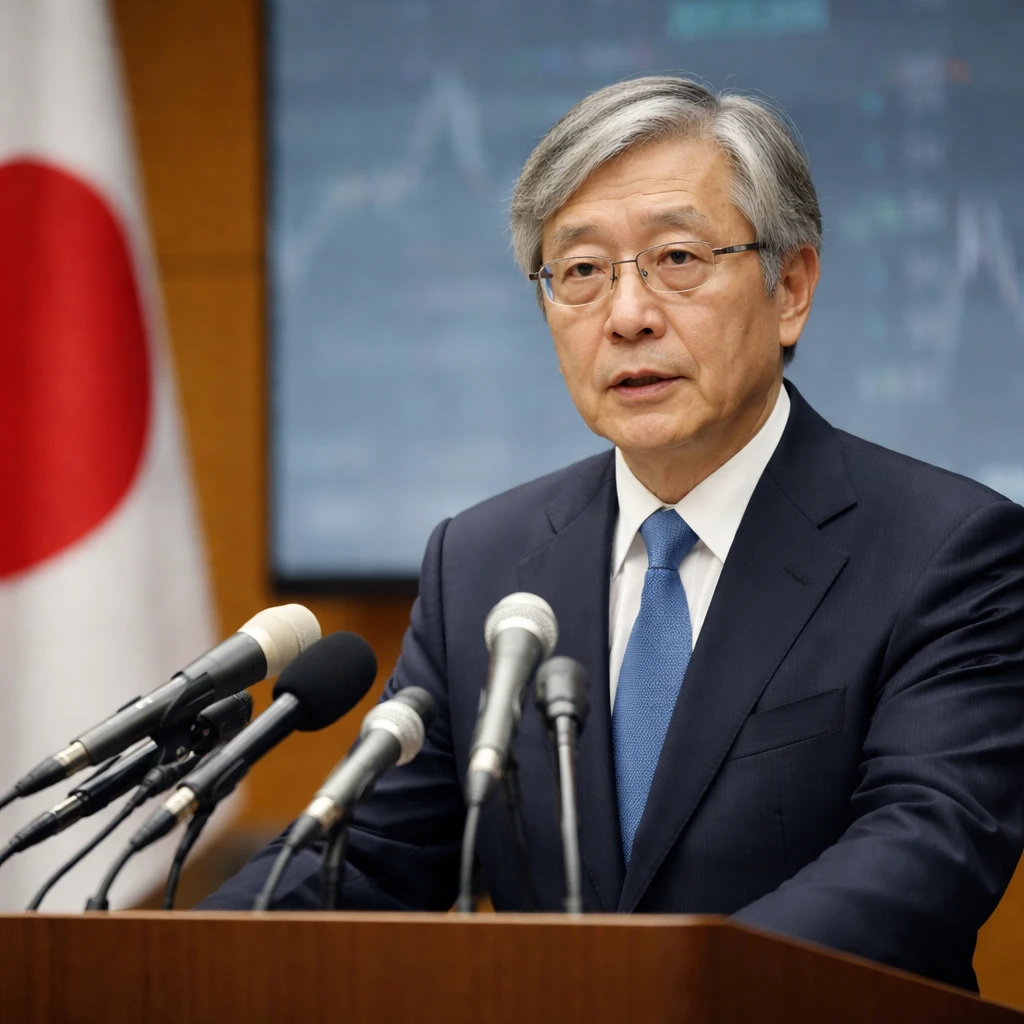
Bank of Japan Governor Kazuo Ueda indicated the central bank could move to raise interest rates at its June 15-16 policy meeting if threats to price stability exceed the economic risks posed by the Middle East crisis.
Ueda said the BOJ will consider a rate increase when upside risks to prices outstrip the downside risks associated with the Middle East conflict. He added that the risks to inflation are emerging sooner and appear larger than had been anticipated.
Market participants have reacted to those remarks by assigning about an 85% probability to a quarter-point rate increase at the June meeting. If the bank enacts such a hike, it would lift the BOJ's benchmark interest rate to a level not seen since 1995.
Internal dynamics at the BOJ suggest a tilt toward tightening. In April the policy board voted 6-3 to hold rates steady. Since then, two members who supported keeping policy unchanged in April have moved toward supporting a near-term increase, citing inflation risks linked to the Iran conflict.
Analysts have read Ueda's statements as an indication that a rate increase is likely, interpreting his comments as evidence of confidence that Japan's economy can tolerate the current geopolitical pressures.
Mixed data complicates the decision
The central bank faces a heterogeneous economic picture as it weighs its next steps. Consumer inflation in Tokyo has shown signs of slowing, and capital spending has come in weaker than expected. At the same time, the BOJ must factor in Prime Minister Sanae Takaichi's position on monetary policy as part of its deliberations.
These elements together frame a challenging policy choice: whether to act preemptively against rising price risks or to remain cautious given geopolitical and domestic demand uncertainties.
Summary of implications
- Governor Ueda signaled a possible rate increase at the June 15-16 meeting if inflation risks dominate.
- Markets price an 85% probability of a quarter-point rise that would put the benchmark rate at its highest since 1995.
- The BOJ board is shifting toward a hike, with two former hold voters now favoring near-term tightening because of inflation risks tied to the Iran conflict.
Key considerations going forward
- Geopolitical developments in the Middle East - particularly those linked to Iran - are an active input to policy deliberations.
- Mixed domestic indicators, including slowing Tokyo consumer inflation and weaker-than-expected capital spending, complicate the timing and scale of any rate move.
- Market expectations and the BOJ board's evolving stance suggest a higher likelihood of tightening, which affects financial markets and interest-rate-sensitive sectors.
As the BOJ approaches its June meeting, officials will balance the increasing signals of inflation pressure against geopolitical risks and uneven domestic data. The outcome will be closely watched by markets and sectors sensitive to interest-rate changes.