
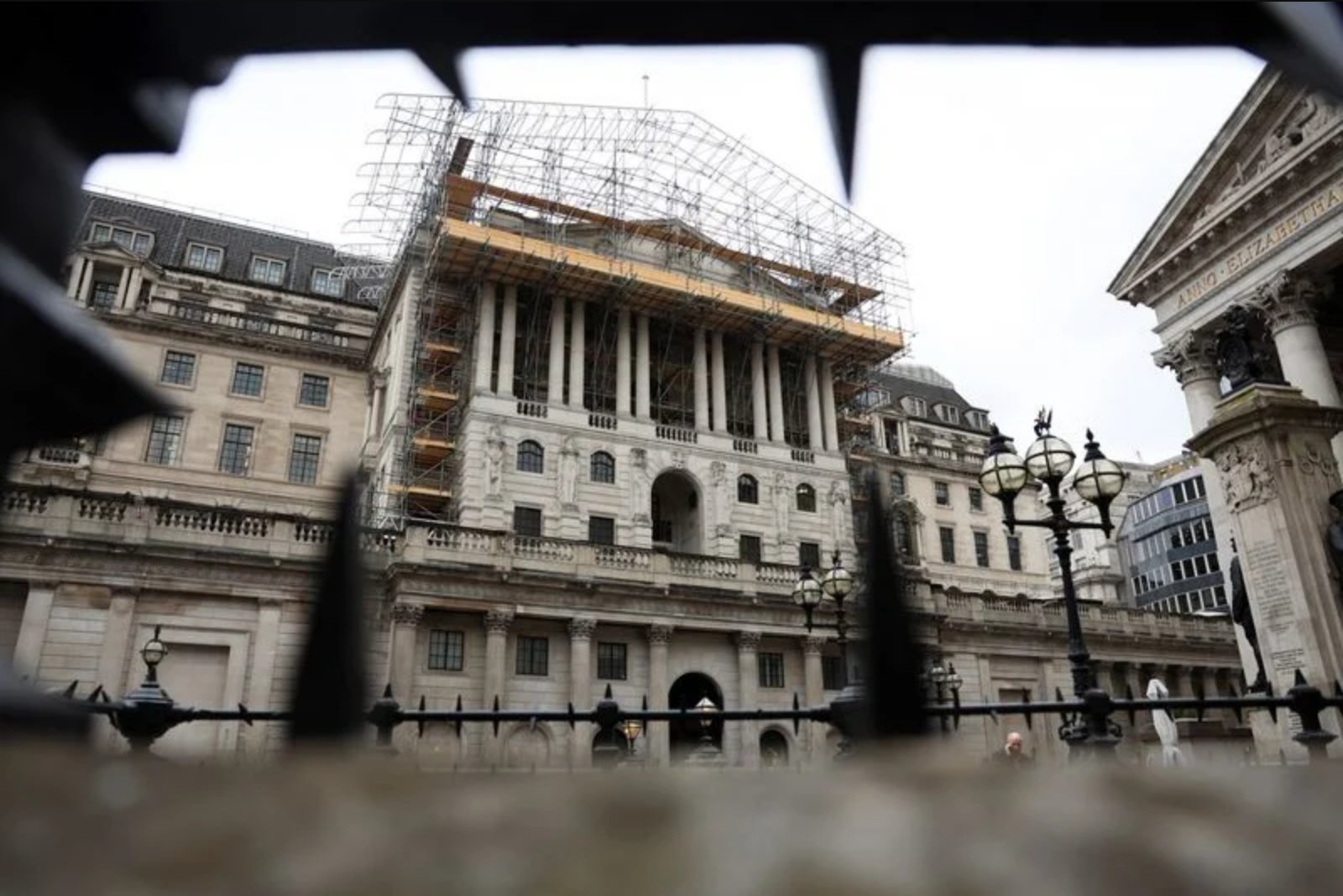
Bank of England policymaker Alan Taylor described the current stance of UK interest rates as restrictive for economic activity, and said he does not see a need to increase the policy rate to fight inflationary pressures that have intensified as a result of the war involving the U.S., Israel and Iran.
In an interview broadcast on television, Taylor made clear he feels the central bank is positioned appropriately given present conditions. "I feel comfortable where we are unless we get the worst-case scenario," he said, stressing that he wants to observe signs that the recent inflationary shock is receding before changing tack.
Taylor's views reflect a shift in emphasis since earlier in the year. Prior to the conflict between the U.S. and Israel on one side and Iran, he was among the strongest voices on the Bank of England's Monetary Policy Committee pushing for interest-rate reductions. That advocacy for easing has moderated: since the outbreak of hostilities, Taylor and a majority of MPC members have consistently voted to leave borrowing costs unchanged.
His comments highlight two linked concerns: the degree to which current policy settings are exerting restraint on the economy, and the influence of external geopolitical events on domestic inflation dynamics. Taylor explicitly tied the increased inflationary pressure to the Iran war, and framed his readiness to act only if conditions worsen substantially - the scenario he described as "the worst-case scenario."
For now, his public stance supports the prevailing approach on the MPC of maintaining the existing interest-rate level rather than pursuing immediate hikes or cuts. He emphasized the importance of seeing a clear improvement in the underlying inflation picture before endorsing a different policy path.
Context and implications
Taylor's remarks underscore the policy trade-offs facing the Bank of England: balancing the restrictive impact of current rates against the risk that geopolitical developments could sustain inflationary pressures. His prior preference for cuts, and subsequent shift to voting with the majority to hold rates after the conflict intensified inflation, illustrates how external shocks have influenced committee dynamics.