
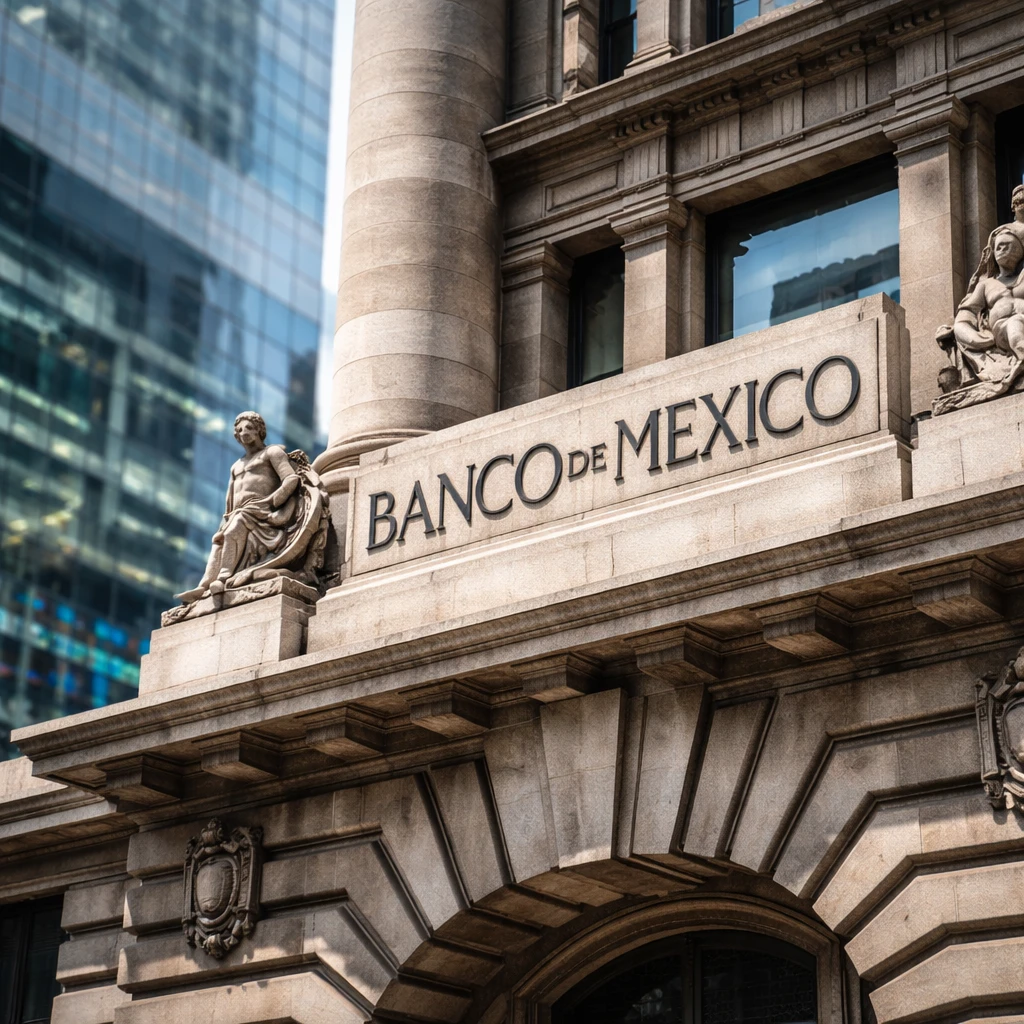
Mexico's central bank should keep its benchmark interest rate at 6.50% given an uncertain path for inflation, Deputy Governor Gabriel Cuadra said Wednesday. Cuadra told Bloomberg Linea that the outlook for prices is complicated and that the central bank should refrain from committing to a schedule for future moves.
According to Cuadra, the timing of any subsequent rate adjustments will be contingent on observed inflation developments rather than a pre-set calendar. He emphasized that there remains uncertainty about how long the policy rate might stay at its current level.
Banxico will make its next policy announcement on June 25. The deputy governor argued that internal discussions should center on inflation projections themselves rather than debating the prospect of additional rate cuts. He reiterated the view that some price pressures are temporary and are expected to ease as those transitory factors dissipate, while warning that risks remain and that forecasts could change if new pressures emerge.
At its May 7 meeting, the central bank trimmed the benchmark rate by 25 basis points to 6.50%. Following that decision, officials within Banxico signaled that the reduction likely represents a pause in the cycle of rate cuts. Cuadra described the current configuration of economic forces as a delicate balance that supports keeping the policy rate unchanged for now.
The deputy governor's remarks frame a cautious approach that anchors deliberations around incoming inflation data and the evolution of the risks he identified. With the next policy decision set for late June, Banxico will weigh whether incoming price developments warrant maintaining the current stance or prompt a re-evaluation of the path ahead.
Key points
- Banxico's policy rate currently stands at 6.50% following a 25 basis point cut at the May 7 meeting.
- Deputy Governor Gabriel Cuadra favors keeping rates at 6.50% given a complicated inflation outlook and uncertainty over the duration of the rate level.
- The next central bank decision is scheduled for June 25; officials have indicated the May cut likely marks a pause in easing.
Sectors likely affected
- Financial sector - bank lending spreads and interest-sensitive financial products are sensitive to the policy rate.
- Household and business borrowing - consumer credit and corporate financing conditions can be influenced by the central bank stance.
Risks and uncertainties
- Duration uncertainty - it is unclear how long the rate will remain at 6.50%, which complicates planning for borrowers and lenders.
- Forecast volatility - Cuadra noted that forecasts may shift if new inflationary pressures appear, creating policy uncertainty.
- Transitory factors - while some price pressures are expected to fade, persistent or new pressures could alter Banxico's assessment.