
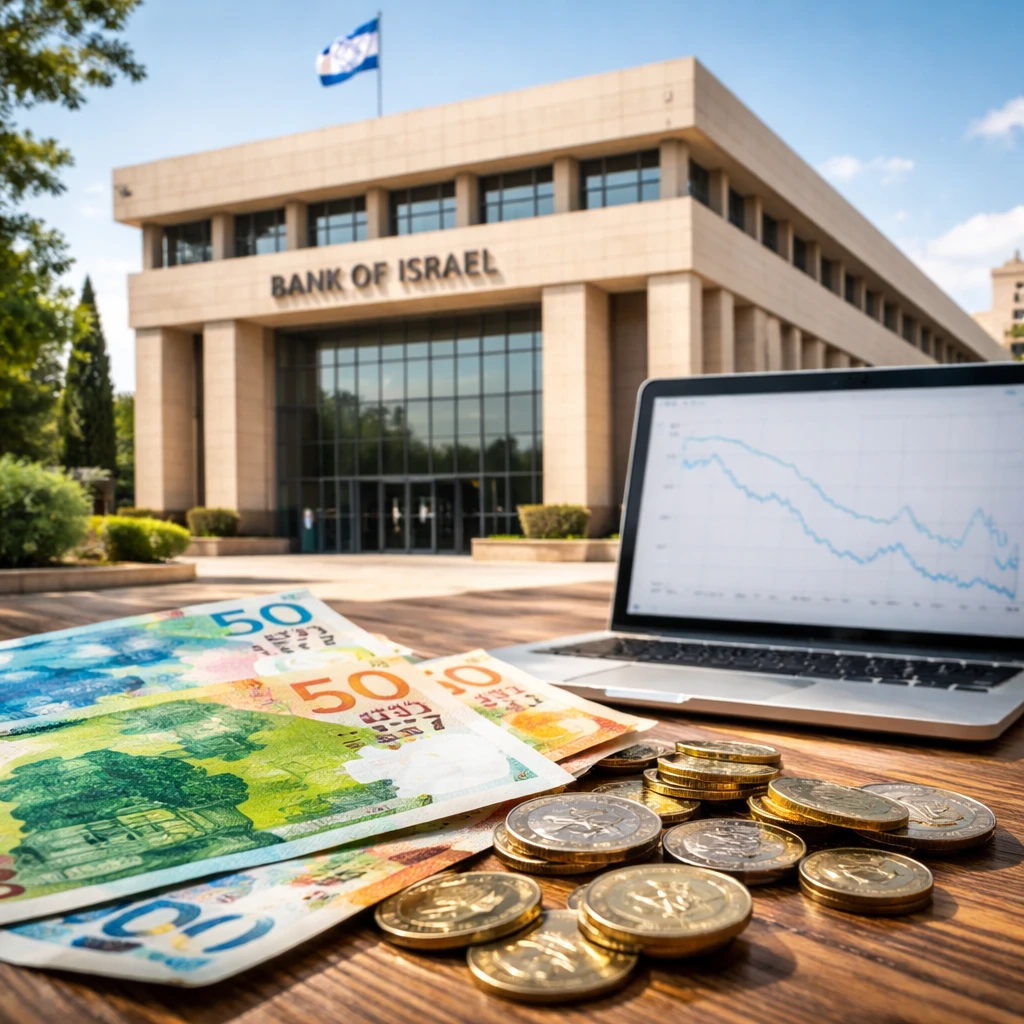
JERUSALEM, May 25 - The Bank of Israel moved to lower short-term interest rates on Monday, trimming its policy rate to 3.75% from 4%. This decision represents the third reduction in the past six months and reflects the central bank's assessment that inflation remains contained even as geopolitical uncertainty persists.
The institution had previously cut rates in November and again in January. It then paused in two subsequent meetings amid the conflict with Iran and concerns that supply-driven shocks could push up prices. Those risks led the bank to hold off on easing until this latest decision.
Inflation data show the annual consumer price increase was 1.9% in April, comfortably inside the Bank of Israel's 1-3% target range. The central bank noted that the large appreciation of the shekel - which is trading at a 33-year high versus the dollar - is likely exerting downward pressure on inflation, a factor that has contributed to its willingness to reduce rates.
Exporters have urged the central bank to either lower interest rates or take action in the foreign exchange market in response to the shekel's strength. The bank's statement reiterated that while price pressures are currently stable, policymakers remain alert to possible renewed acceleration of inflation stemming from geopolitical developments and their effects on economic activity, energy prices, and higher state spending.
The statement highlighted the continued fragility of the geopolitical environment. "There is still significant geopolitical uncertainty, both domestically and globally," the Bank of Israel said. It also addressed the domestic economic impact of the conflict with Iran, saying the Iran war "had an impact on real economic activity, and the most recent data show a recovery."
On the timeline of the conflict referenced by the central bank, the United States and Israel carried out airstrikes on Iran on February 28. A ceasefire that was forged on April 8 has so far held, but the central bank characterized the situation as fragile.
Bank of Israel staff in March had projected two further rate cuts by early 2027, implying a possible policy rate around 3.5%. The Monetary Committee emphasized its multi-pronged remit, stating: "The Monetary Committee's policy is focusing on price stability, support for economic activity, and stability of the markets." It added that "The interest rate path will be determined in accordance with the development of inflation, economic activity, geopolitical uncertainty, and fiscal developments."
Implications
- The rate reduction signals a shift toward monetary easing given contained inflation and currency strength.
- Export-oriented sectors facing a stronger shekel may continue to press for policy or FX measures to restore competitiveness.
- Policymakers remain vigilant to potential inflationary pressures from geopolitical shocks, energy costs, and higher government spending.