
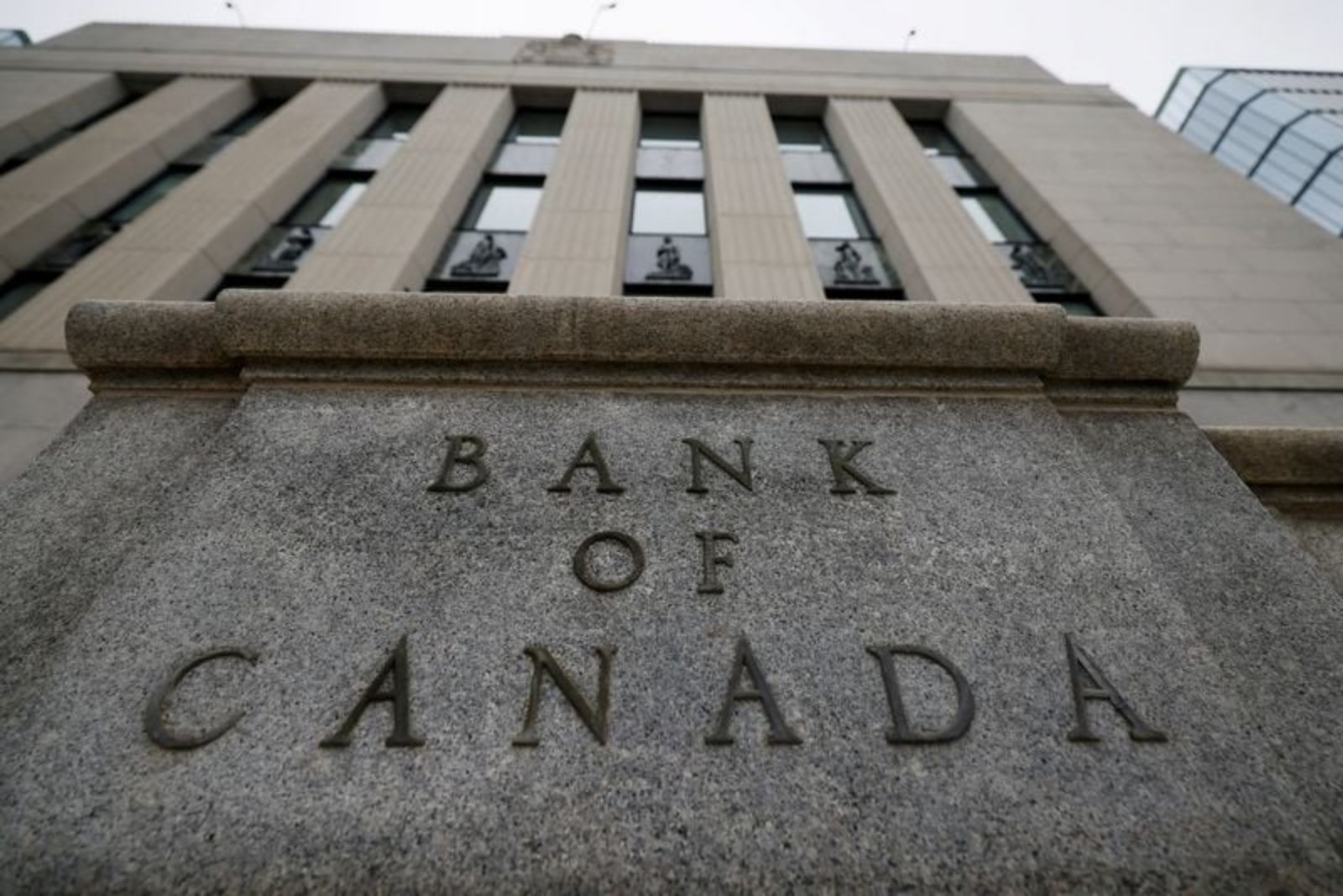
The Bank of Canada is widely expected to maintain its policy rate at 2.25% at its June 10 meeting and to keep rates unchanged for the rest of the year, according to a poll of economists conducted June 2-5. All 34 economists surveyed forecast no change to the overnight rate at next week’s decision, and 28 of the 34 - more than 80% - said they expected the central bank to stay on hold through the year.
Inflation pressures have ticked up amid a sustained energy shock tied to the U.S.-Israeli war with Iran, sending headline inflation to 2.8% in April from 2.4% in March. Despite that rise, the inflation rate remains inside the Bank of Canada’s 1-3% target band. Poll respondents pointed to a decline in core inflation measures as evidence that underlying demand is weak, a factor that supports the case for leaving borrowing costs unchanged while activity remains below potential.
The central bank has substantial easing behind it, having cut rates by a cumulative 275 basis points between June 2024 and October 2025. That policy easing, along with signs of slack in demand, underpins economists’ expectations that the BoC will refrain from further policy action in the near term even as headline inflation is elevated by energy price moves.
Labour market data provided mixed signals. Robust job gains in May were viewed as positive for the economy, yet Canada entered a technical recession in the last quarter - the first such contraction since the COVID-19 pandemic. The combination of still-encouraging employment and weaker overall activity leaves policymakers balancing competing signals when assessing the outlook.
Market pricing diverges somewhat from the median poll view. Financial markets are assigning a probability to one rate hike by the end of 2026, while more than 40% of poll respondents expected a first increase in early 2027, although there was no consensus on precise timing.
Comments from economists included a cautionary tone about the inflation outlook should energy prices remain elevated. "We are not projecting any hikes or cuts this year," said Avery Shenfeld, managing director and chief economist at CIBC Capital Markets. "Core inflation will heat up in upcoming months on the spillover from oil prices, but not enough to justify a rate hike that would slow recovery in an economy far from full employment."
René Lalonde, director of modelling and forecasting at Scotiabank, warned that a prolonged Middle East conflict could change the policy calculus. "A renewed oil price surge comes at a time when inflation expectations are more sensitive, raising the risk that shocks may carry larger and more persistent effects than in the pre-COVID period," he said. "If the Middle East conflict drags on and credibility slips further, inflation would become more persistent and rise more sharply, requiring materially tighter policy."
Trade-related uncertainty also features in the economic backdrop. The United States-Mexico-Canada Agreement, which has shielded most of Canada’s exports from U.S. tariffs, is slated for review in July. Dominic LeBlanc, the minister responsible for Canada-U.S. trade, said Canada had a positive recent meeting with the United States about that review. Nonetheless, trade frictions with Canada’s largest trading partner remain a source of uncertainty for growth prospects.
In sum, the Reuters poll indicates the prevailing view among economists is for a steady policy stance from the BoC in the near term, underpinned by weak core inflation and prior policy easing, even as energy-driven headline inflation and trade uncertainties create upside risks that could influence the timing of future tightening.
Note: The poll covered 34 economists between June 2 and June 5.