
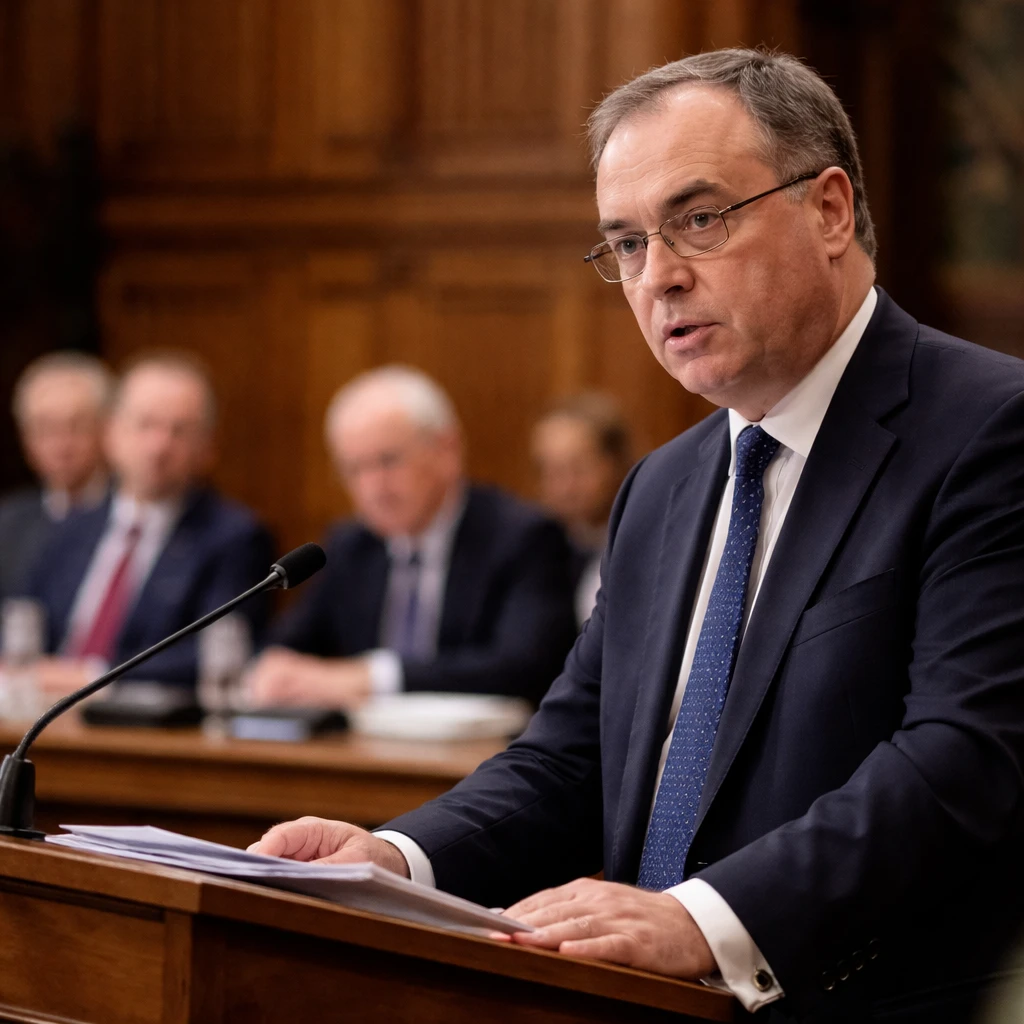
Bank of England Governor Andrew Bailey told lawmakers on Tuesday that returning inflation to the Bank's 2% target is central to restoring public confidence in the institution's credibility.
Speaking to the House of Lords' Economic Affairs Committee, Bailey set out the central bank's focus on managing the process of bringing inflation back to target and ultimately proving the target is credible to households. He highlighted concern that inflation has stayed above the 2% goal for much of the 2020s and said the Bank must concentrate on the path back to the target level and on achieving it.
Bailey specifically dismissed the suggestion of lifting the inflation goal to 3% as a remedy for the recent misses of the 2% target. He reiterated the need to demonstrate that the existing target can be met rather than adjusting the target upward.
On policy decisions, Bailey was part of the April vote to keep Bank Rate unchanged at 3.75%, joining an 8-1 majority that supported holding rates. He also said last week that higher market interest rates have provided the Bank with additional time to assess whether further rate increases are necessary in response to inflationary pressures connected to the Iran war.
Summary and context
The governor framed the Bank's task as both a technical and public-confidence challenge: steer inflation back to 2% and persuade households that the target remains meaningful. That dual emphasis was presented in the context of persistent above-target inflation through much of the current decade.
Key points
- Bailey told the House of Lords’ Economic Affairs Committee that restoring inflation to the 2% target is essential to rebuild household confidence in the Bank's credibility.
- He rejected raising the inflation target to 3% as a fix for recent target misses.
- Bailey voted to keep interest rates at 3.75% in April, joining an 8-1 majority; he also noted that higher market interest rates have provided extra time to judge whether further increases are needed because of inflationary pressures tied to the Iran war.
Risks and uncertainties
- Inflation has remained above the 2% target for most of the 2020s, posing a risk to the Bank's ability to demonstrate target credibility to households.
- Inflationary pressures connected to the Iran war may prompt consideration of further interest-rate moves, creating uncertainty for policy decisions and market expectations.
- The debate over whether to alter the inflation target - though Bailey rejected a 3% target - highlights uncertainty about the policy framework should the current path to target falter.
This account reflects the governor's testimony to the committee and his recent public comments on policy and market conditions.