
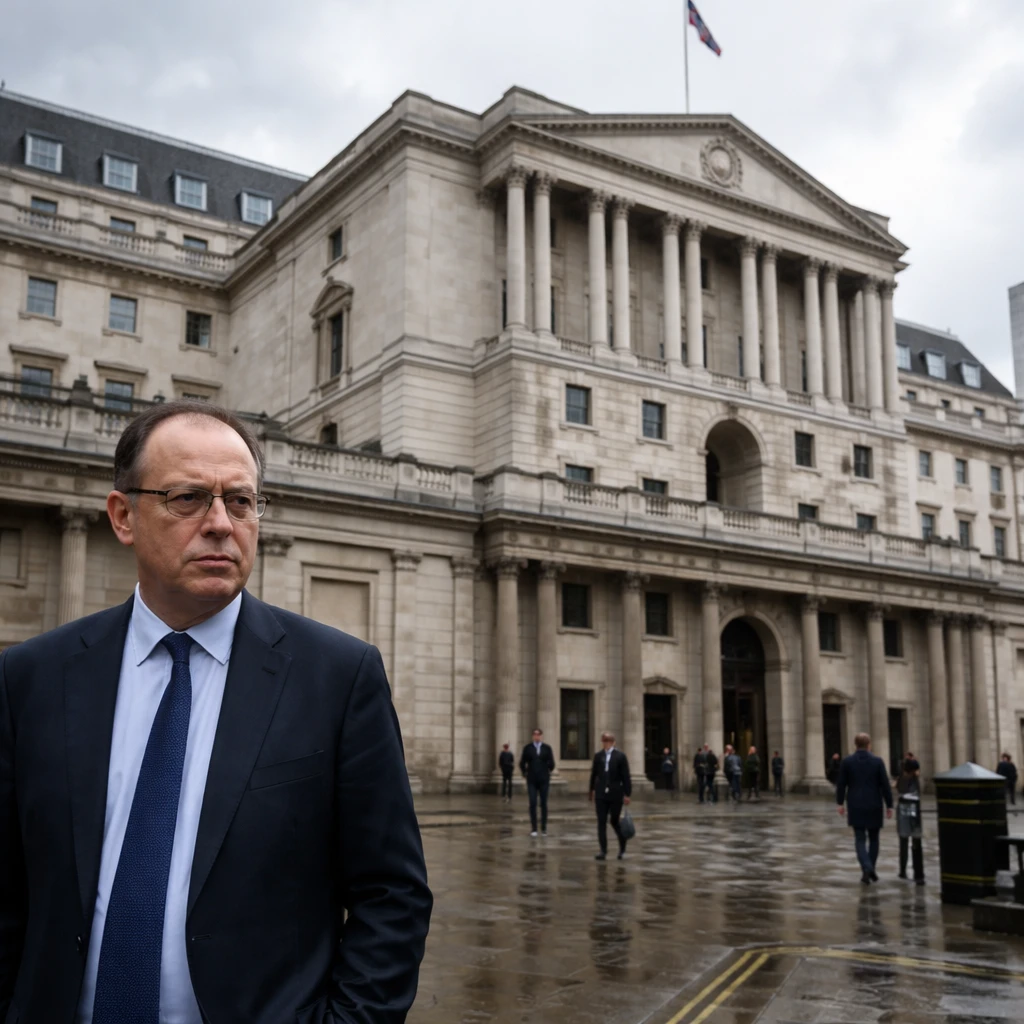
Bank of England Governor Andrew Bailey said on Wednesday that the rise in interest rates seen in financial markets since the onset of the Iran war has provided the central bank with additional time to evaluate how the conflict may affect the United Kingdom economy.
Addressing parliament's Treasury Committee, Bailey pointed to the recent increase in mortgage borrowing costs as evidence of how investors have shifted their positions since the conflict began. "That tightening, I think also gives us ... some time to assess," he told lawmakers.
Bailey was among the eight members of the Monetary Policy Committee who voted to keep the BoE's benchmark interest rate unchanged at its April meeting - an 8-1 majority. At that meeting, the MPC said its approach to the energy shock stemming from the war would hinge on the shock's scale, its duration and the channels through which it spreads across the economy.
The governor also said the outlook for economic growth and the labour market has softened, and he noted that wage settlements have been declining gradually. Those comments underscore the committee's attention to domestic demand and labour-cost pressures as it considers its policy stance.
On energy markets, Bailey remarked that market pricing for energy currently looks "fairly benign" when compared with the degree of damage inflicted on gas infrastructure in the Middle East. His observation signals a contrast between market assessments and the physical disruptions to supply infrastructure documented in the region.
The remarks to the Treasury Committee highlight three related themes: the role of market moves in adjusting financing conditions, the evolving picture for growth and pay, and the uncertainty around energy-related shocks. Higher mortgage borrowing costs have immediate implications for households and the housing market, while softer growth and lower wage settlements affect consumer spending and corporate revenue expectations. Energy-market pricing and the real-world condition of gas infrastructure remain separate but interconnected considerations for policy makers.
Bailey's comments do not alter the fact that the MPC chose to hold the policy rate in April, nor do they introduce new decisions. Instead, they reflect the Bank's stance that it will weigh the scale, persistence and transmission of the energy shock before adjusting policy - and that recent market tightening has afforded the committee scope to carry out that assessment.