
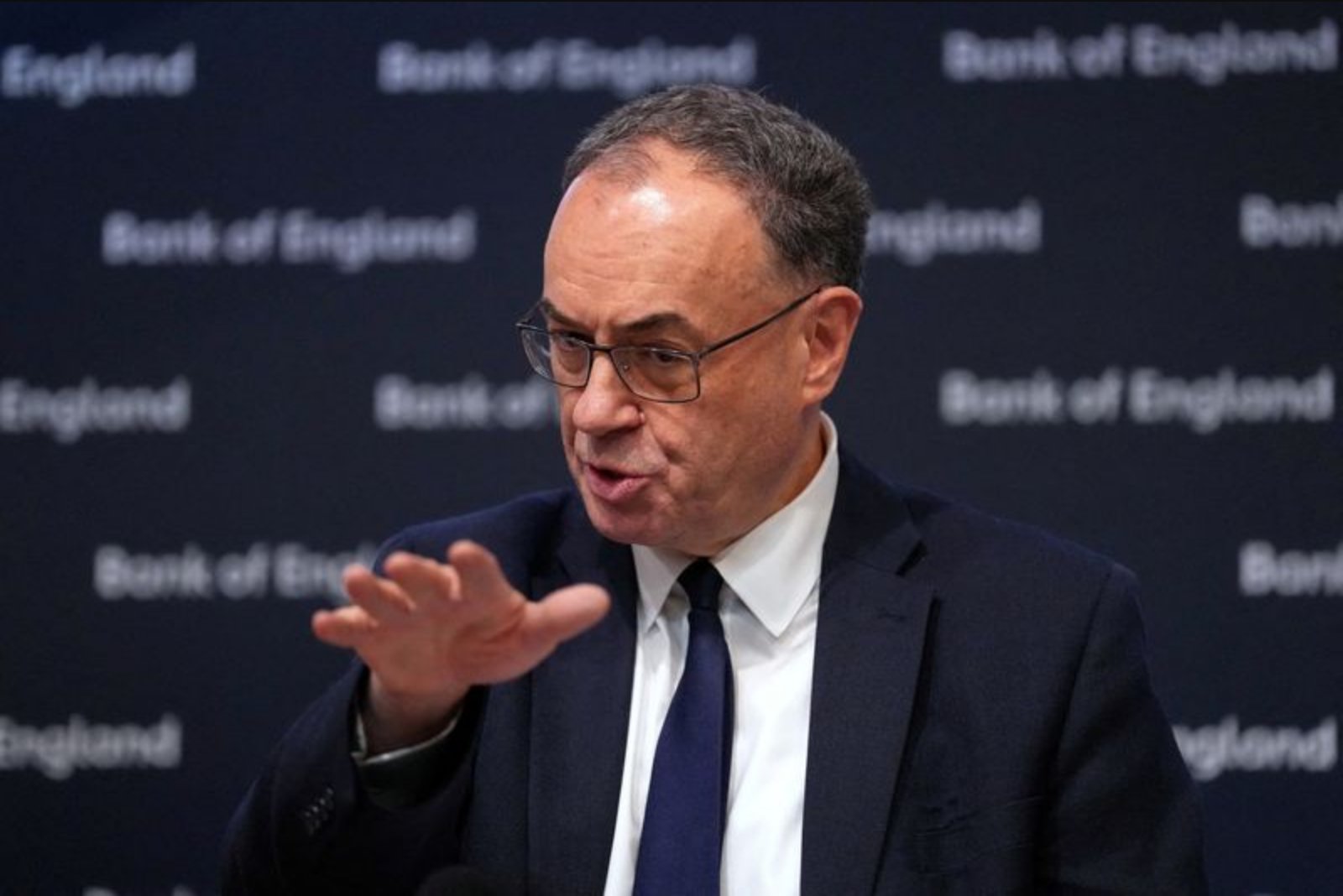
Bank of England Governor Andrew Bailey said on May 29 that it is reasonable to tolerate inflation running above the central bank's 2% target while the economic impact of the Iran war remains unclear and domestic growth is weak.
Speaking at a conference in Reykjavik organised by Iceland's central bank, Bailey said that the Bank's present tolerance for above-target inflation is conditional. "But that tolerance would weaken if signs of second-round effects begin to emerge," he said in the text of the speech.
The Monetary Policy Committee of the Bank of England held interest rates steady on April 30, electing to wait for clearer evidence about how the Iran war would affect activity and price dynamics. In Reykjavik, Bailey reiterated comments he made the prior week that the Bank has tightened policy by taking rate cuts off the table, "and that is already affecting the economy."
He added that policymakers must keep a close watch on developments in the Middle East and their transmission to the UK economy and inflation, saying: "We have to monitor the situation in the Middle East and how it affects the UK economy and inflation very closely and adjust policy as required."
Bailey's remarks underline the cautious stance of the Bank's MPC, where he and most colleagues have signalled they are in no rush to lift borrowing costs. That posture contrasts with the European Central Bank, where policymakers have indicated a likely rate rise in June after having cut rates more aggressively than the Bank of England prior to the Iran war.
Financial market pricing reflects a modest expectation of further tightening by the Bank of England: markets are fully pricing one quarter-point BoE rate hike and assign roughly a one-in-three chance of a second increase over the remainder of 2026.
Context and implications
Bailey framed the Bank's tolerance for higher inflation as temporary and conditional, tied directly to uncertainty from the Iran war and the current weak growth environment. He emphasised that this tolerance would be withdrawn if evidence of persistent, broadening inflationary pressures - so-called second-round effects - emerged.