
Economy June 2, 2026 12:30 PM

Bailey Says Bank of England Must Restore Inflation Target to Preserve Credibility

Governor underscores policy focus on returning inflation to 2% amid divergent BoE projections tied to energy assumptions

By Maya Rios

Bank of England Governor Andrew Bailey told the House of Lords’ Economic Affairs Committee that returning inflation to the central bank's 2% target remains essential to maintain public confidence in monetary policy. He dismissed raising the target to 3% and outlined the bank's central and adverse inflation scenarios, which hinge on energy price paths and could see consumer price inflation approach 4% by late 2026 or exceed 6% in early 2027 under worsening conditions.

Bailey Says Bank of England Must Restore Inflation Target to Preserve Credibility

Key Points

  • Governor Andrew Bailey told the House of Lords' Economic Affairs Committee that restoring inflation to the Bank of England's 2% target is a priority to preserve public confidence in monetary policy - impacts monetary policy credibility and financial markets.
  • Consumer price inflation in Britain fell to 2.8% in April; the BoE's central projection assumes energy prices decline gradually and inflation approaches 4% by the end of 2026 - relevant for bond markets, lenders, and real-return assets.
  • The BoE outlined an adverse scenario where rising energy prices and broader price increases could push inflation above 6% in early 2027, though this would still be below the October 2022 peak of over 11% - material for energy, consumer goods, and inflation-sensitive sectors.

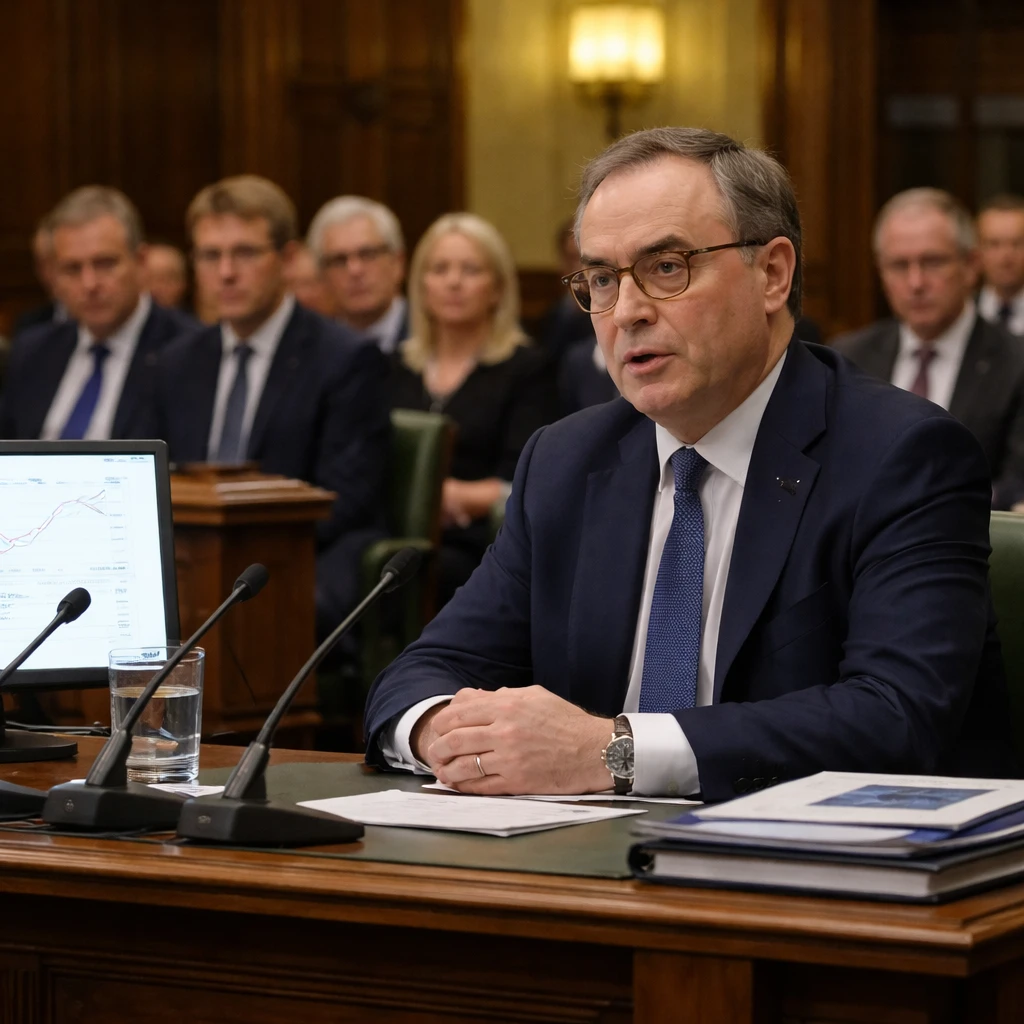
Bank of England Governor Andrew Bailey told lawmakers that re-establishing inflation at the central bank's 2% target is a priority to sustain public trust in the institution's monetary policy. Speaking to the House of Lords' Economic Affairs Committee, Bailey stressed the need to manage the return to target carefully, noting that inflation has remained above 2% for much of the 2020s.

Addressing the committee, Bailey placed particular emphasis on the sequence and credibility of policy actions needed to bring inflation back to target. He said, "We have to focus more on how we manage the path back to target, and ... ultimately get there because we’ve got to give the public confidence that the target is for real." The governor rejected proposals to raise the inflation target to 3% as a remedy for recent misses.

On the data front, British consumer price inflation fell to 2.8% in April. The Bank of England's baseline projection assumes a gradual decline in energy prices through the year, leading to inflation approaching 4% by the end of 2026. That central projection rests on those energy-price assumptions and the implied pass-through to wider goods and services.

The central bank also set out a more adverse scenario in which energy costs climb further while price pressures broaden across goods and services. Under that scenario, inflation could rise above 6% in early 2027. The bank noted that even this adverse path would remain below the peak inflation rate of more than 11% recorded in October 2022.

The governor's testimony to the committee reiterated the BoE's commitment to its 2% target and highlighted the role of energy price trajectories in shaping inflation outcomes. Bailey's comments underline the central bank's focus on ensuring that policy actions are seen as credible and sufficient to restore price stability.


Context limitations: The discussion and projections reported here reflect the Bank of England's own scenarios and assumptions as presented to the committee. The account above does not introduce additional data or forecasts beyond those described by the governor and the central bank.

Risks

  • If energy prices do not decline as assumed, inflation could remain elevated or rise further - risk to consumer-facing sectors, utilities, and inflation-linked instruments.
  • A more widespread increase in goods and services prices could produce an inflation path above the central forecast, raising uncertainty for fixed-income markets and corporate planning.
  • Failure to convincingly manage the return to the 2% target could undermine public confidence in monetary policy - potential implications for market expectations and interest-rate-sensitive sectors.

More from Economy

Australian house price momentum to slow to four-year low as borrowing costs bite Jun 4, 2026 Kevin O’Leary Scales Back Utah Data Center Plan Amid Lawmaker Concerns Jun 4, 2026 Fed's Daly Says AI Could Exert Downward Pressure on Prices Over Several Years Jun 4, 2026 Putin Says Moscow Willing to Make Concessions if Kyiv Reciprocates Jun 4, 2026 Putin Says Moscow and Beijing Near New Energy Deals, Offers Few Details Jun 4, 2026