
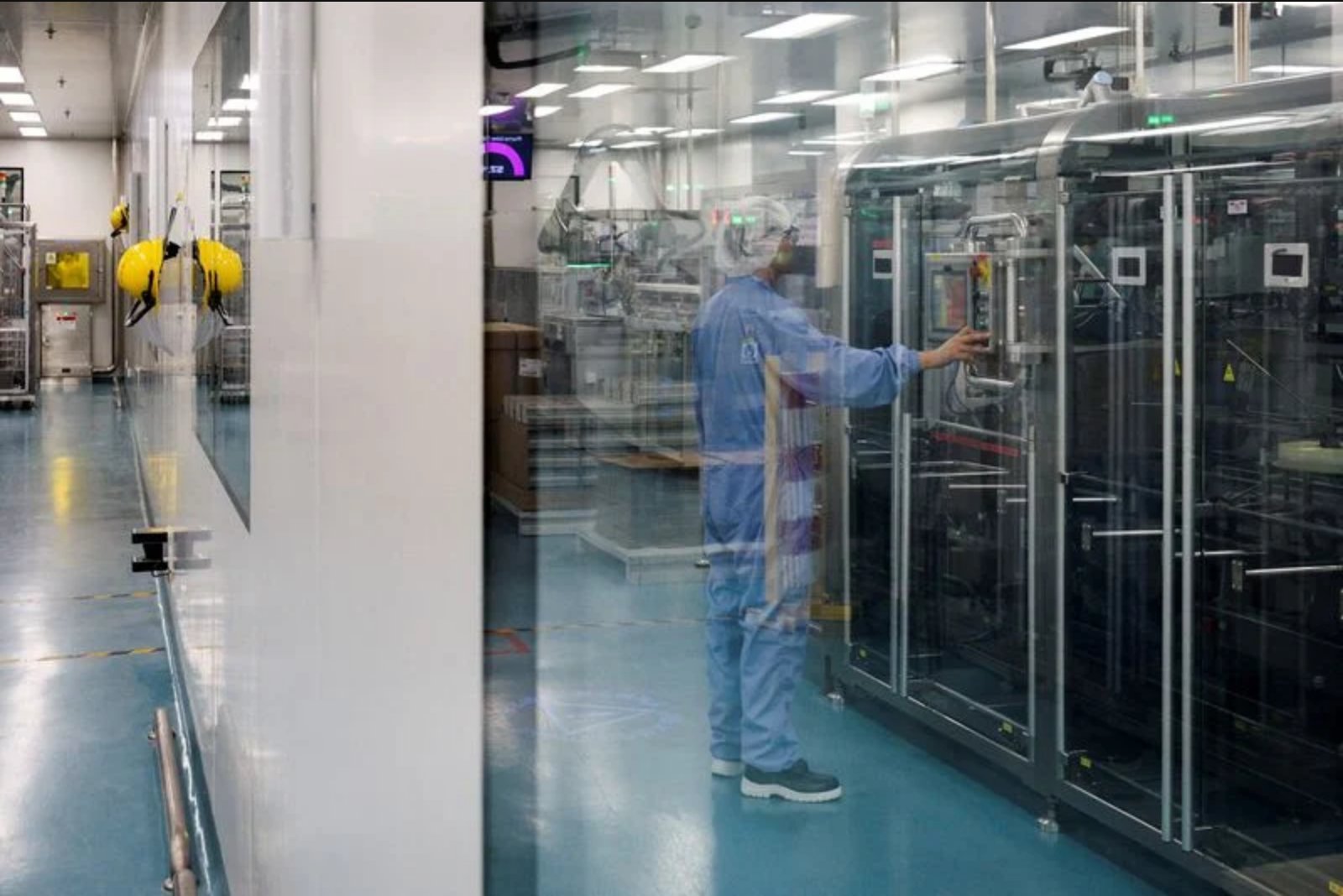
Manufacturing activity across much of Asia expanded in May as some companies increased inventories to protect operations from possible supply shocks tied to conflict in the Middle East, private-sector surveys showed. The trend underlines how the economic effects of the war - particularly on energy and raw material flows - are reverberating through the region.
Heads of major international institutions - the International Energy Agency, the International Monetary Fund, the World Bank and the World Trade Organization - have warned that the war is straining global energy supplies and weighing on the most vulnerable economies. Private purchasing managers' indexes (PMIs) released for May indicate factories in several Asian economies are responding to those risks by building buffers.
The RatingDog China General Manufacturing Purchasing Managers' Index (PMI), compiled by S&P Global, registered 51.8 in May, down from 52.2 in April. The reading remained above the 50.0 threshold that separates expansion from contraction and sat slightly above analysts' expectations of 51.6. The private-sector result contrasted with an official survey that indicated factory activity in China stalled last month amid contracting new orders and persistently rising input costs.
Japan's manufacturing PMI signalled continued expansion as well, at 54.5 in May, easing from April's more than four-year high of 55.1. Firms in Japan reported the sharpest rise in input costs since September 2022, attributing the increase to higher raw material prices linked to the Middle East war.
South Korea recorded one of the stronger private-sector outcomes. Its PMI climbed to 54.8 in May from 53.6 in April - the fastest pace since March 2021 - reflecting a regional push among manufacturers to secure supplies as shipping and trade disruptions connected to the Iran war have unsettled global trade.
Other economies in the region also posted gains. Vietnam's factory PMI rose to 52.8 from 50.5 in April. Taiwan's index strengthened to 56.1 from 55.3, and the Philippines moved back into expansion territory with a PMI of 50.8, up from 48.3 the prior month.
"The current period of expansion is being partly driven by stock building among manufacturers and their clients, as companies looked to safeguard against product shortages and mitigate price risks driven by the war in the Middle East," said Annabel Fiddes, Economics Associate Director at S&P Global Market Intelligence.
The conflict - described in reporting as a U.S.-Israeli war on Iran that began late in February - has disrupted trade patterns, unsettled financial markets and stoked concerns about energy supplies, especially in relation to the Strait of Hormuz, a major route for oil and gas shipments. These pressures have contributed to the surge in input costs reported by some firms and to the inventory accumulation seen in the PMI data.
Overall, the private-sector PMI readings for May show a region-wide move toward expansion, with companies actively adjusting inventories and purchasing behaviour in response to heightened geopolitical and commodity-related risks. At the same time, disparities between private and official measures in some economies point to uneven conditions on the ground, particularly where new orders and costs are exerting opposite forces on manufacturing activity.
Data points:
- China RatingDog S&P Global PMI: 51.8 in May, down from 52.2 in April; analysts had forecast 51.6.
- Japan PMI: 54.5 in May, down from 55.1 in April; sharpest input cost rise since September 2022.
- South Korea PMI: 54.8 in May, up from 53.6 in April; fastest pace since March 2021.
- Vietnam PMI: 52.8 in May, up from 50.5 in April.
- Taiwan PMI: 56.1 in May, up from 55.3 in April.
- Philippines PMI: 50.8 in May, up from 48.3 in April.