
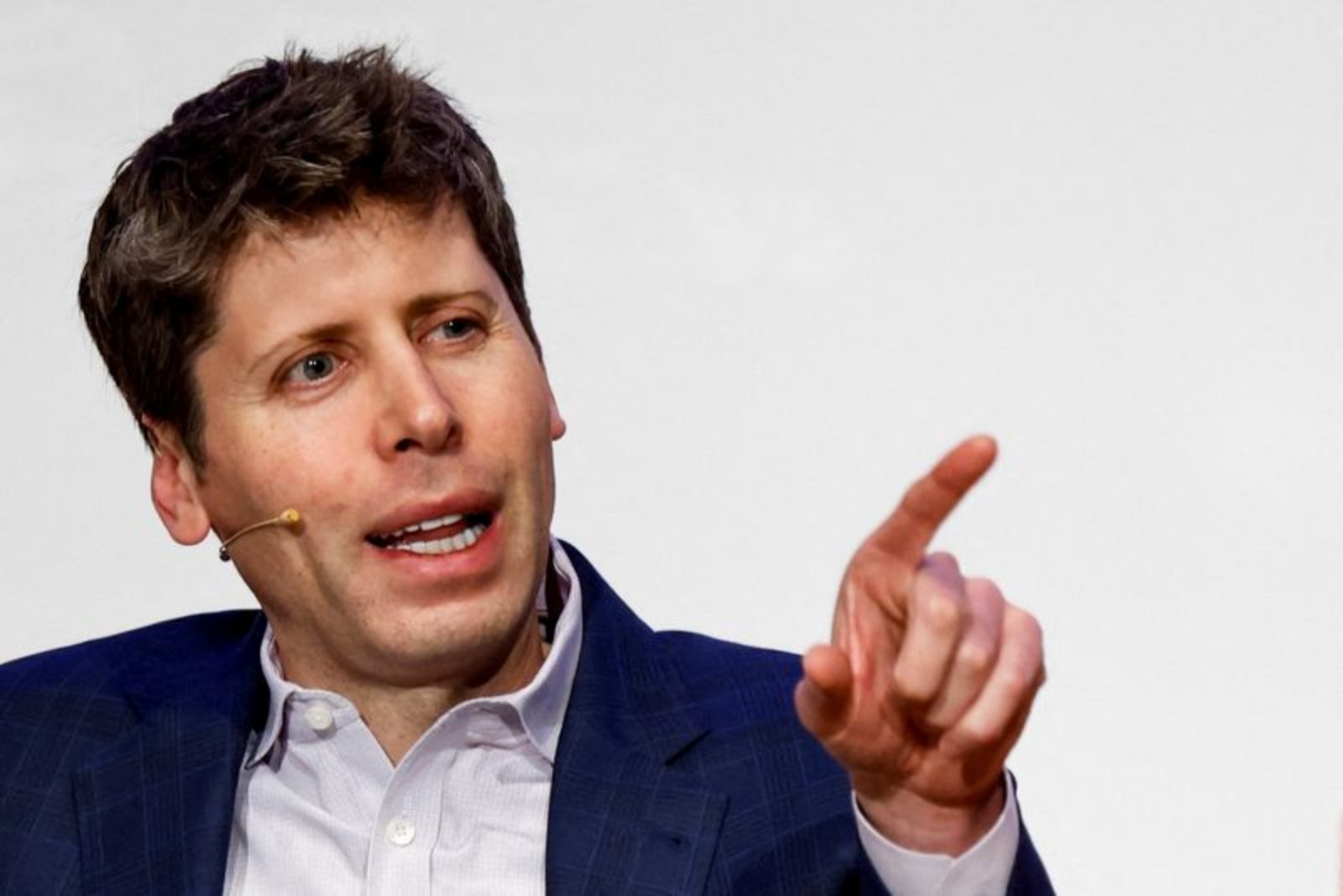
OpenAI Chief Executive Sam Altman said on Tuesday that the fast pace of AI development and deployment has not produced the sweeping, immediate job losses he once feared. Addressing delegates at a Commonwealth Bank of Australia conference in Sydney, Altman described a change in his view about how the technology is affecting employment.
Altman said that when OpenAI launched ChatGPT in 2022, he and his leadership team were "roughly right" in their technical forecasts. However, he added they were "pretty wrong" about the wider social and economic consequences.
"I’m delighted to be wrong about this, I thought there would have been more impact on entry-level white-collar jobs being eliminated by now than has actually happened," Altman told Commonwealth Bank of Australia Chief Executive Matt Comyn during an on-stage interview. He said the mismatch between expectation and reality had prompted him to reassess his earlier concerns.
Altman acknowledged he had initially been worried about the effect AI might have on global employment levels. He described a shift in perspective driven by practical experience with the technology and by observing how organizations and workers have responded.
"I now think I understand more about why it hasn’t, and I’m obviously grateful but that is an area where my intuitions were just off," he said. Altman also noted public criticism that early warnings from industry figures generated alarm. "People are like 'oh you could have saved the world a lot of fear mongering and a lot of doom and gloom' but at the time I was like 'I see this is a real risk we should probably talk about it' and it still may."
Altman did not provide any specific employment data during the session. He has previously discussed potential industry-wide job losses tied to AI, but on Tuesday he refrained from citing numbers.
He highlighted that an increasing list of large corporations have already reported some roles being replaced by AI. "A growing number of global companies, including HSBC, Amazon, Standard Chartered and CBA have announced some jobs within their companies were being replaced by AI," he said, signaling that adoption is already affecting staffing decisions in multiple sectors.
Altman also touched on OpenAI's own corporate plans, saying the company is preparing to confidentially file for a U.S. initial public offering in the coming weeks. He said the company could be aiming for a $1 trillion valuation and raising at least $60 billion.
On a more personal note, Altman described experiments with delegating routine communications to AI. He said he had at one point had an AI respond to Slack and email messages on his behalf, labeling replies as coming from "Sam’s AI." The experience, he said, highlighted the enduring value people place on human interaction.
"I had it reply to messages, saying 'this is Sam’s AI' and it was an amazing example to me of we really do care about people," Altman said. "We really do care about our interactions with people and this thing, which is a huge amount of my time, is not something that I can imagine myself outsourcing to an AI anytime soon."
That insight reinforced his view that many jobs contain a "human part" that AI has not supplanted. He said that realization led him to update his expectations for how employment patterns may evolve.
"It really, in both positive and negative ways, updated me to thinking that the jobs picture is likely to be very different than we thought," Altman said. "I don’t think we’re going to have the kind of jobs apocalypse that some of the companies in our space advocate or talk about."
Context and implications
Altman’s remarks underline a developing picture in which AI expands its role in business operations while stopping short of the immediate, large-scale elimination of many entry-level white-collar tasks that some observers anticipated. Corporations across sectors are already integrating AI into workflows, and OpenAI itself is moving toward a major corporate milestone in the form of a planned confidential IPO filing. At the same time, Altman emphasized limits to what AI appears able to replace, especially where direct human engagement matters.
Summary
Sam Altman said rapid AI adoption has not yet caused the extensive white-collar job losses he once feared. He conceded his team’s technical predictions were broadly correct but that they underestimated the social and economic responses. While some global companies have replaced certain roles with AI, Altman stressed the continued importance of human interaction in many positions and said he now believes a widespread "jobs apocalypse" is unlikely, though uncertainty remains.
Key points
- Altman says OpenAI's technical forecasts since ChatGPT’s launch were broadly accurate, but social and economic outcomes were misjudged.
- Several major firms including HSBC, Amazon, Standard Chartered and CBA have reported some roles being replaced by AI, indicating cross-sector adoption.
- OpenAI is preparing to confidentially file for a U.S. initial public offering, with potential aims of a $1 trillion valuation and raising at least $60 billion.
Risks and uncertainties
- Future employment impacts remain uncertain - Altman warned the risk of job displacement "still may" materialize.
- No specific job-loss figures were provided, leaving the scale and timing of any broader labor market changes unclear.
- Corporate adoption of AI has already led to some job replacements at major firms, creating sector-specific operational and workforce risks.