
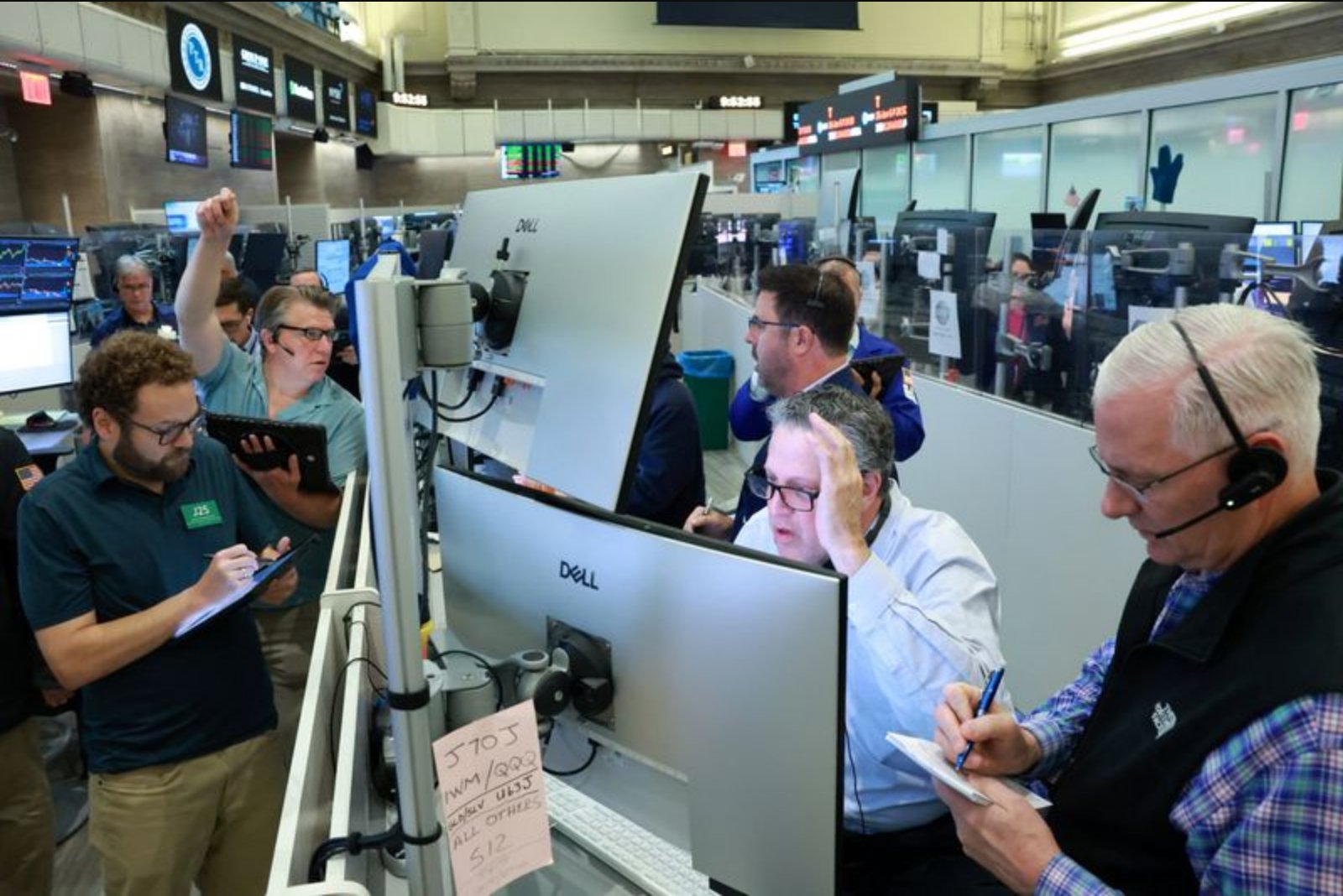
Global equity markets saw a powerful upward movement on Tuesday as persistent optimism regarding artificial intelligence technologies drove major indices to unprecedented levels. The S&P 500 and the Nasdaq both reached new record highs, supported by a significant rally in the technology sector. This momentum was further underscored by the performance of U.S. chipmaker Micron Technology, which briefly joined the exclusive $1 trillion market capitalization club following an explosive period of growth.
The surge in semiconductor stocks acted as a primary driver for the broader market, even as investors navigated geopolitical uncertainties surrounding the prospect of a peace deal between the United States and Iran. While tech sectors flourished, other areas of the market saw more varied results; for instance, the energy sector faced downward pressure, with BP falling 4% and Chevron declining 3.5%.
Market Performance Breakdown
The breadth of the rally was evident in international markets as well. In South Korea, stocks rose by 2.5%, reaching a new high. Global benchmarks such as the MSCI All Country, MSCI Asia ex-Japan, and the small-cap Russell 2000 also achieved record peaks. Conversely, European markets showed some weakness, with Europe down 0.6% while the United Kingdom saw a slight increase of 0.2%.
In the United States, sector performance was highly bifurcated:
- Technology: The sector rose by 1.7%, led by massive gains from Micron Technology (+19%) and AMD (+8%), alongside Qualcomm (+4.5%).
- Energy: This sector saw a decline of 2.8%, with notable drops in BP (-4%) and Chevron (-3.5%).
- Other Notable Movers: Intuit experienced a decline of 5%.
In the foreign exchange markets, the U.S. Dollar remained flat. The Israeli shekel emerged as the largest gainer among major currencies, rising by 1%, while the New Zealand Kiwi was among the most significant decliners within the G10 group ahead of decisions from the Reserve Bank of New Zealand.
The Semiconductor Surge and IPO Expectations
Micron Technology's recent trajectory has been nothing short of extraordinary. The company has seen its stock price explode by more than 180% in less than two months, a run that ultimately pushed its market valuation into the $1 trillion range. This rapid appreciation highlights the intense investor focus on the hardware requirements of the AI era.
Simultaneously, market participants are looking toward the potential initial public offering (IPO) of SpaceX, which could see the company valued at upwards of $1.75 trillion. However, historical data provides a reason for caution regarding such massive debuts. A Reuters analysis of the 50 largest IPOs over the previous five years suggests that investors would have achieved better results by simply investing in an S&P 500 index fund approximately 75% of the time.
Fixed Income and Central Bank Signals
The bond market is currently navigating a period of significant supply and shifting demand. The U.S. Treasury is scheduled to auction $183 billion in coupon-bearing notes this week, covering the short end and middle of the yield curve. This follows $28 billion in 2-year floating rate notes and hundreds of billions in bills. These auctions follow a period of less favorable demand for 20-year bonds and 10-year TIPS last week, which were characterized by weak interest and large tails.
The current environment has led some to analyze the relative value between corporate and sovereign debt. As U.S. Treasuries face a steep selloff, certain corporate bonds may appear more attractive to investors, particularly if the balance sheets of mega-cap companies continue to strengthen while the fiscal position of the United States faces deterioration.
In Europe, the path for interest rate adjustments appears increasingly clear. Policymakers at the European Central Bank, including chief economist Philip Lane and board member Isabel Schnabel, have signaled that a rate hike in June is likely. Schnabel specifically noted that such an increase should occur regardless of whether a peace deal is reached between the U.S. and Iran. This hawkish sentiment has influenced currency markets, where the 2-year U.S.-German yield spread has widened in favor of the dollar, contributing to the euro moving toward $1.16.
Commodities and Macro Indicators
The commodities sector showed mixed results during Tuesday's session. Brent crude oil rose by 4%, while WTI oil saw a decrease of 3%. Meanwhile, gold prices fell by 1.5%.
Looking ahead, several key economic catalysts are expected to influence market direction. These include developments in the Middle East, the interest rate decision from New Zealand, and April inflation data from Australia. Additionally, scheduled speeches from various Federal Reserve officials, including Vice Chair Philip Jefferson, Governor Lisa Cook, and Dallas Fed President Lorie Logan, alongside remarks from Bank of Japan Governor Kazuo Ueda, will be closely monitored by market participants.