
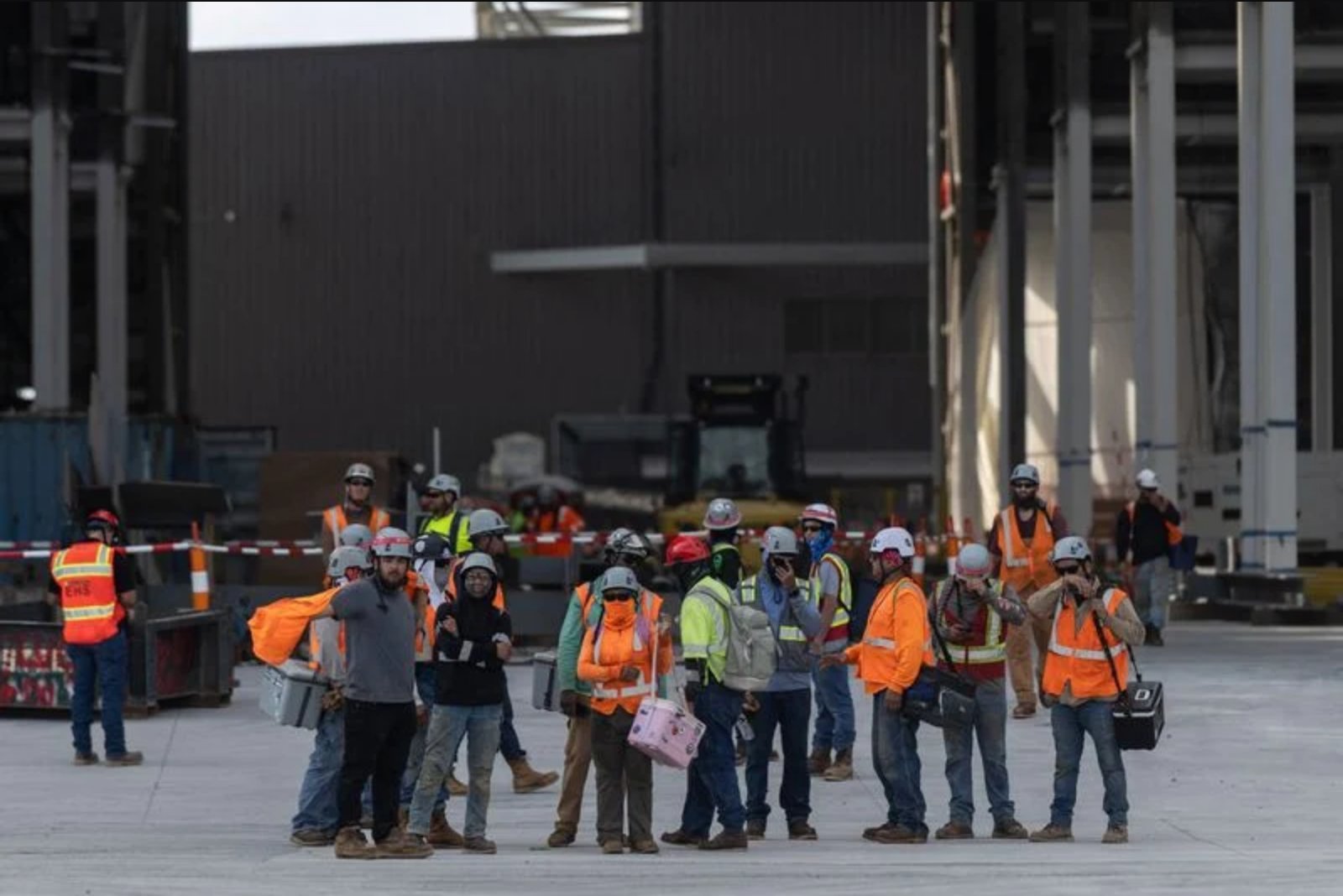
Private-sector employment in the United States expanded by 122,000 jobs in May, according to the ADP national employment report released on Wednesday. The May gain outpaced economists' expectations and followed an April increase that was revised down to a 105,000-job gain.
Economists surveyed by Reuters had projected private employment would rise by 117,000 in May, with the April figure previously reported as a 109,000 advance before being revised downward. The ADP report was produced jointly with the Stanford Digital Economy Lab and was published ahead of the Bureau of Labor Statistics' broader and more closely watched employment report for May, due on Friday.
ADP has a track record of being an imperfect predictor of the BLS private payrolls estimate. Still, the ADP release offers an early look at private-sector hiring trends as markets and policymakers await the official government numbers.
The report comes against a backdrop of a labor market that, after signs of weakness last year linked largely to tariff-related uncertainty, appears to have stabilized. The ADP findings arrive while inflation pressures have been elevated after commodity prices moved higher following the U.S.-Israel war with Iran, yet layoffs have remained at historically low levels.
Separately, a Reuters survey of economists forecast that nonfarm payrolls likely increased by 85,000 jobs in May, following a 115,000 gain in April. The survey also indicated the unemployment rate is expected to hold at 4.3%.
Financial markets are pricing in expectations that the Federal Reserve will keep its benchmark overnight interest rate in a 3.50%-3.75% range into next year, while closely watching how inflation evolves in the wake of the conflict-related commodity price rise. The U.S. government reported last week that inflation rose in April at its fastest pace in three years.
Implications and context
The ADP report provides an early signal on private hiring but does not replace the BLS figures, which are more comprehensive. Observers will compare the ADP and BLS results to assess whether private hiring momentum is sustaining and how it might affect policy and markets.
Summary
- ADP measured a 122,000 increase in U.S. private payrolls in May, above Reuters' consensus.
- April's private payroll gain was revised down to 105,000.
- The ADP release precedes the BLS monthly jobs report and has historically been a poor predictor of the BLS private payrolls estimate.
Key points
- ADP reported stronger-than-expected private hiring in May, a sign of stabilization in the labor market.
- Markets expect the Federal Reserve to hold the federal funds rate at 3.50%-3.75% into next year, monitoring inflation developments.
- Inflation accelerated in April at the fastest pace in three years, and the conflict referenced in the report has pushed commodity prices higher.
Risks and uncertainties
- ADP has historically been a poor predictor of the BLS private payrolls estimate - the official BLS report could differ materially.
- Rising commodity prices tied to the U.S.-Israel war with Iran create inflation uncertainty that could influence policy and market volatility.
- Forecasts for nonfarm payrolls and the unemployment rate are projections and may be revised when the BLS releases its comprehensive data.