
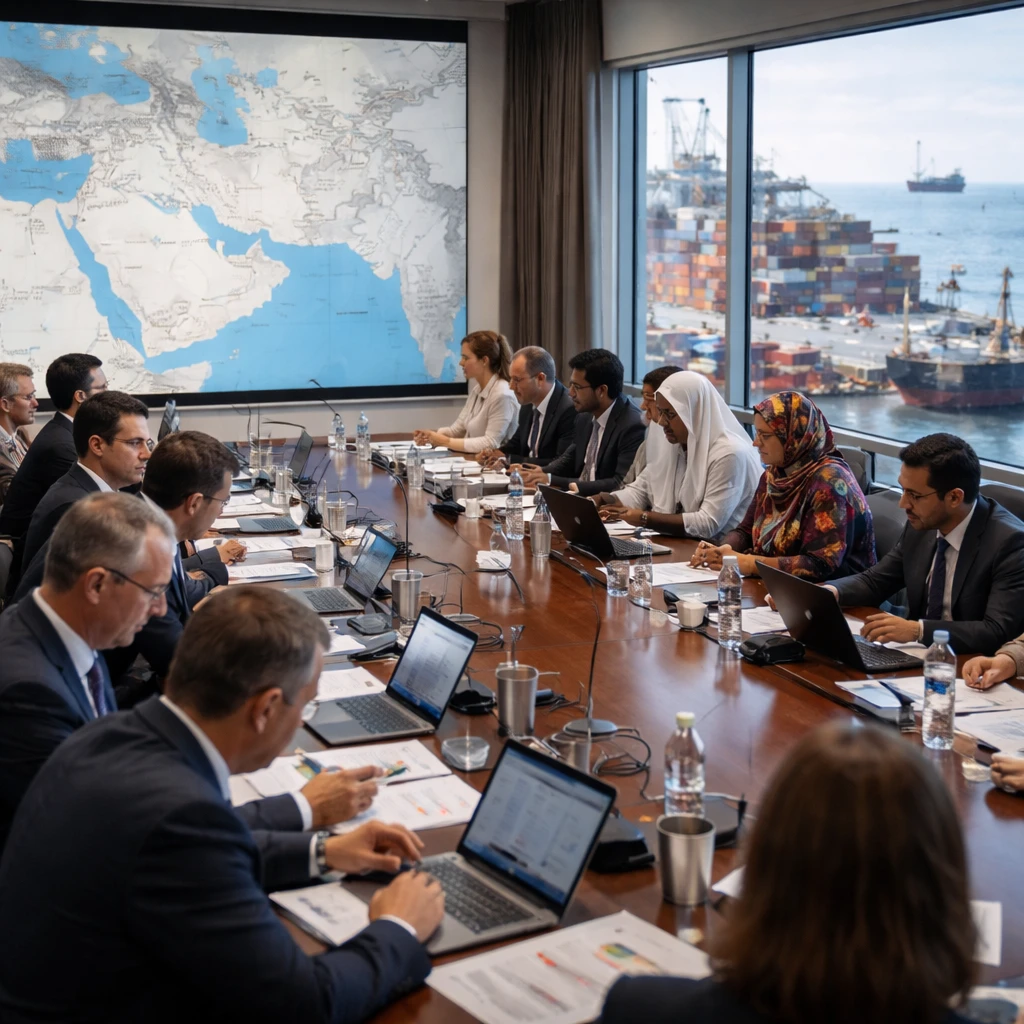
An internal World Bank memorandum shows that 27 countries have taken steps to access emergency financing mechanisms embedded in existing World Bank programs since the onset of the Iran war on February 28. The document, reviewed by Reuters, indicates that three countries have fully authorized new contingent instruments and that the remaining 24 are still completing required administrative procedures.
The memorandum does not identify the individual countries involved nor disclose the total amount of capital being sought, and the World Bank declined to comment. What the document does outline is the operational activation of pre-arranged contingent lines and fast-disbursing mechanisms designed to provide sovereign borrowers with rapid liquidity in times of crisis.
Officials in at least two nations - Kenya and Iraq - have publicly confirmed they are requesting quick financial support from the World Bank. Kenya's appeal is driven in part by a domestic surge in fuel prices. Iraq is pursuing assistance after experiencing a sharp decline in state oil revenues that follows localized maritime export disruptions.
The internal note places the 27 countries within a larger group of 101 nations that keep access to contingent financing facilities ready for near-term deployment. Among these, 54 countries have enrolled in the World Bank's Rapid Response Option. That mechanism allows sovereign borrowers to immediately reallocate up to 10% of their undisbursed project balances for urgent needs.
The operational mobilization follows public remarks by World Bank President Ajay Banga last month, in which he described the institution's revised crisis toolkit as potentially enabling countries to draw between $20 billion and $25 billion through pre-arranged contingent lines and fast-disbursing facilities. Banga further suggested that the bank could reorient its wider portfolio to deliver up to $60 billion within a six-month timeframe.
Concurrently, International Monetary Fund Managing Director Kristalina Georgieva previously indicated expectations that up to a dozen countries could seek between $20 billion and $50 billion in near-term emergency help. However, three sources with direct knowledge of IMF activity reported that relatively few formal requests have been logged at the IMF to date, with many governments remaining in a wait-and-see mode.
Analysts cited in the memorandum note a distinct borrower preference for World Bank instruments over formal IMF programs, pointing to the latter's frequent requirement for stringent fiscal austerity conditions. The preference reflects a strategic choice by sovereigns seeking speed and flexibility in financing during external shocks.
The memorandum also highlights the broader macroeconomic channels through which the Middle East conflict is affecting vulnerable economies. Disruption of international energy networks and the interruption of fertilizer shipments have tightened supply chains and raised costs, particularly for developing countries that depend on imports of fuel and agricultural inputs.
While the document provides an operational snapshot of the World Bank's crisis response, it leaves several specifics unspecified. The identities of most countries activating contingency instruments are not listed, the total capital being requested remains undisclosed, and the pace at which approvals will convert into disbursed funds is not detailed. These gaps reflect the confidential and rapidly evolving nature of sovereign financing decisions under stress.
Key points
- Twenty-seven countries initiated activation of World Bank contingent financing measures after the Iran war began on February 28 - three have fully approved new instruments, 24 are completing administration.
- The 27 are part of 101 countries with pre-arranged contingent facilities; 54 are enrolled in the World Bank's Rapid Response Option, which permits reallocation of up to 10% of undisbursed project balances.
- Public statements from World Bank and IMF leadership outline potential deployment ranges - $20-25 billion via contingent lines and fast-disbursing facilities and up to $60 billion from portfolio reorientation over six months; IMF estimates cited up to a dozen countries seeking $20-50 billion - while few formal IMF requests have been recorded so far.
Risks and uncertainties
- Funding totals and the identities of most requesting countries are not disclosed - this opacity complicates assessment of the scale and distribution of financial need across sectors such as energy and agriculture.
- Disruptions to energy networks and fertilizer shipments threaten supply chains and commodity-dependent revenues, particularly affecting fuel markets and agricultural inputs in developing economies.
- Many governments remain in a wait-and-see mode regarding IMF engagement, creating uncertainty over whether larger-volume support tied to stricter conditionality will materialize.