
Summary
A William Blair report released Friday projects that the 2026 FIFA World Cup will provide a modest and temporary increase in tourism and hospitality activity across the three host countries. While leisure, restaurants, bars, and other spectator-sport-related services are expected to see the most immediate uplift, the report stresses the effect on total economic growth will be limited and uneven, concentrated in specific cities and venues.
Event scope and immediate demand drivers
The tournament is scheduled to begin on June 11 and will be co-hosted by the United States, Canada, and Mexico. Organizers will expand the field to a record 48 teams, staging 104 matches in 16 host cities. William Blair identifies leisure, hospitality, and tourism-related firms as the primary beneficiaries, noting that consumer spending on spectator sports has remained comparatively strong since the pandemic, which supports demand in advance of the tournament.
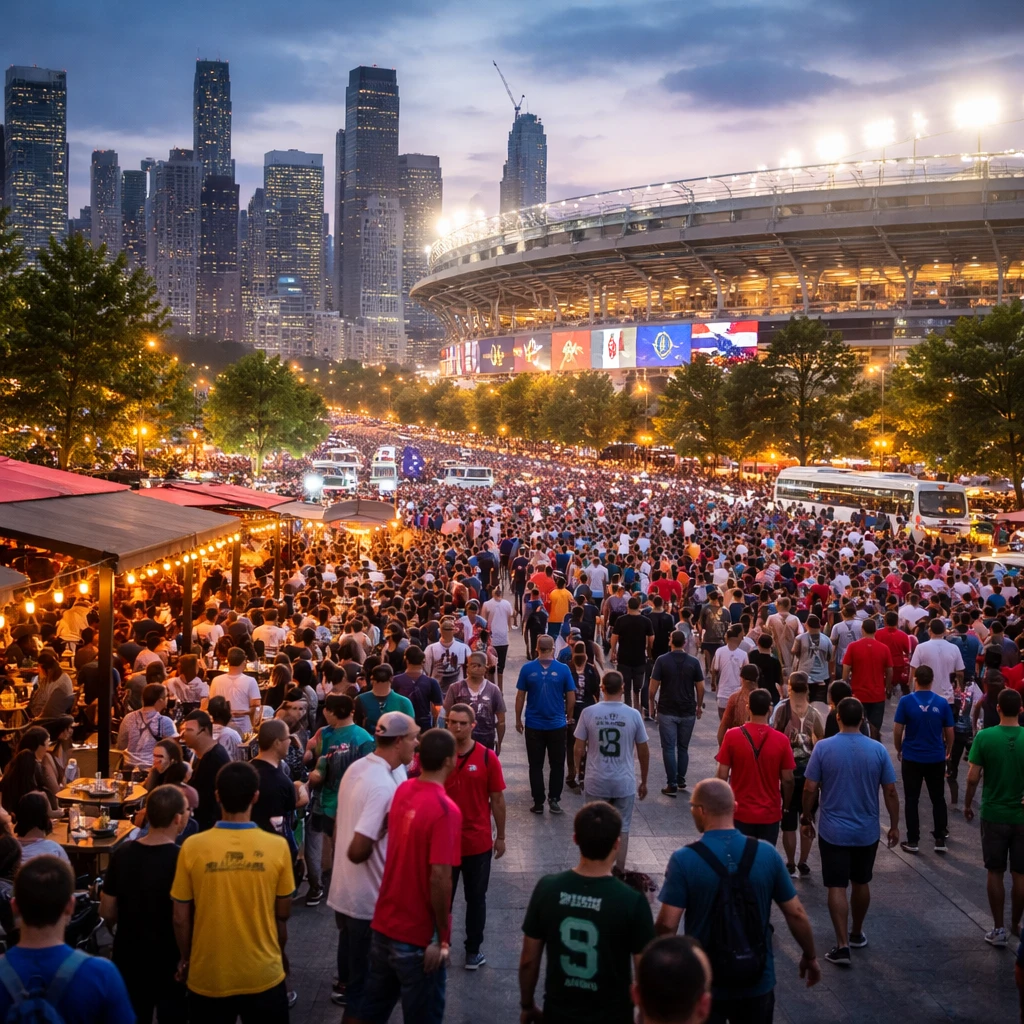
The report points to recent tournament data for context. During the 2025 FIFA Club World Cup, spending in stadium-adjacent zip codes increased by about 7% year over year over the course of the competition, with the rise largely attributable to restaurant and bar transactions.
Where gains are likely to land
William Blair highlights that cities which do not regularly attract substantial international visitation could experience the greatest net increases in local spending. In contrast, established tourism hubs - the report cites New York and Miami as examples of major markets - may see World Cup visitors supplant pre-existing travel demand rather than generating wholly incremental tourist flows.
Pricing and travel frictions
The report raises caution about ticketing and inbound travel. FIFA's use of dynamic pricing has driven some ticket prices to historic highs, though the firm notes that ticket prices for several matches were reduced recently as sales weakened. On the international travel front, hotel-industry surveys cited in the report indicate booking activity in several host markets is running below expectations. Respondents flagged visa processing times, travel costs, and entry requirements as potential obstacles that could deter overseas visitors.
Potential market effects
William Blair also considers financial-market implications. Historical patterns show stock trading volumes tend to fall during World Cup matches, especially in countries with large football followings. The firm further notes that nations winning the World Cup have, on average, outperformed global equities by about 5.5% in the month after the final. Host countries, the report says, have typically experienced stronger market performance in the period before and during the tournament than in the period that follows.
Overall conclusion
William Blair concludes that while the 2026 World Cup should produce a temporary lift to tourism and hospitality activity in the United States, Canada, and Mexico, it is unlikely to materially change the trajectory of overall economic growth across the host nations. The uplift is expected to be concentrated, short-lived, and subject to pressures from ticket pricing and international travel constraints.